
From the Editor’s Desk
January 29, 2026
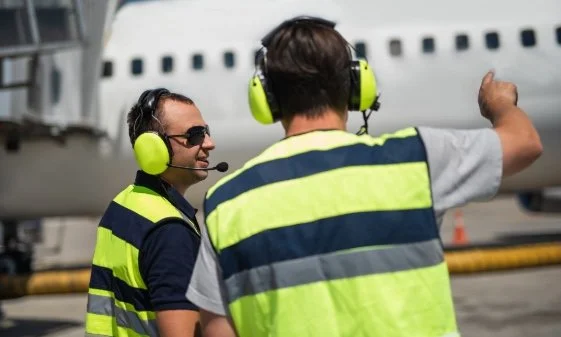
A fatal plane crash near Baramati on January 28 killed Maharashtra’s Deputy Chief Minister Ajit Pawar and four others during a chartered flight operated by a private aviation company. The incident demands an examination of whether India’s aviation system contains the structural safeguards found in more developed regulatory environments.
The aircraft was a Bombardier Learjet 45XR, a small, twin-engine business jet designed for short- to medium-range corporate or charter travel. It was operated under India’s non-scheduled aviation category, which refers to flights that run on demand rather than regular routes. These services are regulated through the Non-Scheduled Operator Permit (NSOP) framework administered by the Directorate General of Civil Aviation (DGCA), India’s national aviation regulator.
An investigation into the crash is ongoing. The Aircraft Accident Investigation Bureau (AAIB) is examining technical and operational factors, and a final report has not yet been released. According to news reports, the flight was conducted under valid certification, during daylight hours, and with qualified crew. Visibility and weather conditions are among the possible factors being considered. However, no definitive cause has been confirmed by investigators, and all explanations remain provisional.
Let’s look at how India regulates general aviation and charter operations, particularly for flights involving senior officials.
One major issue is that India lacks an institutional system that places a protective buffer between political authority and operational flight decision-making. Political authority here refers to the influence of elected officials, their offices, or aides who coordinate travel, determine schedules, and shape the expectations surrounding such flights. While aviation regulations grant pilots the final say over safety matters, there is no independent operational mechanism that separates command decisions from the administrative structure arranging the flight. Even in the absence of direct interference, pilots and operators may perceive an implicit expectation that the flight should proceed on schedule, particularly if a high-ranking official is on board and their itinerary is time-sensitive.
In aviation safety theory, this dynamic resembles the concept of an “authority gradient,” a situation where unequal power relations affect communication and decision-making. The term is usually applied to interactions within cockpit crew, such as between a captain and first officer. But it also offers a useful way to understand how informal hierarchies outside the aircraft, including the status of passengers, can affect safety decisions inside it. In systems where there is no structural defence of the pilot’s authority, decisions to delay, divert, or abort a flight can feel professionally risky, even if they are technically sound.
India does not have a formally codified aviation operations framework that creates a separate protocol for flights involving elected officials or senior government personnel. All such flights are governed by the same NSOP regime used for ordinary charter operations. While the NSOP rules cover essential safety requirements such as airworthiness, maintenance, and crew qualifications, they do not distinguish between flights based on who is travelling. This means there are no additional operational safeguards tied to the stakes of the mission. Key decisions, such as aircraft selection, departure timing, or continuation under marginal weather, are left to the discretion of the operator and pilot without built-in institutional separation.


In countries such as the United States and across the European Union, flights involving public officials are subject to additional procedures. These may include independent dispatch authorities, formal risk assessment before takeoff, and structured decision-making systems that protect operational judgement from political or reputational pressure. Such systems are designed not to assume misconduct, but to prevent the possibility of institutional bias from influencing high-stakes safety calls.
Audit and oversight mechanisms in India’s aviation system are administered by the DGCA, which is responsible for both scheduled airlines and non-scheduled operators. While the DGCA conducts audits, inspections, and surveillance across operator categories, public reporting on the frequency, depth, and findings of oversight activities for the charter sector is limited. Parliamentary reviews and expert commentary have noted that oversight capacity—especially in terms of staffing and technical inspectors—has not kept pace with the rapid growth in private and business aviation. This suggests that while rules are in place, the institutional resources needed to enforce them uniformly across all operator types may be insufficient.
India’s civil aviation safety regulations are formally aligned with standards set by the International Civil Aviation Organization (ICAO), and India retains Category 1 status under the U.S. Federal Aviation Administration’s International Aviation Safety Assessment programme. However, implementation capacity and transparency vary. Scheduled airlines undergo regular audits and submit compliance documentation, but comparable oversight for non-scheduled charter operators is not publicly reported in the same detail. Compared to regulators like the FAA, which publish detailed safety performance data and audit results, India’s system relies more heavily on internal reporting and has fewer public-facing safety metrics for the charter sector.
The DGCA also maintains systems for reporting and analysing aviation safety data, including mandatory incident reporting and voluntary safety submissions. Recent reforms have expanded surveillance to include airports and maintenance organisations. Still, there is no public requirement for routine post-flight safety logging or transparent operational review of every chartered flight—particularly those involving public officials. While safety data is collected within DGCA for internal risk analysis, detailed performance records for the non-scheduled sector are not made publicly available. This makes it harder for independent experts, the media, or the public to observe systemic risks before they lead to major incidents.
The solution lies not only in better aircraft or improved pilot training, but in a regulatory redesign that addresses structural exposure to risk. This includes insulating operational flight decisions from the informal influence of authority, improving transparency in oversight, and ensuring that higher-stakes flights are supported by stronger institutional safeguards than those used for standard charters.
You have just read a News Briefing, written by Newsreel Asia’s text editor, Vishal Arora, to cut through the noise and present a single story for the day that matters to you. We encourage you to read the News Briefing each day. Our objective is to help you become not just an informed citizen, but an engaged and responsible one.


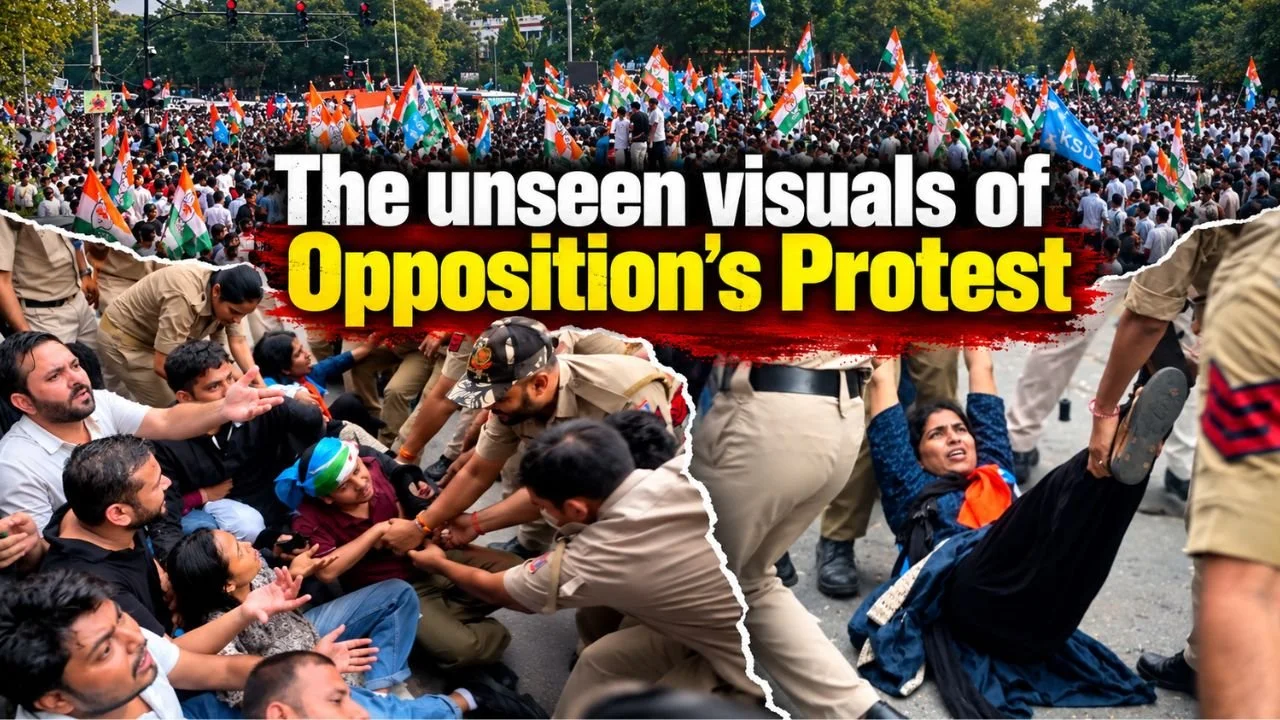
Hundreds of protesters gathered at Bangla Sahib in Delhi at 1 PM on October 23 for a protest called by People Against SIR, a collective of over 100 organisations mobilising against the Election Commission of India’s Special Intensive Revision (SIR) of electoral rolls across the country. Along with detentions and use of force, security personnels are using another tactic - blowing whistles to silence the voices.