
Bank Accounts Aren’t Enough to Bring Women Into India’s Gig Economy, ILO Warns
From the Editor’s Desk
August 31, 2026

Owning a bank account is not enough to bring women fully into India’s gig and platform economy, a policy brief by the International Labor Organization and the National Council of Applied Economic Research said. Nearly all Indian women now have a bank account, but most still can’t use one on their own, few understand the loans and insurance sold to them, and the financial products themselves are built for how men earn, not how women do.
The brief, published in August 2026, said women’s exclusion from credit, insurance and savings products suited to their needs gets far less attention than other barriers to their platform work, even though it’s just as significant.
Digital labour platforms worldwide grew from 193 in 2010 to more than 1,070 by 2023, the report noted, pointing out that India had an estimated 7.7 million platform workers – working for platforms like Zomato, Blinkit, Swiggy, Urban Company, and Cargo – in 2020, a figure that reached 12 million by fiscal year 2025 and is projected to climb to 23.5 million by 2029-30. However, women remain underrepresented in this workforce, it said.
Globally, women make up about 38% of workers on online web-based platforms but only about 10% on location-based platforms such as ride-hailing, like Uber, and delivery, the report said. A study of two-wheeler delivery drivers in India’s urban areas found drivers are predominantly young men with an average age of 28, and less than 1% were women.
On basic account ownership, India has made rapid progress. In 2014, about 43% of women in India had a bank or similar financial institution account, compared with about 62% of men, a gap of nearly 20 percentage points, the report said, citing Global Findex data from the World Bank. By 2024, account ownership had risen to about 89% among women and 88% among men.
The progress has not carried over into active digital financial use. Among Indians aged 15 and above, only 25.2% of women could perform online banking transactions, compared with 47.1% of men. In rural India, only 17.1% of women could bank online, compared with 39.2% of men. On a composite measure covering internet search, email and online banking, 18.0% of women had all three skills, compared with 30.1% of men.

Further, in 2024, 32% of men in India had a mobile money account, compared with 14% of women, an 18-percentage-point gap that was three times the global average gap of 6 points and the largest among comparator countries cited in the report.
These gaps show up in who actually gets a loan. Digital lenders, called nonbanking financial companies, gave women only 18% of the total loan money they handed out, the report said, citing 2026 industry data. Banks show the same pattern. Women held just 22.9% of all individual bank loans in India as of March 2023, according to Reserve Bank of India figures cited in the report. Part of the reason, a 2020-21 national survey suggests, is that only 21% of women in India were financially literate, against 27% of men, leaving many unable to weigh a loan or insurance policy's terms before they sign.
A cross-country analysis of 52 emerging and developing economies found gender gaps in digital financial inclusion widened in 21 countries between 2014 and 2017, and that in Asia the digital gap was slightly larger than the traditional financial-inclusion gap, the report said.
India’s Code on Social Security, a law covering workplace benefits, has extended formal recognition to gig and platform workers for the first time, entitling them to protections such as accident insurance, health and maternity benefits, and old-age support. The money for this comes from the platform companies themselves, which must pay in 1% to 2% of their annual revenue. The Reserve Bank of India also has a National Strategy for Financial Inclusion, running from 2025 to 2030, under which banks are required to systematically collect data on how men and women differ in their access to financial services.
Rajeshwar Rao, then deputy governor of the Reserve Bank of India, said at a credit conference in Mumbai on July 1, 2025, that a system called the Unified Lending Interface could eventually pull in data from e-commerce and gig economy apps, giving lenders a way to check delivery workers’ and freelancers’ earnings before approving a loan.
That system isn’t there yet, though. The report said gig platforms currently aren’t allowed to share worker data through a related system called the Account Aggregator framework, and workers’ earnings records aren’t even classified as financial information under it. That means a woman’s history of completed gigs and payments can’t yet be used to help her get a loan.
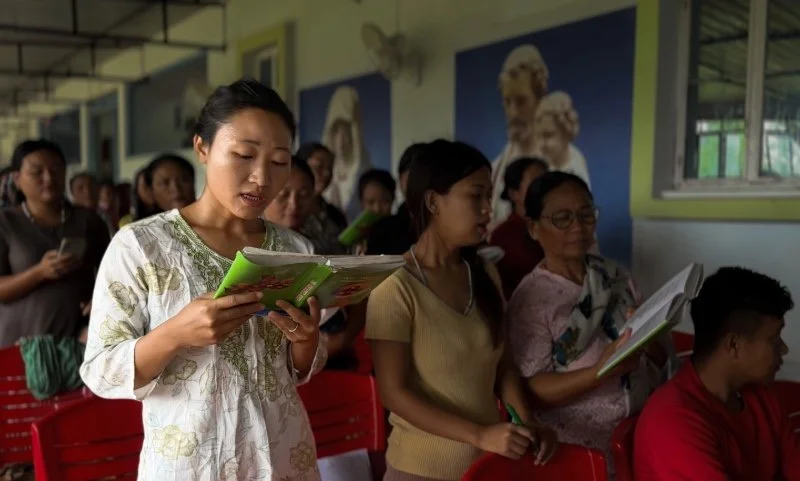

Some platforms aren’t waiting and have started building financial tools into their own apps instead. Zomato added a feature from the fintech company Fixerra to its delivery partner app in August 2024, letting workers put away as little as 100 rupees a month in savings. More than 4,500 delivery partners have used it, and by March 2026 they had saved over 25 million (2.5 crore) rupees through it, the report said.
Urban Company’s Project Udaan offers women two-wheeler loans, manufacturer discounts, 10,000 rupees in down-payment support, free riding lessons and licensing assistance. As of December 2025, about 1,100 women had received riding training and 700 had purchased scooters, with average monthly loan instalments of about 4,000 rupees over two years and no defaults reported. A separate report cited found the down-payment subsidy increased weekly earnings by about 13% over seven to eight months for women who bought scooters through the program.
The brief recommended that the RBI and the Insurance Regulatory and Development Authority of India should jointly run small-scale pilot programs, testing new ideas on a limited group before rolling them out widely, to explore how gig workers’ earnings and social security records could be used to decide who qualifies for a loan, while checking that the process doesn’t unfairly penalise women whose income is interrupted by care work or illness. It also called for the two regulators to set up a single, simple complaints channel for financial products sold through platform apps, so a worker with a problem doesn’t have to figure out on her own which regulator to approach.
You have just read a News Briefing, written by Newsreel Asia’s text editor, Vishal Arora, to cut through the noise and present a single story for the day that matters to you. We encourage you to read the News Briefing each day. Our objective is to help you become not just an informed citizen, but an engaged and responsible one.
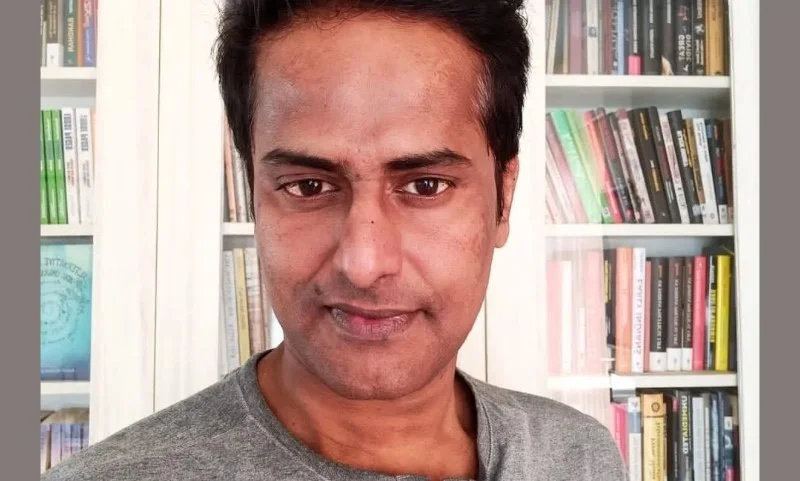

What happened in Mumbai on October 2 may have been only one day of protest, but the issues behind it are unlikely to disappear with the dispersal of the crowd. The protest was centred around concerns over the Election Commission, electoral rolls and the Special Intensive Revision (SIR) exercise, with protesters demanding accountability from Chief Election Commissioner Gyanesh Kumar. At the same time, similar mobilisation has been taking place across different parts of the country, with student groups, Opposition parties and civil society organisations raising concerns over the electoral process. Newsreel Asia spent the day at Mumbai Protest capturing the preparations, the police presence, conversations with protesters, the atmosphere on the streets and how the day unfolded. The speech of Cockroach Janta Party's leaders and sentiment of protestors seemed larger than the concerns regarding the electoral process. Will this lead to something bigger?