
Toxic Air Chokes Most Indian Cities, Not Just Delhi
From the Editor’s Desk
January 11, 2026
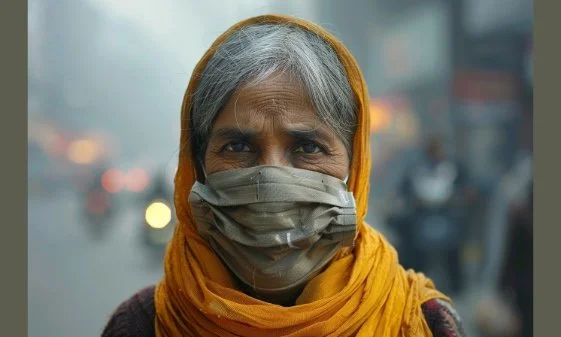
A new report shows that the majority of Indian cities are recording levels of air pollution far above the national safe standards. This shows that toxic air has become a daily reality across the country, while policies continue to misread the causes and fall short in delivering effective responses.
As many as 190 out of 229 Indian cities with adequate data continue to exceed the National Ambient Air Quality Standards (NAAQS) for PM10, which refers to tiny airborne particles measuring 10 micrometres or less, about one-seventh the width of a human hair. When inhaled, these particles can lodge deep in the lungs, triggering inflammation, aggravating asthma and bronchitis, and increasing the risk of long-term heart and lung disease.
This is as per the report by the Centre for Research on Energy and Clean Air, titled “Tracing the Hazy Air 2026,” which assesses progress under the National Clean Air Programme (NCAP), launched in 2019 by the Ministry of Environment, Forest and Climate Change.

Delhi, Ghaziabad and Greater Noida are among the worst affected, recording PM10 levels above 180 µg/m³, three times the safe limit. For PM2.5, 103 out of 231 cities recorded levels above the national standard of 40 µg/m³. In Delhi and Ghaziabad, PM2.5 levels were found to be more than double the limit. PM2.5 are fine airborne particles that are 2.5 micrometres or smaller in diameter, small enough to enter the bloodstream through the lungs, which poses more serious health risks, including heart attacks, strokes and reduced lung function.
Other severely affected cities include Jaipur and Udaipur in the west, Patna and Muzaffarpur in the east, Nagpur and Chandrapur in central India, Byrnihat in the northeast, and Bengaluru and Hyderabad in the south, all of which recorded PM10 or PM2.5 levels breaching national safety thresholds.
In the Indo-Gangetic Plain, one of the most densely populated regions in the world, 60 of the 61 cities with valid data exceeded safe limits for PM10, and 47 of 61 cities did so for PM2.5. In 2025, 14 cities around the capital city of Delhi recorded PM10 levels above the national standard, and 12 of them also breached the PM2.5 limit, based on cities with year-round monitoring data. States including Rajasthan, Bihar, Uttar Pradesh, Odisha, Punjab and West Bengal saw nearly all monitored cities breach safe air quality limits.

Even where pollution levels fell, they remained dangerously high. Among 100 NCAP cities with valid PM10 data, 77 cities showed some reduction. However, 68 of those still failed to meet the minimum national standards. These included cities such as Varanasi, Lucknow, Jaipur, Indore, Bhopal, Hyderabad and Bengaluru.
Monitoring infrastructure remains insufficient. Twenty-eight of the 130 NCAP cities still have no continuous air quality monitoring stations, including key locations such as Puri, Dharamshala, Silchar, Korba and Jalna. The report also flags serious issues in data quality, improper siting of equipment and poor maintenance, which undermine the reliability of the entire monitoring system.
Further, funds allocated under NCAP have not been fully utilised. Since the programme began, the government has released about 1.6 billion (13,400 crore) rupees, but only about 1.2 billion (9,900 crore) rupees has been spent. Of that, 68 percent went toward road dust management, while sectors like industrial pollution, domestic fuel use and public awareness each received less than 1 percent. Only 90 of the 130 NCAP cities have completed source apportionment studies to determine what is causing the pollution in their local context.
The NCAP aimed to reduce PM10 pollution levels in 130 cities by 20 to 30 percent by 2024–25, based on 2017–18 levels. That target has now been revised to a 40 percent reduction or to meet the NAAQS of 60 micrograms per cubic metre by 2025–26. But according to the report, only 23 cities have met the revised target.
Despite what amounts to a public health crisis, the government’s response does not reflect a sense of urgency. The slow expansion of monitoring infrastructure, underuse of allocated funds and the continued absence of source identification studies in dozens of cities point to a programme running on administrative routine rather than public health priority. With spending heavily skewed toward road dust while industrial emissions, domestic fuel use and public engagement remain neglected, the pattern suggests that air pollution is being treated more as a compliance exercise than a serious threat to the health of millions.
An international report by a global research collaboration, the Lancet Countdown, revealed in October 2025 that India accounted for nearly 70% of all global deaths caused by air pollution. The report estimated that PM2.5 pollution in India was responsible for around 1.72 million deaths each year, marking a sharp 38% rise since 2010.
You’ve just read a News Briefing written by Newsreel Asia’s Text Editor, Vishal Arora, meant to cut through the noise and bring you one important story of the day. We invite you to read the News Briefing daily. Our aim is to help you become a sharp, responsible and engaged citizen who asks the right questions.
What happened in Mumbai on October 2 may have been only one day of protest, but the issues behind it are unlikely to disappear with the dispersal of the crowd. The protest was centred around concerns over the Election Commission, electoral rolls and the Special Intensive Revision (SIR) exercise, with protesters demanding accountability from Chief Election Commissioner Gyanesh Kumar. At the same time, similar mobilisation has been taking place across different parts of the country, with student groups, Opposition parties and civil society organisations raising concerns over the electoral process. Newsreel Asia spent the day at Mumbai Protest capturing the preparations, the police presence, conversations with protesters, the atmosphere on the streets and how the day unfolded. The speech of Cockroach Janta Party's leaders and sentiment of protestors seemed larger than the concerns regarding the electoral process. Will this lead to something bigger?