
Most Indians Die Without the State Verifying a Medical Cause
From the Editor’s Desk
January 12, 2026
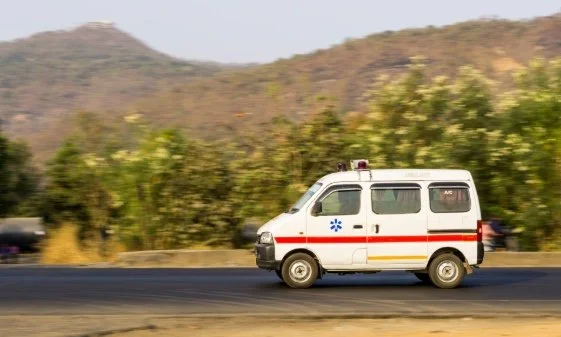
Nearly 78 percent of all deaths in India occur without any verified medical cause, according to a new report. The state does not know and does not even try to confirm what killed the vast majority of its citizens. The absence of basic data cripples the country’s ability to identify disease patterns, plan healthcare services, or respond to emerging threats.
In countries with strong mortality surveillance systems, nearly all deaths are medically certified. For example, Sweden, the United Kingdom and Japan certify close to 100 percent of deaths with clear, medically reviewed causes. These countries maintain real-time tracking of public health trends, allowing early detection of epidemics, accurate estimates of disease burdens and targeted policy responses.
In contrast, India certifies only 22.5 percent of deaths, and this figure has improved by just 2.5 percent over the past decade, according to the report, published in the Nature.com’s journal Scientific Reports and produced by researchers from the Indian Council of Medical Research.

The report looked at 15 years of data, from 2006 to 2020, to understand how well different parts of India recorded the medical cause of deaths. It grouped states and Union Territories into three categories, based on how reliably they certified the cause of death through doctors. In technical terms, this is called Medical Certification of Cause of Death, or MCCD.
The first group, called Cluster 1, included 23 states with the poorest performance. On average, only 18 percent of deaths in these states were medically certified. In most of them, only about one in four hospitals even submitted this data. These states also had the fewest doctors, just 0.14 doctors for every 1,000 people, compared to nearly double that in better-performing regions.
States in the South and West, like Tamil Nadu, Andhra Pradesh and Goa, reported far better results. Tamil Nadu improved its certification rate from 28 percent to 43 percent. Goa certifies nearly every death. On the other hand, states like Uttar Pradesh, Bihar and Haryana are still far behind, with little progress over the years. Union Territories show wide variation too. Lakshadweep certifies over 94 percent of deaths, while Delhi lags behind at 57 percent.

The study found that just building more hospitals does not help. Only 40 percent of hospitals in the country are even registered to report MCCD data. Of these, many do not actually report anything. In the worst-performing states, only 15 percent of hospitals are both registered and actively reporting. In contrast, the better-performing regions have over 90 percent of hospitals consistently sending in certified death data.
The most important takeaway is that it is not the number of hospitals or even the number of doctors that matters most in this area. What matters is whether hospitals are actually participating in the system and doing the work of certifying deaths. Public health experts call this institutional participation, and it turns out to be the strongest predictor of good performance.
In public health, knowing how people die is essential. Without that knowledge, governments cannot see which diseases are becoming more common or which communities are most at risk, and policies end up based on guesswork. Resources may also be spent in the wrong places. Further, warnings about rising suicide rates, chronic illness or sudden infections may come too late.
The lack of certification also means that most health data in India is based on the small number of states that report well. As a result, national health estimates are likely skewed toward richer or more urban regions. The poorer and more rural states, where the need for public health investment is often greater, are left out of the picture.
This brings up a key public health idea. Fairness in health starts with fairness in data. Many states in Cluster 1 are poorer, more rural and have weaker infrastructure. If no one knows how people are dying in these areas, then health policy will keep ignoring them.
The difference in reporting between states also reflects how India’s healthcare system is managed. Health is mostly controlled by state governments. The report shows that what states choose to do, how they enforce death registration laws, support hospital reporting and set health priorities, makes a big difference. Chhattisgarh, for example, increased its certification rate from 7 to 20 percent. But its neighbour Jharkhand stayed below 5 percent, even though both started from a similar place.
The single most urgent problem is the lack of active reporting by hospitals. Two states may have similar infrastructure, but one performs much better simply because more hospitals are doing their job. States where hospitals are registered but do not report have much lower certification rates. This makes clear that just spending more is not enough. Hospitals need support, monitoring and motivation to participate fully.
It should also be noted that many people in India still die outside of hospitals. Even inside hospitals, there are not enough trained staff to certify causes of death. Doctors may be overburdened or unaware of how to fill in the forms. And the legal system for enforcing certification is weak.
For families, this has serious consequences. If someone dies from an illness that was never diagnosed or recorded, the system learns nothing. That death does not help prevent the next one. In a pandemic, or in areas affected by floods, pollution or displacement, missing death data can make it impossible to respond in time.
The report recommended targeted support for Cluster 1 states to increase the number of hospitals both registered for and actively reporting cause of death data. This could involve public awareness campaigns, staff training, routine audits, and administrative or financial incentives. High-performing regions like Goa and Lakshadweep offer working models that others can adapt. However, without political commitment and pressure to act, these gaps are likely to persist.
You’ve just read a News Briefing written by Newsreel Asia’s Text Editor, Vishal Arora, meant to cut through the noise and bring you one important story of the day. We invite you to read the News Briefing daily. Our aim is to help you become a sharp, responsible and engaged citizen who asks the right questions.
What happened in Mumbai on October 2 may have been only one day of protest, but the issues behind it are unlikely to disappear with the dispersal of the crowd. The protest was centred around concerns over the Election Commission, electoral rolls and the Special Intensive Revision (SIR) exercise, with protesters demanding accountability from Chief Election Commissioner Gyanesh Kumar. At the same time, similar mobilisation has been taking place across different parts of the country, with student groups, Opposition parties and civil society organisations raising concerns over the electoral process. Newsreel Asia spent the day at Mumbai Protest capturing the preparations, the police presence, conversations with protesters, the atmosphere on the streets and how the day unfolded. The speech of Cockroach Janta Party's leaders and sentiment of protestors seemed larger than the concerns regarding the electoral process. Will this lead to something bigger?