
The Problem With West Bengal’s Election Officer Becoming the Chief Secretary
From the Editor’s Desk
May 15, 2026

Photo by Al Jazeera, licensed under CC BY-SA 2.0.
The new Bharatiya Janata Party (BJP) government in West Bengal has appointed Manoj Agarwal, the state’s former Chief Electoral Officer (CEO), as the next Chief Secretary, the highest-ranking bureaucrat in the state administration. The decision draws attention because Agarwal was the official responsible for overseeing the electoral process in the state, including the controversial Special Intensive Revision (SIR) of voter rolls, before being elevated into the executive structure of the government that later won the election.
The concern is that elections require voters to trust that the officials managing the process operate independently of the governments contesting those elections. And this trust depends partly on legal safeguards that exist on paper and partly on public confidence that election administrators remain institutionally separate from any political reward system.
The Election Commission appointed Agarwal as West Bengal’s CEO in March 2025 after reportedly rejecting the state government’s first shortlist of candidates. The Commission wanted an officer whose retirement would take place only after the 2026 Assembly election cycle, according to The Indian Express. The reasoning was that an officer nearing retirement after the election would, in theory, face less pressure from the ruling state government because future postings or promotions would hold less significance.
That logic itself recognised the sensitivity of election administration in a politically polarised state like West Bengal. The Election Commission appeared to want visible distance between the electoral machinery and the state government.

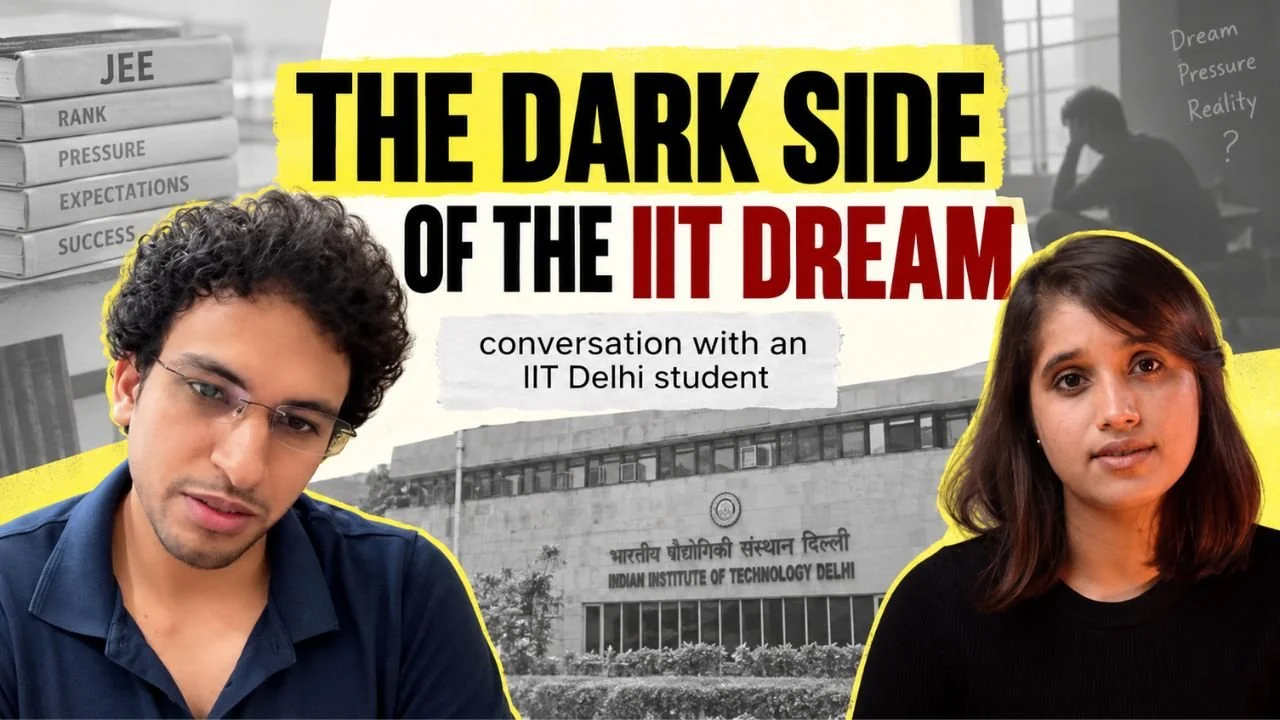
During Agarwal’s tenure, the SIR exercise removed around 9.1 million (91 lakh) names from the electoral rolls. Of course, electoral roll revisions are legally permitted exercises intended to remove duplicate, deceased, or ineligible voters. However, exercises of this scale almost always become politically contentious because they directly affect who can participate in elections.
The Trinamool Congress (TMC) repeatedly accused Agarwal of bias during the revision process. The party formally complained to the Election Commission, alleging partisan conduct favouring the BJP.
TMC leaders also referred to a 2013 CBI chargesheet alleging that Agarwal and his wife had accumulated disproportionate assets, according to the Express. A Delhi court acquitted him in 2018. The CBI challenged that acquittal in 2020, and the appeal remains pending before the Delhi High Court. Legally speaking, the acquittal still stands unless overturned by a higher court.
The question is not whether the appointment followed formal procedure, but how ordinary citizens will view it.
The BJP defended Agarwal’s appointment by arguing that he was simply the senior-most IAS officer serving in the state and therefore deserved the post under established bureaucratic norms. Seniority is indeed an important principle in civil services, and precisely because it is expected to reduce arbitrary appointments and internal factionalism within the bureaucracy.
It’s important to acknowledge that election officials occupy a particularly sensitive institutional position. Their role resembles that of judges, constitutional regulators, or central bankers, offices where public confidence depends heavily on visible independence. Even if an official follows every rule correctly, later accepting a powerful position from a government connected to a contested electoral process can create the impression that institutional boundaries are weaker than they appear on paper.
The timing of the appointment deepens that perception. Days before naming Agarwal as Chief Secretary, the BJP government also appointed Subrata Gupta, the Election Commission’s special observer for West Bengal, as an adviser to Chief Minister Suvendu Adhikari. Together, the two appointments may create the impression that officials associated with supervising or observing the election process are gradually moving into positions within the executive structure of the victorious government.

That is where the Election Commission’s earlier reasoning becomes important. The Commission reportedly wanted a CEO insulated from state government pressure. The later appointment to the Chief Secretary’s post may blur that separation retrospectively. The very distance the Commission tried to preserve now appears much narrower.
For voters, the distinction between electoral authority and executive power carries enormous importance. Citizens vote with the belief that the officials conducting elections answer to constitutional rules rather than political interests. That belief must be treated as sacred.
The office of the Chief Secretary itself adds to the seriousness of the issue. The Chief Secretary is the administrative head of the state bureaucracy. The position oversees coordination between departments, influences senior bureaucratic postings, manages file movement, supervises implementation of government decisions, and acts as the main link between the state and Union governments. It is one of the most powerful bureaucratic offices in the state.
Many actions may remain technically legal while still weakening public confidence in neutrality. A judge accepting a government appointment immediately after deciding politically sensitive cases would generate similar concerns, even if no law explicitly prohibited it.
The larger issue here is whether officials supervising elections may begin perceiving that maintaining good relations with powerful governments could benefit their careers after retirement or transfer.
You have just read a News Briefing, written by Newsreel Asia’s text editor, Vishal Arora, to cut through the noise and present a single story for the day that matters to you. We encourage you to read the News Briefing each day. Our objective is to help you become not just an informed citizen, but an engaged and responsible one.
What happened in Mumbai on October 2 may have been only one day of protest, but the issues behind it are unlikely to disappear with the dispersal of the crowd. The protest was centred around concerns over the Election Commission, electoral rolls and the Special Intensive Revision (SIR) exercise, with protesters demanding accountability from Chief Election Commissioner Gyanesh Kumar. At the same time, similar mobilisation has been taking place across different parts of the country, with student groups, Opposition parties and civil society organisations raising concerns over the electoral process. Newsreel Asia spent the day at Mumbai Protest capturing the preparations, the police presence, conversations with protesters, the atmosphere on the streets and how the day unfolded. The speech of Cockroach Janta Party's leaders and sentiment of protestors seemed larger than the concerns regarding the electoral process. Will this lead to something bigger?