
By Vishal Arora
May 18, 2026
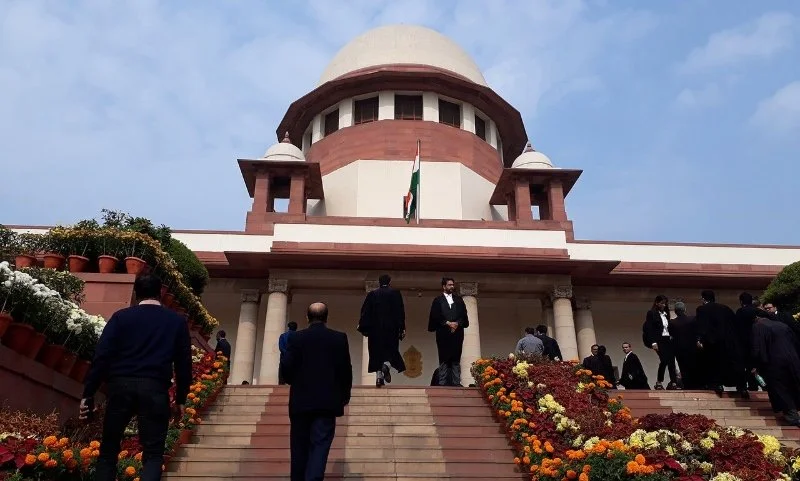
Photo by Pinakpani, licensed under Creative Commons.
Chief Justice of India Surya Kant recently made remarks reportedly comparing social media critics and people who “attack the system” to “parasites of society,” and unemployed young people to “cockroaches” who become activists, media figures, or online critics and “attack everyone.” Though he later said he was misquoted, the language used by holders of the country’s highest constitutional office carries obligations different from ordinary political speech.
The Chief Justice made the remarks during proceedings involving a lawyer seeking Senior Advocate designation, as reported by Hindustan Times. “There are already parasites of society who attack the system and you want to join hands with them,” he was quoted as saying. “There are youngsters, like cockroaches, who don’t get any employment or have any place in profession. Some of them become media, some of them become social media, RTI activists and other activists, and they start attacking everyone.”
Later, the Chief Justice stated, “I am pained to read how a section of the media has misquoted my oral observations made during the hearing of a frivolous case yesterday,” as quoted by Mint. “What I had specifically criticised were those who have entered professions like the Bar (legal profession) with the aid of fake and bogus degrees. Similar persons have sneaked into the media, social media, and other noble professions as well, and hence, they are like parasites.”
Judges, like all public officials, can lose patience in court. Indian courtrooms are often tense spaces filled with delays, professional rivalries, frivolous petitions, and occasionally outright misconduct. Senior judges also witness the darker side of public discourse every day, online abuse, misinformation campaigns, personal attacks and orchestrated trolling.

The concern here is not judges losing their temper, disciplining lawyers, or condemning irresponsible conduct. Judges absolutely can and should do that. The question is whether the language used by holders of constitutional office must reflect caution, restraint and awareness of the authority their words carry.
A Chief Justice does not speak merely as a private individual because the office itself represents constitutional authority. Constitutional democracies rely heavily on public faith in institutions. Courts have neither electoral mandate nor military power. Their legitimacy comes largely from public confidence that they will exercise immense authority with restraint, fairness, and respect for the equal dignity of citizens. That is why certain metaphors become deeply troubling once they come from holders of constitutional office.
Language comparing sections of society to insects or parasites carries historical baggage far larger than a moment of courtroom anger. In many political systems and historical periods, dehumanising metaphors have often emerged during periods of heightened institutional hostility toward critics or dissenters. Constitutional democracies remain healthiest when public institutions stay conscious of how their language can gradually influence public attitudes toward critics, activists, journalists and dissent itself.
The remarks also appear to reflect a deeper unease within many modern institutions about the widening of public speech and criticism beyond traditional elite spaces.


For decades, public influence in India flowed mainly through established newspapers, senior lawyers, political parties, elite universities and recognised public intellectuals. Digital media disrupted that structure. Today, a local RTI activist, independent journalist, YouTuber or unknown lawyer can suddenly influence a national conversation. This transformation has produced noise, misinformation, performative outrage and reckless allegations. But it has also widened democratic participation in public scrutiny.
The Right to Information (RTI) movement itself emerged from ordinary citizens demanding accountability over wages, welfare payments and corruption. Many journalists and activists work under financial insecurity precisely because accountability work rarely produces wealth or institutional protection. Some certainly cross ethical lines. Some weaponise outrage irresponsibly. But democratic systems depend on the existence of uncomfortable scrutiny. Courts, governments, corporations and political parties all operate better under conditions where citizens can ask difficult questions without being viewed as socially harmful elements.
This becomes especially important in relation to the judiciary because courts occupy a unique constitutional position. Citizens can punish governments through elections, while ministers face opposition parties, legislative scrutiny and constant political contestation. Judges exercise a different kind of authority. Contempt powers, institutional prestige and distance from electoral politics create a natural imbalance between courts and ordinary citizens. That imbalance demands judicial restraint precisely because judges exercise enormous constitutional authority.
A citizen hearing such remarks may reasonably wonder whether criticism itself is increasingly being viewed with suspicion within powerful institutions. Even if unintended, such impressions can gradually discourage democratic scrutiny and open criticism.
The irony is that Indian courts themselves have repeatedly defended dignity as a constitutional principle. Article 21 jurisprudence has expanded the idea of dignity to prisoners, accused persons, minorities, workers and vulnerable communities. Courts have often insisted that constitutional morality requires the state to treat even unpopular citizens with humanity and restraint. The judiciary has historically commanded greatest public respect when it rose above the language of public hostility and social polarisation.
You have just read a News Briefing, written by Newsreel Asia’s text editor, Vishal Arora, to cut through the noise and present a single story for the day that matters to you. We encourage you to read the News Briefing each day. Our objective is to help you become not just an informed citizen, but an engaged and responsible one.
Hundreds of protesters gathered at Bangla Sahib in Delhi at 1 PM on October 23 for a protest called by People Against SIR, a collective of over 100 organisations mobilising against the Election Commission of India’s Special Intensive Revision (SIR) of electoral rolls across the country. Along with detentions and use of force, security personnels are using another tactic - blowing whistles to silence the voices.