
Is the Government Combining the Census and the National Population Register?
From the Editor’s Desk
August 20, 2026

Is the government using the Census to quietly collect information for the National Population Register (NPR), even though it has not officially announced that the NPR is being updated? Former senior Census official K. Narayanan Unni told a media outlet that some of the 40 questions announced by the Home Ministry appear more useful for the NPR than for a normal Census.
The distinction between the two explains why he thought so. A Census collects information about the population as a whole, such as the number of people living in India, their ages and literacy levels, and their access to various services. The government uses this information to identify patterns and produce statistics for public policy. The NPR, by contrast, is a register of individual residents. It therefore requires information that can identify each person, including their name, address, parents’ names and family relationships.
Among the 40 questions announced by the Home Ministry are questions about people’s names, their parents’ names and their parents’ addresses, according to ThePrint, which quoted Unni as saying that such details are unnecessary for a Census, which, for example, does not count how many people share a particular name or surname. Their inclusion led him to suspect that the information may eventually be used to create or update the NPR.
The Census deliberately avoids creating identifiable personal records because everyone is legally required to answer its questions, and that extraordinary power is granted for one limited purpose, to produce population statistics needed for public policy. Its legitimacy depends on a clear assurance that information given to an enumerator will not later be used to investigate a person, determine citizenship, deny rights or benefits, or create an official identity record. If identifiable Census data could be transferred to another government database such as the NPR, the exercise would cross that boundary, allow information collected for statistics to be used for administrative or legal decisions, and discourage people, especially vulnerable communities, from answering honestly.

The new questionnaire also seeks a person’s spouse’s name, declared nationality, parents’ names, place of Covid vaccination, number of bank accounts and, if available, mobile, Aadhaar, voter ID, passport and driving-licence details.
Previous Census databases did not retain people’s names. Enumerators might write a name on the form to identify the respondent during collection, but the name was not entered into the final statistical database. It was unnecessary.
Unni also said the official technical committee had previously opposed combining the NPR with the Census. Its members generally believed that the two exercises should remain separate.
The government does have legal authority to conduct the NPR and require residents to provide prescribed information under the Citizenship Act and the Citizenship Rules, 2003. That settles the question of compulsion. The remaining issue is that the NPR information is collected under a different law, the Citizenship Rules of 2003. People must therefore be clearly told whether they are answering Census questions or NPR questions, under which law the information is being collected, whether answering each question is compulsory, and how the information may be used.
The NPR records everyone who usually lives in an area, regardless of citizenship. The concern is that during the preparation of an NRC, officials may scrutinise the details recorded in the NPR and mark some residents as having doubtful citizenship, after which they may be required to prove that they are Indian citizens. It is therefore feared that information collected for the NPR could later be used to determine whose name is included in the NRC and who is required to prove their citizenship.
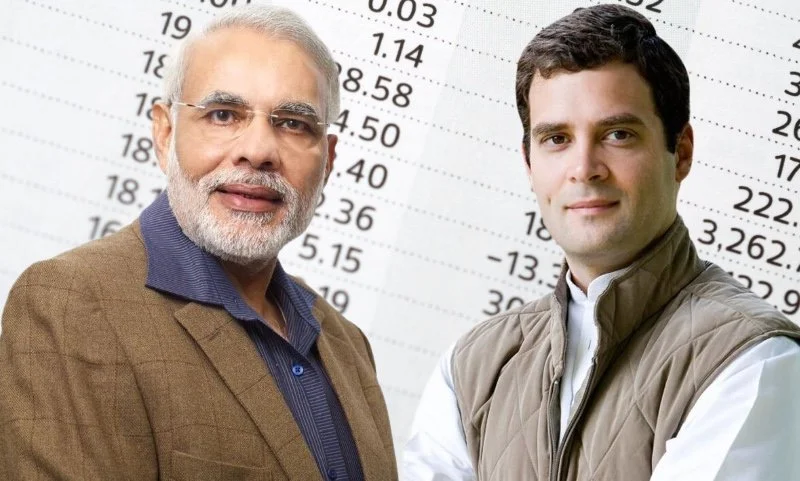
The NPR was created nationwide in 2010 by the Congress-led United Progressive Alliance government headed by Prime Minister Manmohan Singh. P. Chidambaram was the Union home minister, and the Cabinet approved the project and its funding. The legal authority for it, however, came from the Citizenship Rules of 2003, which had been made by the earlier BJP-led National Democratic Alliance government headed by Atal Bihari Vajpayee.

The UPA government’s stated purpose was to create a comprehensive identity database of every person who usually lived in India, including both citizens and non-citizens. It collected names, family relationships, places of birth, nationality and addresses, with plans to add photographs, fingerprints and iris scans. The government presented the NPR as a means of reliably identifying residents, preventing duplication and identity fraud, and eventually issuing identity cards. Security was also an important reason, particularly in coastal areas following the 2008 Mumbai attacks. NPR data collection had already begun in coastal states before being extended nationwide.
For administrative convenience, the government collected the NPR information in 2010 alongside the house-listing phase of the 2011 Census.
Crucially, it used a separate NPR form.
You have just read a News Briefing, written by Newsreel Asia’s text editor, Vishal Arora, to cut through the noise and present a single story for the day that matters to you. We encourage you to read the News Briefing each day. Our objective is to help you become not just an informed citizen, but an engaged and responsible one.


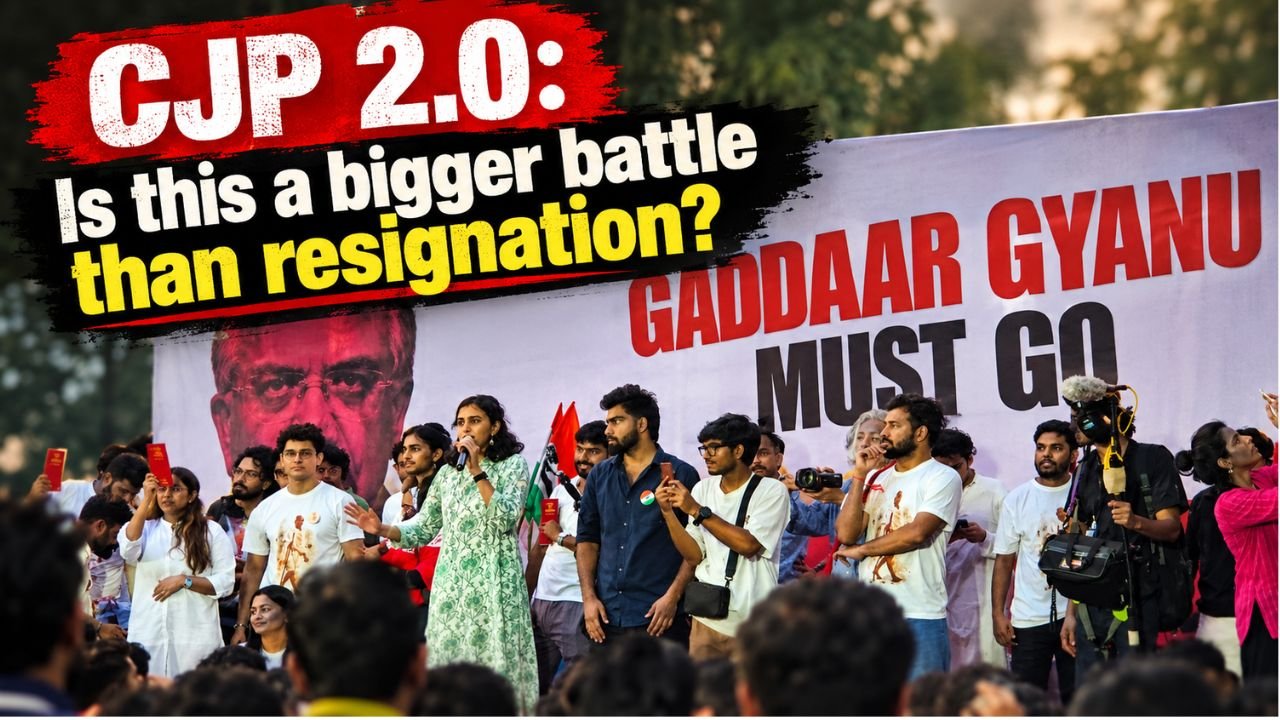
On October 12, opposition leaders, MPs, MLAs, student organisations and political workers came together in a massive march against Chief Election Commissioner Gyanesh Kumar, raising serious concerns over the Special Intensive Revision (SIR) of electoral rolls and the alleged mass deletion of voters’ names. The march brought together a broad coalition, including the INDIA bloc, AISA, SFI and other student unions, as part of a wider nationwide mobilisation against the SIR exercise and concerns surrounding electoral integrity.