
Supreme Court Raises Alarm Over States’ Free Electricity Push
From the Editor’s Desk
February 21, 2026
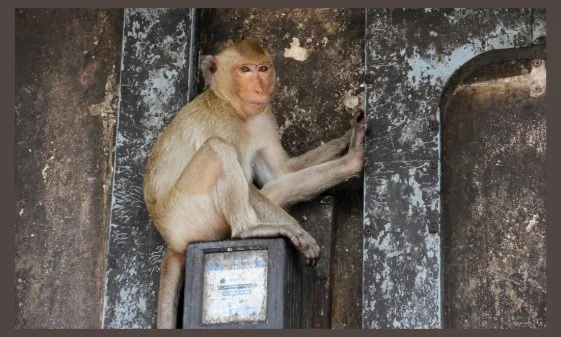
The Supreme Court has questioned the Tamil Nadu government’s policy of providing free electricity to certain consumer groups, opening a wider debate about where welfare support ends and political freebie culture begins. The central concern in this dispute is how far governments can expand subsidies without putting public finances and long-term development under strain.
The case comes from a challenge linked to the 2024 Electricity Amendment Rules, which require electricity tariffs to reflect the actual cost of supply and limit how large the gap can be between what power companies earn and what they spend. Tamil Nadu argues that the rules restrict its ability to provide subsidised electricity, which it treats as part of its social welfare policy.
During the hearing, the bench led by Chief Justice Surya Kant offered a sharp critique of what it described as a growing national pattern of distributing benefits without distinguishing between those who truly need support and those who can afford to pay, as reported by Hindustan Times. The judges questioned whether governments were leaning towards short-term electoral gains instead of investing in long-term infrastructure. They repeatedly raised the question of who ultimately pays for such schemes, and whether citizens expect public money to be used for roads, hospitals and schools. The bench also stressed that electricity tariffs should broadly reflect actual costs and warned that continuing revenue gaps in the power sector carry risks for public finances.

The remarks place the Court within a longstanding debate in political economy about the use of limited public resources by democratic governments. From a political science viewpoint, the case reflects the logic of distributive politics. In highly competitive electoral systems, political parties often use material benefits to build and retain voter support.
This phenomenon has been described by Susan Stokes, an American political scientist known for her work on “clientelism,” a system in which political leaders or parties exchange targeted material benefits, such as cash, jobs or subsidies, for voters’ electoral support. Stokes argued that many democracies use material benefits to secure voter loyalty, especially where many citizens depend heavily on state support and have limited trust in public institutions. Her research suggests that this pattern can deepen democratic participation in the short term by bringing voters into the political process, yet it can also weaken program-based politics over time by shifting competition toward the distribution of benefits rather than the delivery of broad public goods.
Tamil Nadu offers a clear example of this pattern. For decades, rival political parties in the state have made generous welfare promises a routine part of election politics, including free electricity for farmers and households. Over time, many voters have come to see these benefits as normal entitlements. Once that happens, any government that tries to withdraw them faces serious political risk.
Political economist Douglass North has explained this dynamic through the idea of “path dependence,” which means that early policy decisions shape public expectations, and those expectations later lock governments into continuing the same policy even when financial pressure rises.

The Court’s concern also links to a basic question in public finance, which is how governments allocate their spending. Economists usually separate spending that builds future economic strength, such as infrastructure, health and education, from spending that mainly supports present-day consumption.
German-American economist Richard Musgrave, who helped develop modern public finance theory, said the state performs three main roles, allocating resources, redistributing income and stabilising the economy. Electricity subsidies fall into redistribution. Building roads, hospitals and power networks falls into resource allocation. The dispute in Tamil Nadu is focused on the concern that public money is limited, and greater spending on broad subsidies leaves less room for long-term investment.
Tamil Nadu’s defence is based on a well-recognised development argument, that affordable electricity can help farmers, support small businesses and improve living standards at home. Indian economist and Nobel laureate Amartya Sen argued that public spending which expands people’s real freedoms can strengthen long-term development. From this viewpoint, subsidies by themselves do not automatically create financial stress. Their impact depends on who receives them, how clearly they appear in the budget and how carefully the government manages the cost.
The Court, however, is focusing on a different risk. Electricity distribution companies across many Indian states remain under heavy financial strain because tariffs often stay below the real cost of supply. The resulting losses build up year after year and usually require support from state budgets. Public choice theory, associated with economist James Buchanan, helps explain why this pattern persists. Elected governments often prefer policies that deliver quick and visible benefits to voters, while investments in infrastructure produce results more slowly. Voters, in turn, tend to respond more strongly to immediate relief than to projects whose gains appear years later.
The 2024 tariff rules attempt to tighten financial discipline in the electricity sector. This simply means utilities are expected to live within their means instead of depending on repeated government rescue. Hungarian economist János Kornai explained that organisations that expect frequent bailouts tend to keep accumulating losses. By limiting how large the revenue gap can grow and by requiring old losses to be cleared within a fixed time, the rules aim to restore financial credibility in the power system.
India’s federal structure adds another layer to the dispute. The Constitution gives states wide authority over social welfare programmes. Tamil Nadu has argued that strict tariff rules framed at the national level cut into this space.
The Court’s intervention therefore brings into focus a deeper structural tension in India’s political economy. The central policy challenge for states, including Tamil Nadu, lies in protecting vulnerable households while also preserving the financial and infrastructure base needed for long-term growth.
You have just read a News Briefing, written by Newsreel Asia’s text editor, Vishal Arora, to cut through the noise and present a single story for the day that matters to you. We encourage you to read the News Briefing each day. Our objective is to help you become not just an informed citizen, but an engaged and responsible one.
What happened in Mumbai on October 2 may have been only one day of protest, but the issues behind it are unlikely to disappear with the dispersal of the crowd. The protest was centred around concerns over the Election Commission, electoral rolls and the Special Intensive Revision (SIR) exercise, with protesters demanding accountability from Chief Election Commissioner Gyanesh Kumar. At the same time, similar mobilisation has been taking place across different parts of the country, with student groups, Opposition parties and civil society organisations raising concerns over the electoral process. Newsreel Asia spent the day at Mumbai Protest capturing the preparations, the police presence, conversations with protesters, the atmosphere on the streets and how the day unfolded. The speech of Cockroach Janta Party's leaders and sentiment of protestors seemed larger than the concerns regarding the electoral process. Will this lead to something bigger?