
India Averaged Over 3 Hate Speech Events Per Day in 2025, Says Report
From the Editor’s Desk
January 15, 2026
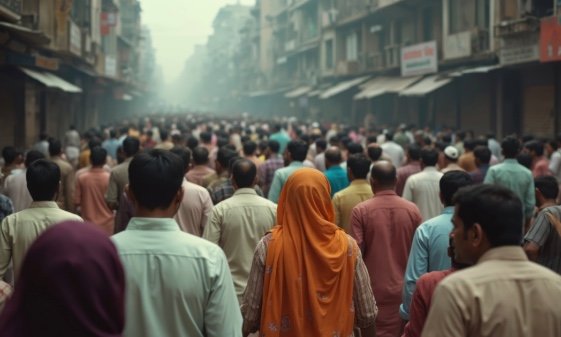
In 2025, India recorded 1,318 in-person hate speech events, averaging more than three per day and overwhelmingly led by Hindu nationalist groups and political actors affiliated with the ruling Bharatiya Janata Party (BJP), according to a report by the India Hate Lab. The report supports the inference that a political choice is behind the sustained scale of public incitement, which undermines both the rule of law and the idea of equal citizenship.
The 400-page report presents data that show a steady, organised ecosystem of hate mobilised largely against India’s Muslim and Christian minorities. Of the 1,318 incidents, 98 percent targeted Muslims either alone or along with Christians.
Uttar Pradesh, Maharashtra and Madhya Pradesh saw the highest numbers, and April had the sharpest spike, coinciding with both Ram Navami processions and public mobilisation following the Pahalgam terror attack, according to the India Hate Lab, a research project based in Washington, D.C. in the United States and led by Indian American researchers and journalists, that tracks and analyses hate speech and organised hate in India.

The majority of speeches were tied to Hindu nationalist organisations including the Vishwa Hindu Parishad, Bajrang Dal and Antarrashtriya Hindu Parishad. Over 50 percent included conspiracy theories such as “love jihad,” “land jihad” and “thook jihad.”
“Love jihad” claims that Muslim men deceive Hindu women into relationships or marriage to convert them to Islam. “Land jihad” alleges that Muslims systematically encroach on public or forest land to expand religious influence and shift local demographics. “Thook jihad” accuses Muslims of intentionally spitting in food meant for Hindus to contaminate it or insult religious purity.
Nearly a quarter of speeches contained direct calls for violence or arms. Others promoted economic and social boycotts, or the destruction of religious sites.
The report adopts the United Nations definition of hate speech and uses the six-point test of the Rabat Plan of Action, a United Nations framework that sets a legal threshold for identifying hate speech that qualifies as incitement to discrimination, hostility, or violence. It includes speaker status, intent, reach and likelihood of violence, to classify events. The India Hate Lab says it used data drawn from verified videos and reports, tracked across newspapers, digital platforms and a network of field reporters.
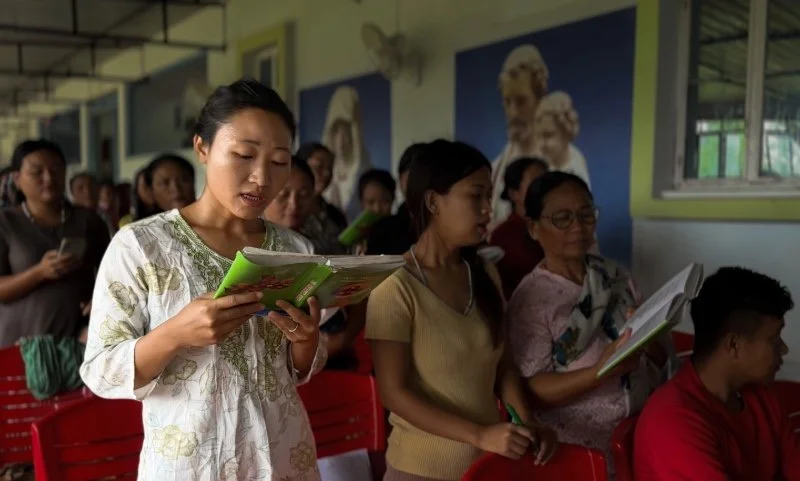

Nearly all of the 1,318 hate events were broadcast online, mainly through Facebook, YouTube and Instagram.
A total of 88 percent of these events took place in states ruled by the BJP or its National Democratic Alliance (NDA) allies, with several incidents led directly by sitting ministers or party functionaries. BJP leaders also emerged among the top 10 individual purveyors of hate speech, alongside religious leaders and self-styled monks. In contrast, hate speech in opposition-ruled states fell by a third in 2025.
The recurring use of hate speech in public life violates the basis of state authority, which rests on a “social contract.” This idea holds that citizens agree to be governed in return for equal protection under the law. A state that enables or even tolerates violence against sections of its own population breaks that agreement. Political theorist John Locke argued that such a government forfeits its legitimacy because it no longer protects rights but instead endangers them.
The Indian state’s toleration, and in many cases apparent active support, of hate speech points to a transformation in the very function of the state. In democratic theory, the state is meant to act as an impartial guarantor of rights, applying the law equally to all citizens regardless of identity. But where the state enables or aligns itself with majoritarian hostility, it takes on a partisan role, using its institutions to enforce ideological goals rather than legal principles.
Sociologist Max Weber defined the modern state as the institution that claims a monopoly over the legitimate use of violence within its territory. This means that only the state can lawfully use force through institutions such as the police, the courts or the military, and it can do so only to uphold the law and protect all citizens equally. That is what makes the state’s use of violence legitimate, rather than coercive or criminal.
The sustained targeting of minorities through legal, cultural and physical means also exposes the erosion of equal citizenship. The language used in these speeches, like calling Muslims “termites,” “zombies,” and “parasites,” strips entire communities of moral and political legitimacy. Philosopher Hannah Arendt observed that totalitarian regimes begin by stripping certain groups of the “right to have rights,” making their exclusion appear justified within the political order. Her insight helps explain how sustained public vilification and legal targeting can gradually render minority groups socially invisible and politically defenceless, even in systems that still claim to be democratic.
The use of conspiracy theories to justify discrimination reflects what sociologists describe as “moral panic,” a manufactured crisis that portrays a minority group as a danger to the moral and social order. Terms like “population jihad” and “vote jihad” lend an illusion of logic to an imagined threat. These narratives create public support for exclusionary laws and policies.
One of the most troubling aspects documented in the report is how hate speech has become embedded in electoral strategy. The data show that senior political figures, including chief ministers and union ministers, repeatedly delivered hate speeches during election campaigns in states such as Delhi and Bihar, where they were officially appointed as campaign leaders. Many hate speech events were timed to coincide with state elections or followed national security incidents, suggesting a deliberate use of communal rhetoric to mobilise voters. The report also notes that these patterns continue even outside election periods, which indicates a long-term strategy to keep polarisation active in the lead-up to future elections.
Political theorist Chantal Mouffe warned that democracy begins to deteriorate when political competition turns into a battle between “enemies” rather than a contest between “legitimate rivals.” In such a climate, those in power stop presenting themselves as guardians of rights, equality or constitutional values. Instead, they claim authority by defending what they call the true culture or identity of the nation. This begins to redefine political legitimacy as the ability to protect a dominant group, not to uphold equal rights for all. It replaces the language of law and representation with the language of loyalty and belonging, fundamentally changing how democracy functions.
Lastly, the entrenchment of hate speech through public ceremony, including trishul deeksha events, religious processions and oath-taking rallies, suggests that hate is being ritualised. The incorporation of hate into civic and religious routines sends a clear message that minorities are unwanted and expendable in the project of building majoritarian unity.
You’ve just read a News Briefing written by Newsreel Asia’s Text Editor, Vishal Arora, meant to cut through the noise and bring you one important story of the day. We invite you to read the News Briefing daily. Our aim is to help you become a sharp, responsible and engaged citizen who asks the right questions.
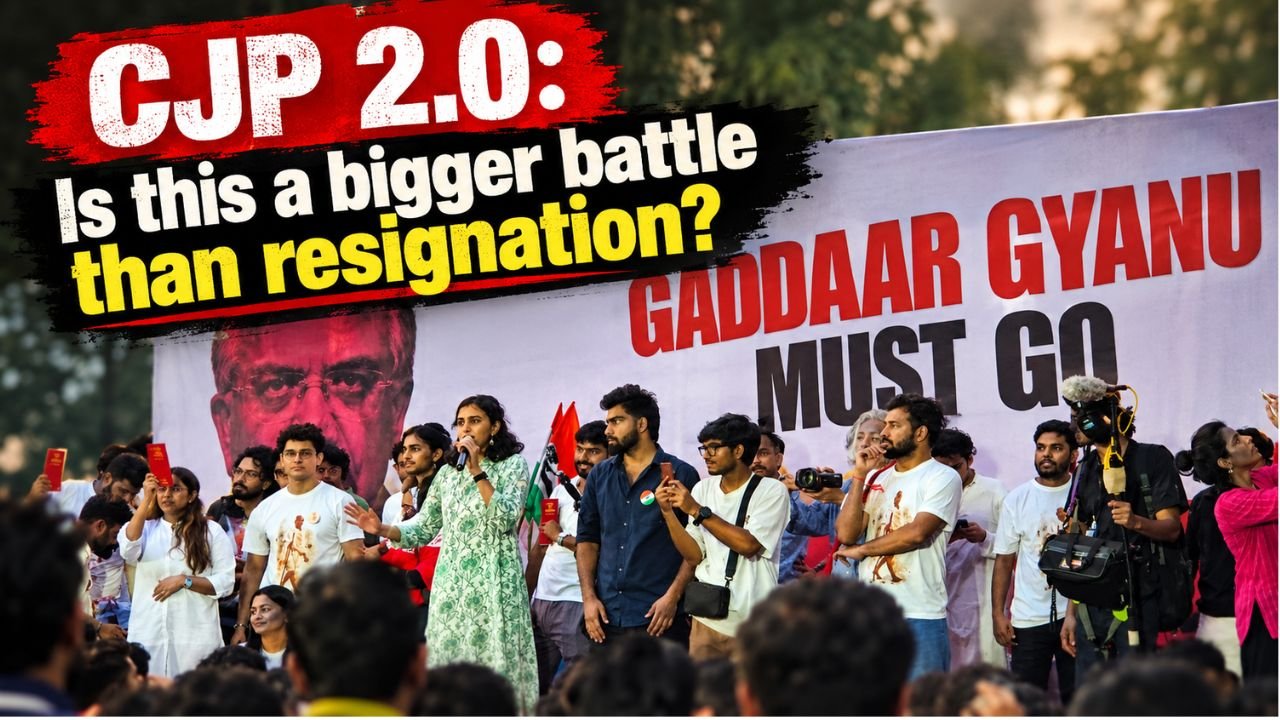
On October 12, opposition leaders, MPs, MLAs, student organisations and political workers came together in a massive march against Chief Election Commissioner Gyanesh Kumar, raising serious concerns over the Special Intensive Revision (SIR) of electoral rolls and the alleged mass deletion of voters’ names. The march brought together a broad coalition, including the INDIA bloc, AISA, SFI and other student unions, as part of a wider nationwide mobilisation against the SIR exercise and concerns surrounding electoral integrity.