
Indian Youth’s ‘Cockroach’ Party Now the Biggest on Instagram; What’s Their Message?
From the Editor’s Desk
May 22, 2026
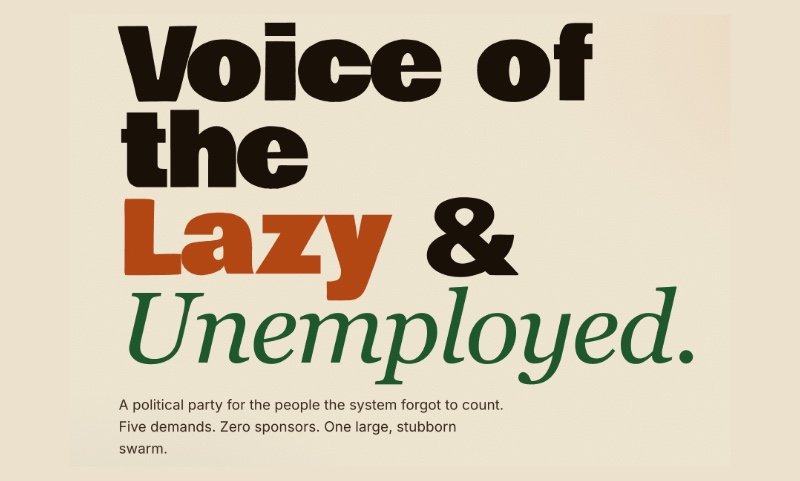
A satirical Indian political movement, called the Cockroach Janta Party (CJP) and built entirely on internet culture, has gained more than double the Instagram following of the ruling Bharatiya Janata Party (BJP), just days after being founded in response to remarks by the country’s chief justice allegedly comparing unemployed young people to insects. Its rapid rise signals the depth of frustration among a generation burdened by unemployment, exam fraud and what appears to be growing distrust toward institutions.
On the morning May 22, the CJP, a parody of the BJP and which brands itself as the “Voice of the Lazy and Unemployed,” reached nearly 19 million followers on Instagram. The BJP, which has long promoted itself as the world’s largest political party, holds 8.7 million followers on the platform. The Indian National Congress leads Indian political parties on Instagram with 13.2 million followers.
The movement was launched after Chief Justice of India (CJI) Surya Kant reportedly compared sections of unemployed youth to “cockroaches” and “parasites of society” during a courtroom proceeding; the CJI later said he was “misquoted.” Rather than rejecting the label, young internet users adopted it. The party’s handle, @cockroachjantaparty, launched on May 16, crossed 3 million followers within 78 hours of its launch. On X, CPJ’s account was withheld, and the “party” promptly started a new account, Cockroach is Back.
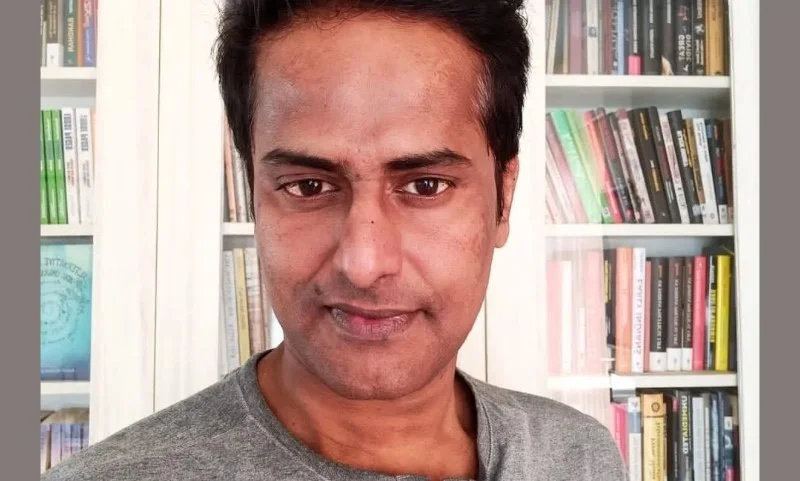
Abhijeet Dipke, the 30-year-old founder, is a political communication strategist pursuing a master’s degree in Public Relations at Boston University in the United States. Between 2020 and 2022, he volunteered with the Aam Aadmi Party (AAP)’s social media team and contributed to meme-driven campaigns during the 2020 Delhi Assembly elections. He posted a Google Form on X for people to formally register as members, and more than 350,000 people have reportedly signed up online.

Demands
The CJP openly describes itself as satire, but it has published a formal set of demands. Its manifesto calls for barring Chief Justices from receiving post-retirement Rajya Sabha (Upper House of Parliament) seats, strict action against deletion of valid votes, electoral bans for legislators who defect from their parties, action against media outlets that spread misinformation, and greater representation for women in governance.
The CJP’s messaging on social media has also repeatedly criticised communal polarisation and the constant focus on religious divisions in national political discourse. Its posts argue that public attention is being diverted toward identity conflicts while everyday governance issues such as unemployment, examination scandals, pollution, inflation and public services receive inadequate scrutiny.
The demands reveal a coherent distrust of institutions, especially institutions that younger Indians increasingly believe operate through elite networks insulated from public accountability. That’s what Irish political scientist Peter Mair meant when he argued that many democracies may enter a phase where people participate in elections but steadily lose emotional faith in the institutions surrounding them.
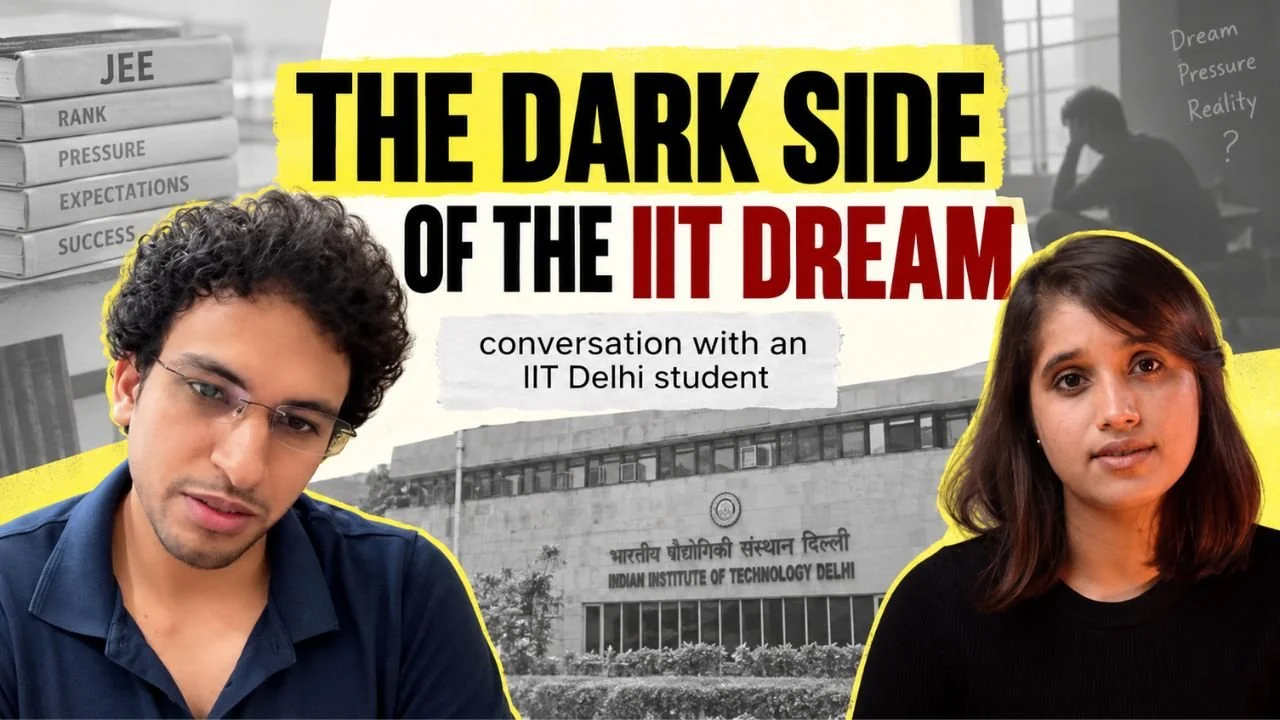
Youth unemployment has formed a persistent backdrop to the movement’s rise. Data from the Centre for Monitoring Indian Economy (CMIE), an independent economic research organisation, put India’s youth unemployment rate at 45.4 percent in 2022-23, against an overall national unemployment rate of 7.5 percent for the same period, a gap that had widened by more than 23 percentage points since 2017-18. That scale of joblessness among young people, compounded by the NEET exam scandal and alleged institutional indifference, gave the CJP’s satirical platform traction well beyond the meme-sharing communities where it began.
The party also released a protest song titled “Haan Main Hoon Cockroach,” meaning “Yes, I am a Cockroach,” targeting exam fraud and what supporters described as government failure. The NEET (centralised medical school entrance) exam paper leak was among the specific grievances cited by those drawn to the movement.

Significance of the Movement
The adoption of the word “cockroach” itself carries sociological significance. There is global precedence of communities and political groups taking insulting labels used against them and turning them into symbols of solidarity, pride or resistance. Dalit political movements in India, for instance, reclaimed identities that caste society had historically treated with contempt. Similarly, black civil rights movements in the United States transformed derogatory racial language and stereotypes into expressions of collective dignity and political assertion. This weakens the power of humiliation by refusing shame and converting stigma into shared identity.
In the case of the CJP, however, that reclamation is unfolding through internet humour, memes and irony rather than organised ideological mobilisation. The joke itself has become political language, allowing young people to express anger, alienation and distrust in a form that is instantly recognisable and shareable online. American political scientists W. Lance Bennett and Alexandra Segerberg called it “connective action.” In connective action, individuals join because they emotionally identify with a message or mood, not necessarily because they belong to a formal organisation.
Zizi Papacharissi, a Greek-American media scholar known for her research on digital culture, social media and the role of emotions in online political mobilisation, called it “affective public.” It refers to large groups of people who become politically connected online through shared emotions such as anger, humiliation, anxiety or irony, even if they have never met each other or joined a formal organisation. People feel politically connected because they are sharing the same emotional experience in digital space.
What’s important to acknowledge is that digital humour can function as an early stage of political consciousness, especially among younger citizens who feel disconnected from formal institutions and traditional party structures.
Signs of the movement gradually shifting from online expression into visible civic action are already emerging. On May 20, a group of young supporters wearing cockroach caps was seen cleaning the heavily polluted Yamuna River in Delhi. Several videos are also being circulated online under the label of “cockroach politics,” showing ordinary citizens confronting officials accused of neglecting their duties, abusing power or treating people with arrogance. Such acts suggest that the movement’s appeal may rest not only in satire or internet virality, but also in its attempt to convert shared frustration into public participation and symbolic acts of accountability.
You have just read a News Briefing, written by Newsreel Asia’s text editor, Vishal Arora, to cut through the noise and present a single story for the day that matters to you. We encourage you to read the News Briefing each day. Our objective is to help you become not just an informed citizen, but an engaged and responsible one.

What happened in Mumbai on October 2 may have been only one day of protest, but the issues behind it are unlikely to disappear with the dispersal of the crowd. The protest was centred around concerns over the Election Commission, electoral rolls and the Special Intensive Revision (SIR) exercise, with protesters demanding accountability from Chief Election Commissioner Gyanesh Kumar. At the same time, similar mobilisation has been taking place across different parts of the country, with student groups, Opposition parties and civil society organisations raising concerns over the electoral process. Newsreel Asia spent the day at Mumbai Protest capturing the preparations, the police presence, conversations with protesters, the atmosphere on the streets and how the day unfolded. The speech of Cockroach Janta Party's leaders and sentiment of protestors seemed larger than the concerns regarding the electoral process. Will this lead to something bigger?