
From the Editor’s Desk
June 4, 2026
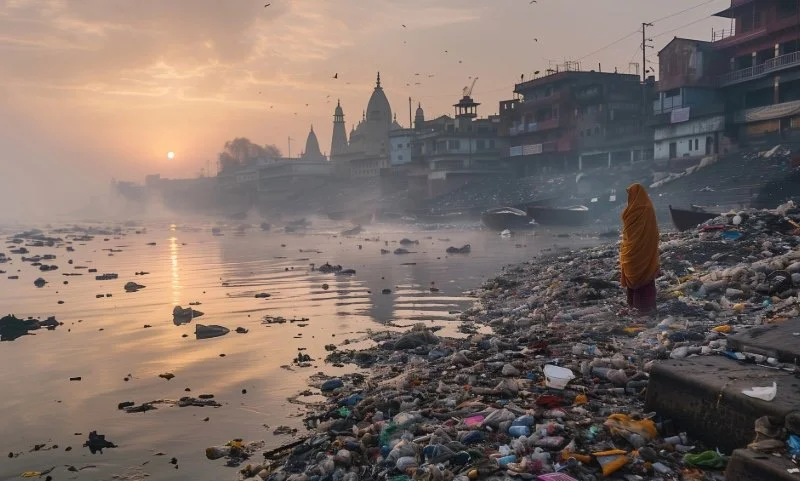
A study has found that 138 Indian cities belong to the category where economic expansion came with worsening air quality, the highest share of any country in the world at 35.4 percent of the global total. The finding raises a question about whose prosperity is being measured when the price of growth is paid in the air that everyone, regardless of income, has no choice but to breathe.
The study, published in Nature Cities and covering 5,435 cities worldwide between 2019 and 2024, used satellite-derived nitrogen dioxide measurements alongside city-level economic indicators to track the relationship between pollution and income, as reported by The Times of India.
Of the 902 Indian cities covered, 15.3 percent recorded a statistically significant rise in nitrogen dioxide levels over the five-year period. The researchers attributed this to private vehicle use, industrial activity, urban sprawl, and coal-based power generation. Nashik appeared in the study’s top 10 list within the polluted-but-wealthier category.
Globally, nearly 80 percent of cities showing clear trends were placed in the cleaner-and-wealthier category. China alone accounted for 719 cities in that group, with Beijing, Shanghai, Guangzhou and Chengdu recording falling pollution alongside rising incomes, a result the researchers linked to stricter environmental enforcement, relocation of high-emission industries, and rapid electrification of public transport.

Delhi, Mumbai and Kolkata showed signs of cleaner economic growth, while the burden of worsening air quality was concentrated in smaller and mid-sized cities, the very places where manufacturing clusters and conventional power generation remain the dominant engines of local income. This means the gains from growth and the costs of growth are not borne by the same people.
A factory owner in a mid-sized industrial town may save a little money because coal is cheap and pollution rules are weak. But those savings carry a cost the owner does not pay. The cost falls on the factory worker and the child walking to school, who breathe the same air without sharing any of the profit.
India’s performance in this study, compared with China’s, deserves close attention. In China, governments relocated highly polluting industries, tightened industrial regulation and electrified public transport systems, helping cities reduce the carbon intensity of their growth. India has environmental laws and pollution control boards on paper. However, a substantial gap appears to remain between institutional responsibilities and actual enforcement.
The distinction between India’s large metros and its smaller cities points to a structural problem. Mid-sized industrial cities in India grew precisely because they offered cheaper land, cheaper labour, and cheaper energy than the larger metros. The “cheaper energy” in most cases meant coal. Expecting these cities to pursue cleaner growth without access to technology, funding for green infrastructure, or support for higher costs places a heavy burden on local economies.


The study also found that some Indian cities fell into the most troubling category, places where pollution increased even as economic growth remained weak or stagnant. These cities are experiencing rising nitrogen dioxide levels without the stronger incomes that are often used to justify environmental costs. It suggests that economic activity in some urban areas is generating pollution without creating comparable economic gains. It also raises concerns about the efficiency of local economic models, which consume environmental resources without producing enough wealth to support future investments in cleaner technologies and pollution control.
That standard argument, known in economics as the “environmental Kuznets curve,” holds that pollution rises with income up to a point and then falls as wealthier societies demand and can afford cleaner technologies. The study’s finding that 80 percent of cities with clear trends fall into the cleaner-and-wealthier category suggests that such an outcome is possible. However, the evidence also suggests that cleaner air does not arrive automatically with economic growth. It requires deliberate policies, investment and enforcement.
We need to ask who benefits from economic growth. If success is measured only by GDP or rising city incomes, those 138 cities may appear to be doing well. However, if success also includes the health of the people who live there, especially the air they breathe and the effect it has on their lungs, the picture becomes far less positive.
You have just read a News Briefing, written by Newsreel Asia’s text editor, Vishal Arora, to cut through the noise and present a single story for the day that matters to you. We encourage you to read the News Briefing each day. Our objective is to help you become not just an informed citizen, but an engaged and responsible one.



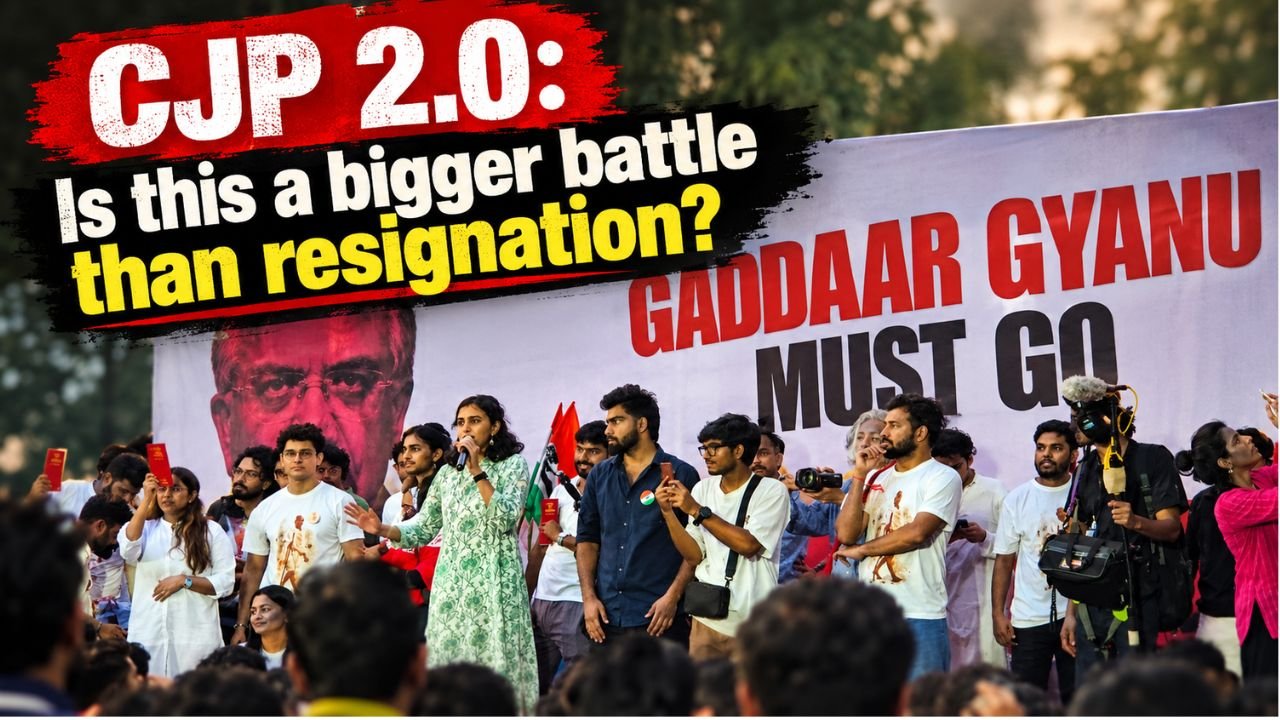
On October 12, opposition leaders, MPs, MLAs, student organisations and political workers came together in a massive march against Chief Election Commissioner Gyanesh Kumar, raising serious concerns over the Special Intensive Revision (SIR) of electoral rolls and the alleged mass deletion of voters’ names. The march brought together a broad coalition, including the INDIA bloc, AISA, SFI and other student unions, as part of a wider nationwide mobilisation against the SIR exercise and concerns surrounding electoral integrity.