Why Students from Some Communities Need Support Pathways into Universities
December 17, 2025
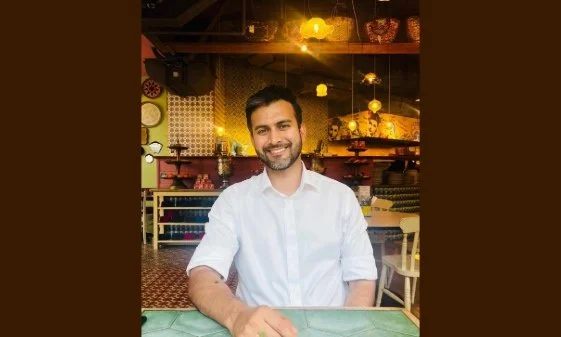
Manzer
India’s higher education sector has expanded steadily over the years, yet the benefits of this growth remain concentrated among those with social and economic privilege. For students from marginalised communities, entry into universities continues to be blocked by barriers that rarely make it into policy debates. In this interview, Manzer, a scholar working to bridge gaps in access, explains what keeps these students out of higher education, based on what he has observed while working closely with marginalised communities.
Students from Scheduled Castes and Scheduled Tribes are underrepresented in universities relative to their share of the country’s population, with the gap far wider for Muslims in particular. Of the 43.3 million students enrolled in higher education in 2021–22, Muslim students made up 4.87 percent of total enrolment, even though the community accounts for 14.2 percent of the population, according to the All India Survey on Higher Education released by the Ministry of Education.
Such statistics prompt different responses. Manzer, who goes by his first name, chose to act. He is the founder of Bridge, a non-profit initiative that provides scholarships and mentorship to students from historically marginalised communities, and has worked at the intersection of education access, equity and policy.
He currently serves as a project manager at Fair Work at the Oxford Internet Institute, University of Oxford. A Chevening Scholar, Manzer holds a master’s degree in Evidence-Based Social Intervention and Policy Evaluation from Oxford, and a master’s degree in social work from the Tata Institute of Social Sciences (TISS), Mumbai.
The following are excerpts from the conversation with Manzer.
What led to the creation of Bridge?
I come from Ambikapur, a city in Chhattisgarh. Like most students in India, I didn’t really know what to do after higher secondary education, so I chose the most common path, engineering. While studying engineering, I realised this wasn’t for me. After a few years, I enrolled in a master’s in social work at TISS, Mumbai.
When I reached TISS, I witnessed protests against changes made by the government to its post-matric scholarship scheme. Many of my friends who were eligible for scholarships were facing serious difficulties. One of my closest friends, who was supposed to receive the scholarship, began skipping meals just to save money. A meal cost him around 40 rupees.
That incident made me acutely aware of my own privilege. I didn’t have to worry about such things. That’s when I felt we had to do something. This was around 2017-18.
That’s how the idea of Bridge emerged. It began as a student-led initiative to raise funds from TISS alumni and use them to create scholarships and financial aid for students in need. We also reached out to faculty members, who supported the idea and offered valuable inputs.
Rather than creating a parallel system, we tried to embed Bridge within the university’s existing financial aid framework. Our role was to raise funds, while the university would disburse them to the neediest students. The initiative formally materialised in 2020 and initially catered only to TISS students across all campuses.
Has the model evolved over the years?
Yes, significantly. In 2023, while I was studying at Oxford, several TISS alumni based in the U.K. reached out, expressing interest in supporting students financially. Some wanted to start scholarships in memory of loved ones; others wanted to support specific groups, such as Muslim women from western Uttar Pradesh.
This continued as a partnership with TISS, but we soon realised the process was slow. Moreover, the assistance was limited to tuition fees, whereas many students needed support for accommodation and living expenses as well. That’s when we decided to part ways with the university system and function independently.
We registered Bridge as a Section 8 non-profit, and in 2024, we launched our first cohort of scholars as an independent organisation.
How do you assess access to higher education in India today?
From my experience, access to higher education, particularly in the social sciences, is worsening. Social sciences education is increasingly becoming the preserve of an elite few. I include myself in that group. As a Muslim student, I could afford both science and social science education, and that itself is a form of privilege.
At an institution like TISS, a master’s degree in social sciences costs around 200,000 (2 lakh) rupees. Students from underprivileged regions such as Marathwada in Maharashtra or parts of Chhattisgarh simply cannot afford this. Ironically, their lived experiences and insights are often far more valuable than those of students from urban backgrounds studying the same subjects.
We need more such students in these spaces, but affordability and lack of mentorship remain major barriers. While access to higher education is a challenge for disadvantaged groups overall, the crisis is especially severe in the social sciences. Government funding for these subjects has declined sharply. Conversations with TISS faculty suggest that enrolment from rural areas and marginalised communities has dropped significantly.
What does higher education mean for students from marginalised backgrounds?
For many, it is the only way to escape the poverty trap and achieve upward social mobility. I know scholars from agricultural backgrounds who had to sell their livestock just to survive and pay fees. Today, they work with premier organisations like CEEW and Grant Thornton Bharat LLP.
In India today, a bachelor’s degree is often not enough; a master’s degree has become essential for employment. When these students secure stable jobs, they not only improve their own lives but also support their families financially. Importantly, their success creates a ripple effect within their communities, encouraging others to view higher education as an attainable and worthwhile goal.
That’s why it’s crucial to build a pipeline where students can pursue education seamlessly, without constant financial stress, and receive mentorship that helps them transition into meaningful careers. Over time, they become role models for their communities.
What are your broader reflections on education in India?
Education remains accessible largely to those with social and financial capital. These individuals have networks and the know-how to navigate career pathways, like when to study, what to study, how to go abroad, and how to leverage opportunities.
Meanwhile, many deserving students remain unaware of these pathways altogether. They lack both the resources and the social capital required to access quality education. Whatever education they can afford is often either expensive or of poor quality, and sometimes both. Accessibility to quality education remains one of India’s biggest challenges.
Having worked with students and creating Bridge, you have identified problems. Where do solutions lie?
Honestly, organisations like Bridge should not have to exist. Access to quality education should be free and guaranteed by the state. Even if organisations like ours existed, they should have been limited to mentorship support, not financial assistance.
Given the current reality, however, the government needs to pay far greater attention to the educational needs of marginalised students. Without structural intervention, these gaps will only widen.
What are Bridge’s plans?
We want to move beyond supporting only TISS students and expand our reach to partner with other institutions such as Jamia Millia Islamia, the Delhi School of Social Work, and the Madras School of Social Work, institutions that offer quality education but remain unaffordable for many deserving students.
Since 2020, 32 individual donors have supported scholarships for 84 students. Of these, 12 donors have committed to recurring scholarships, providing sustained, long-term support. In addition to financial assistance, we have delivered over 500 hours of structured mentorship, helping students grow academically, professionally and personally.
To date, our funding has relied largely on goodwill and individual relationships. We have not yet tapped into our full funding potential, which is a key area of focus going forward. Bridge currently operates without full-time staff. Apart from a recently hired social media intern, all work is carried out remotely. I manage operations from afar, while a single coordinator at TISS oversees on-ground activities; all other contributors volunteer their time.
Building a small, dedicated full-time team would allow Bridge to scale meaningfully, particularly in fundraising, partnerships, and outreach, which we hope to achieve soon.
You have just read a News Briefing by Newsreel Asia, written to cut through the noise and present a single story for the day that matters to you. Certain briefings, based on media reports, seek to keep readers informed about events across India, others offer a perspective rooted in humanitarian concerns and some provide our own exclusive reporting. We encourage you to read the News Briefing each day. Our objective is to help you become not just an informed citizen, but an engaged and responsible one.