Could Malayalam Actor’s Acquittal in Sexual Assault Case Be State-Enabled Impunity?
How Investigative Agencies and Prosecution Derail Justice in Sexual Assault Cases
December 15, 2025

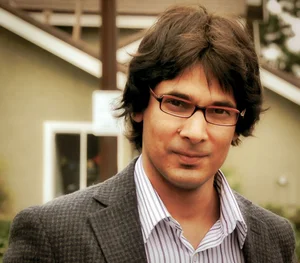
Malayalam actor Dileep has been acquitted in the 2017 case involving the abduction and sexual assault of a female actor. The verdict by a court in Kerala was based on the state’s failure to prove its own claims, not on any finding that cleared him of wrongdoing, and it stands as yet another example of how investigation and prosecution remain weak links in the justice system, especially in cases where the accused is powerful and influential.
The case dates back to February 2017, when a woman actor was abducted and sexually assaulted in a moving vehicle on the outskirts of Kochi. She was filmed during the attack. The prime accused, Sunil N.S., known as Pulsar Suni and who formerly worked as a personal driver to actors in the Malayalam film industry, was arrested and charged.
Dileep, a major star in the Malayalam film industry, was later named as the eighth accused, with the prosecution alleging that he had conspired with Sunil to carry out the attack in retaliation for a personal dispute.
It was claimed that the survivor had revealed Dileep’s extramarital affair to his then-wife, and that this led to a revenge plot involving financial transactions and secret meetings. The alleged conspiracy was said to have started in 2013 and culminated in the 2017 attack.
The court’s 1,709-page judgment found that these claims could not be proved, as reported by Live Law. It noted that many key allegations were introduced for the first time during the trial, not during the initial investigation.
The alleged threat made by Dileep during a 2012 public event could not be independently verified. Testimony about his efforts to sabotage the survivor’s film career was vague and unsupported. Financial links between Dileep and Sunil were not clearly tied to the crime. The claim that Dileep confessed to plotting the assault from a hotel room collapsed when court records showed the police already knew about that location before the confession was made.
The investigating officer also failed to present the relevant disclosure records and instead relied on a publicised recovery memo that the court found unreliable.
Further, the prosecution failed to produce hotel guest registers, CCTV footage, or witness statements to back its claims of meetings between the accused.
In one instance, tower location data was used to argue that Dileep and Sunil were present near the same college on the same day, but the court held that this was not sufficient to prove conspiracy. It concluded that no legally admissible evidence established that Dileep had instructed, paid, or coordinated with the primary accused to commit the crime.
This outcome follows a wider pattern in sexual assault cases involving powerful accused. Survivors often report the crime, but police delay key steps, ignore evidence and allow inconsistencies to build in the record. Investigating officers skip basic procedures and fail to preserve material that could support prosecution. Prosecutors then enter court with weak, disjointed evidence and fail to press for accountability. Judges are bound by legal standards, and with no solid proof before them, they grant the benefit of doubt.
India has witnessed several such collapses in cases involving powerful men, as was seen in the Tarun Tejpal case (2013), M.J. Akbar case (2018–2021), Chinmayanand case (2019), and Asaram Bapu cases, to name just a few.
The problem is not that courts are biased in favour of the accused. It is that investigators and prosecutors do not meet the standards that criminal law demands. Judges can only act on what is placed before them. If timelines are not established, financial transactions are not traced to the crime, or witnesses change their statements due to fear or fatigue, acquittal becomes the only legal option.
It’s not surprising that in January, the Kerala government informed the state’s High Court that 40 police complaints had been filed concerning sexual abuse in the Malayalam film industry since the Justice Hema Committee report was published about five months earlier.
Several women actors in Kerala, including Parvathy Thiruvothu, have consistently spoken out about sexual harassment and gender-based discrimination in the Malayalam film industry. Following the 2017 assault case, many actors came together to form the Women in Cinema Collective (WCC), a platform that has repeatedly criticised the industry’s silence and complicity in protecting powerful men accused of misconduct. Parvathy, in particular, has openly addressed how survivors are sidelined while accused individuals continue to be celebrated, and she has called for structural reforms to ensure safety, accountability and dignity for women working in the industry.
The weakness of police and prosecution in sexual harassment cases is not beyond repair. Other countries have introduced changes that limit such failures and improve institutional response.
In Canada, some provinces use specialised sexual violence prosecutors who work with trained investigators from the outset. In Sweden, survivors have the right to an independent lawyer from the moment they report the offence. Germany allows survivors to testify by video to prevent intimidation.
What this case shows is not only how the system failed one woman, but how it continues to fail others in similar positions. The police must be trained, monitored and made answerable for lapses in collection and preservation of evidence. Prosecution teams must be equipped to handle cases involving circumstantial evidence, digital trails and legal complexity.
Magistrates, prosecution heads and women’s commissions must be empowered to reject chargesheets that show poor investigation or procedural gaps. These bodies must act independently of political control and intervene before flawed cases are allowed to proceed to trial.
There is no legal reason why such failures must continue. The law provides the tools, but the institutions that carry it out must be reformed. A survivor should not have to prove a crime twice, once to the police and again in court, while the state falls short both times.
(This commentary is based on publicly available court records and reporting. It does not assert criminal guilt or innocence, but examines institutional performance in delivering justice.)
You have just read a News Briefing by Newsreel Asia, written to cut through the noise and present a single story for the day that matters to you. Certain briefings, based on media reports, seek to keep readers informed about events across India, others offer a perspective rooted in humanitarian concerns and some provide our own exclusive reporting. We encourage you to read the News Briefing each day. Our objective is to help you become not just an informed citizen, but an engaged and responsible one.