
Pakistan-Afghanistan Tensions: What the ‘Open War’ Claim Means
From the Editor’s Desk
February 27, 2026
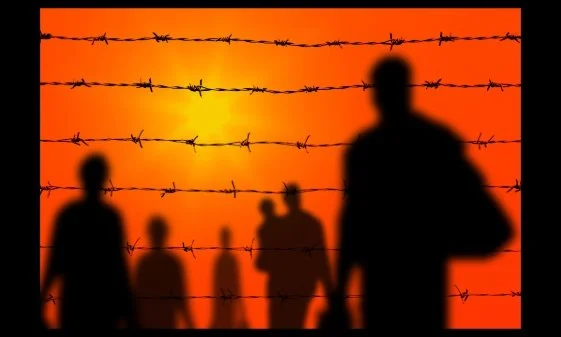
Pakistan and Afghanistan are once again exchanging airstrikes across their shared border, raising fears of a wider conflict between them. The latest tension began this week after Afghanistan carried out a cross-border strike that it said was retaliation for earlier Pakistani air attacks. Pakistan then responded with fresh strikes inside Afghan territory, and the country’s defence minister described the situation as an “open war.”
There are three layers to what is happening. One is the immediate trigger for the latest strikes. The second is the deeper dispute driving the conflict. The third is why the situation is causing concern across the wider region. Here is a step by step look at each.
First, the immediate trigger.
In late February 2026, Afghanistan launched an attack into Pakistani territory. Pakistan then responded with fresh airstrikes, including reported explosions in Kabul, Kandahar and Paktia, as reported by The Associated Press. Casualty figures remain unclear, and Afghan officials have yet to respond directly to Pakistan’s “open war” claim.

A ceasefire brokered earlier through Qatar now looks fragile.
That is the visible crisis. The deeper story runs through a militant group called Tehreek-e-Taliban Pakistan, or TTP.
The TTP is separate from the Afghan Taliban government, yet the two share ideological roots and historic ties. The TTP’s goal is to overthrow the Pakistani state and replace it with its version of an Islamist emirate, as noted by the Foreign Affairs magazine. For Islamabad, this group represents one of its most serious internal security threats.
Pakistan’s core accusation is that TTP fighters operate from Afghan soil with the tolerance, or quiet backing, of the Taliban authorities in Kabul. From those safe havens, Pakistan says, militants cross into its territory to attack security forces and other targets.
Terrorist violence reportedly surged sharply in Pakistan after the Taliban returned to power in Afghanistan in 2021. In 2025 alone, Pakistan recorded hundreds of attacks and over 1,000 deaths linked to militant groups, with the TTP being allegedly responsible for a large share, according to Pakistan Institute for Conflict and Security Studies, as cited by the magazine.

Islamabad argues that without pressure on the Taliban to curb the TTP, the violence will keep rising.
The Taliban leadership sees the situation very differently.
Taliban officials reject Pakistani claims that they sponsor the TTP. They also resist Pakistani demands to crack down on the group. Part of the reason lies in internal Taliban politics. The movement contains multiple factions, including hard line clerical leadership based in Kandahar. Turning forcefully against fellow militants risks internal fractures within the Taliban system.
There is also a political calculation inside Afghanistan. Public opinion there often views Pakistan with deep suspicion because Islamabad supported the Taliban insurgency during the U.S.-led war years from 2001 to 2021. Standing firm against Pakistani pressure can strengthen the Taliban’s domestic standing.
This mutual mistrust has produced a cycle that keeps repeating. Pakistan conducts strikes against suspected militants inside Afghanistan. The Taliban respond with border attacks or threats. Talks begin, often mediated by countries such as Qatar, Turkey or Saudi Arabia. Progress remains limited. Then violence resumes.
Another factor that has recently increased Pakistan’s anxiety is India’s growing contact with the Taliban government.
During the 1990s Taliban rule, India opposed the movement and backed its rivals. After the Taliban returned to power in 2021, many expected India’s role in Afghanistan to shrink. Instead, diplomatic and commercial engagement between New Delhi and Kabul has gradually increased. Taliban ministers have visited India, and India has reopened its embassy in Kabul.
For Pakistan’s security establishment, which portrays India as its principal rival, this trend raises concern about what it claims as strategic encirclement. Pakistani officials frequently allege Indian support for militant groups targeting Pakistan, claims New Delhi denies.
In this tense environment, even limited border clashes risk wider consequences.
Pakistan’s military leadership has warned the Taliban to choose between ties with Pakistan and tolerance of the TTP.
Pakistan has hosted millions of Afghan refugees for decades. In October 2023, Islamabad launched a sweeping crackdown that pushed millions back into Afghanistan, including many who had lived most of their lives in Pakistan. The mass returns have created pressure inside Afghanistan’s already fragile economy.
Looking ahead, the risk of escalation remains real.
Pakistan has limited options left that have produced lasting results. Previous offensives against militants near the border delivered only temporary relief. Trade pressure on Afghanistan has yielded modest impact. That leaves Islamabad facing harder choices, including deeper cross-border operations.
Such moves would raise the stakes sharply. The Taliban leadership insists on defending Afghan sovereignty. Sustained Pakistani strikes deep inside Afghanistan could trigger larger retaliation through militant networks.
Regional powers are watching closely. China has an interest because attacks allegedly linked to militants have targeted Chinese nationals in Pakistan. The United States and several regional powers, including China, India and Russia, worry that rising instability could create space for militant groups such as Islamic State Khorasan, the Afghanistan-based branch of the Islamic State group, to expand their operations.
For people in both countries, the real risk is that small clashes along the border could grow into a much larger conflict that becomes difficult to control. Pakistan’s use of the term “open war” suggests rising political anger rather than a formal declaration of war. But past tensions along this frontier show how quickly limited fighting can expand.
As Afghanistan and Pakistan remain locked in a tense standoff, the situation suggests that pressure from a regional power may be required to push at least one side toward a different course. Otherwise, the cycle of strikes, retaliation and failed mediation is likely to continue, with consequences that could affect areas far beyond their shared border.
You have just read a News Briefing, written by Newsreel Asia’s text editor, Vishal Arora, to cut through the noise and present a single story for the day that matters to you. We encourage you to read the News Briefing each day. Our objective is to help you become not just an informed citizen, but an engaged and responsible one.

What happened in Mumbai on October 2 may have been only one day of protest, but the issues behind it are unlikely to disappear with the dispersal of the crowd. The protest was centred around concerns over the Election Commission, electoral rolls and the Special Intensive Revision (SIR) exercise, with protesters demanding accountability from Chief Election Commissioner Gyanesh Kumar. At the same time, similar mobilisation has been taking place across different parts of the country, with student groups, Opposition parties and civil society organisations raising concerns over the electoral process. Newsreel Asia spent the day at Mumbai Protest capturing the preparations, the police presence, conversations with protesters, the atmosphere on the streets and how the day unfolded. The speech of Cockroach Janta Party's leaders and sentiment of protestors seemed larger than the concerns regarding the electoral process. Will this lead to something bigger?