Bhutan’s Journalists Face Growing Information Blockades
Bureaucratic Delays, Vague Rules and Fear are Undermining Press Freedom
By Dawa Gyelmo | Thimphu
December 3, 2025
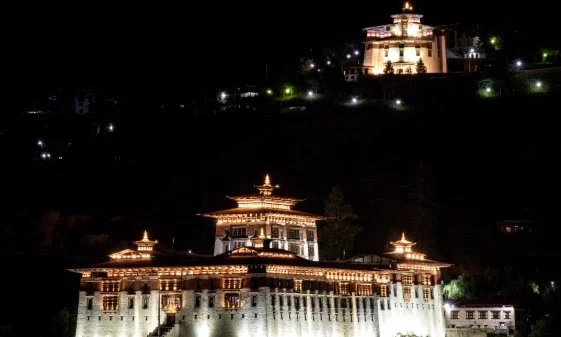
Officials in Bhutan appear to have cultivated a habit of avoiding the media and withholding information, leaving journalists with few avenues for access. The resulting silence is straining an already fragile media landscape, pushing it closer to collapse.
Bhutan’s transition to democracy has often been praised globally as exemplary, with its Constitution guaranteeing citizens the fundamental rights to freedom of speech, opinion, and expression. Article 7, Section 5 of the Constitution of the Kingdom of Bhutan affirms, “There shall be freedom of the press, radio and television and other forms of dissemination of information, including electronic.”
Yet, in practice, this constitutional promise has grown harder to realise. Over the years, data points to a steady decline in both the volume and quality of journalism, revealing a widening gap between legal protections and the media’s lived reality.
Unlike India and Bangladesh, Bhutan has no law that guarantees the right to information. The Bhutan Media Foundation’s 2023 State of Journalism report took note of this gap, revealing that two-thirds of journalists surveyed said authorities often reject their requests for information or stall them with delays. The most commonly cited responses included: “Not authorised to share information,” “Information is under process,” and “Do not have information.”
A 2024 study by Yangchen C. Rinzin, a researcher with the Centre for Bhutan Studies and a former reporter at the Kuensel newspaper, found that limited access to information remained a widespread concern. Nearly two-thirds of the 63 respondents in her research identified this as the primary challenge facing journalists in Bhutan.
Rinzin’s study noted that bureaucrats often refuse to engage with journalists or share information, citing various regulations, which severely hinders the media’s capacity to report accurately. One example cited in the study involved a reporter’s investigation into procurement lapses related to Nu. 4.3 million worth of incinerators, which was left incomplete because she could not access the necessary information.
An Uphill Road
“Access to information is very challenging mostly when working on sensitive issues or those involving government agencies,” said a young female journalist working with a private newspaper, requesting anonymity. “It takes ages to avail even a simple information related to agriculture issues, or clarification on certain information already available in public domain,” she told Newsreel Asia.
Chencho Dema, a journalist with Kuensel daily, told Newsreel Asia that reporters now have to go through designated media spokespersons in most government offices to access information. “In doing so, it takes weeks to avail even small information, as these so-called media spokespersons do not have information themselves and they have to write to the concerned authorities to avail the information to mail us back.”
She said such rules affect the timely publication of news. “We have to wait for days or even weeks to access information we’re entitled to.” Chencho added that while the media waits for official information, anonymous profiles on social media often publish the same news first, usually filled with half-baked or inaccurate details.
Ministries require journalists to submit written questions and wait for responses that can take up to six months, under Standard Operating Procedures based on Thimphu Thromde’s 2018 model, noted the Journalists’ Association of Bhutan (JAB) in a paper published in July 2025. Thromde refers to a municipal administration, and in Thimphu, the capital city, officials within the city government follow Standard Operating Procedures designed for urban governance.
This procedural bottleneck was evident during the 2024 dengue outbreak, when BBS (Bhutan Broadcasting Service) TV’s reporting was delayed due to the need for bureaucratic clearance, allowing misinformation to circulate freely on WhatsApp before any verified updates were aired.
Judicial reporting faces similar barriers, with a 2022 SOP routing all press queries through the Chief Justice’s office, effectively allowing editorial control over what is released, further constraining independent journalism, the paper added.
Chencho cited an instance where she had to wait three to four weeks to receive a single piece of information from an agency, saying such delays deprive the public of their right to truth and information. “However, there are a few organisations and newsmakers that are exceptions, as they make an effort to provide information on time,” she said.
Tshering Namgay, a former journalist with Kuensel, told Newsreel Asia that he was often driven by the urge to gather information that could turn his article into headline news. However, he said many of those stories had to be abandoned midway because they remained incomplete when newsmakers either refused to share information or responded after an unreasonably long delay.
“There was an incident where I was almost beaten by a high-profile political figure while working on an investigative story involving the party,” he recounted.
Growing Culture of ‘Lets Avoid Media’
Tenzin Lamsang, editor at The Bhutanese , is one of Bhutan’s most recognised journalists, with his articles consistently making it to the must-read list for much of the population. He is known for producing some of the most thoroughly researched and investigative pieces in the country.
However, Lamsang told Newsreel Asia that he too faces challenges in accessing information. “While we do manage to get certain information using old contacts and our own approaches, it has become difficult as everyone seems to play it safe and follow a culture of ‘let’s avoid the media’ or remain silent on many issues,” he said. “An exception to this are just a few newsmakers and current news updates.”
He said many heads of state-owned enterprises, bureaucracies and private companies have gone years without ever speaking to the media. They seem to believe it is safer to stay silent, but in a democracy where the Constitution guarantees citizens the right to information and freedom of speech, it is their moral duty to share and deliver information to the public, Lamsang said.
He said the media might seem irritating and intrusive at times, but as the fourth pillar of democracy, its presence is vital to ensure transparency in government operations and to hold public institutions and leaders accountable.
The culture of silence and secrecy wasn’t always dominant, he said. There was a time when many chose to share information directly with the media out of a sense of moral responsibility. However, things have taken a turn for the worse since 2022, Lamsang added.
The tendency to avoid the media has intensified since April 2022, after the Ministry of Agriculture and Forests issued a press release announcing the compulsory resignation of two female foresters who were found to have spoken to the media, as noted by the International Federation of Journalists’ South Asia Media Hub.
The Ministry later withdrew the statement and issued a revised version, clarifying that the two foresters had not been asked to resign for speaking to the media, but for failing to comply with transfer orders, which was in fact the case, Lamsang said.
However, the Ministry’s initial press statement had already caused significant damage, creating fear among civil servants and others about the potential consequences of speaking to the media.
To make matters worse, the Royal Civil Service Commission introduced the “Rules for Administrative Disciplinary Actions (RADA)” in July 2022, which, among other provisions, criminalises certain disclosures by civil servants, Lamsang pointed out. While most of the RADA is reasonable, he said, one particular section restricts civil servants from sharing information or expressing themselves.
While the RADA rules do not explicitly prohibit civil servants from sharing information with the media, their lack of clarity around terms like “sharing critical information” has created a chilling effect and reinforced restrictive practices already in place. The vagueness has led many officials to avoid engaging with the media, said another journalist.
Since then, the culture of silence, secrecy and media avoidance has deepened, with journalists largely restricted to covering current affairs, promotional events, inaugurations and other non-investigative news.
Further adding to the storm, the Anti-Corruption Commission introduced the Model Public Service Code of Conduct in December 2022, which prohibits civil servants from sharing official information without prior authorisation. Under this code, even disclosing non-confidential information without approval could lead to disciplinary or criminal sanctions.
All these rules and incidents have raised more barriers to accessing information, even though the Constitution guarantees freedom of speech, said Lamsang. “The trend is very unhealthy not just for the media but for the overall country.”
Government agencies and other offices have increasingly appointed media spokespersons, said Namgay. However, he added, these media focal persons are often either not authorised to speak directly to the media without consulting higher authorities or simply do not have the necessary information.
The Falling Press Freedom Ranking
Bhutan’s press‑freedom ranking in the Reporters Without Borders (RSF)’s World Press Freedom Index has seen a sharp decline over the years. Bhutan was at 33rd place in 2022, then dropped to 90th in 2023, 147th in 2024, and 152nd in 2025. (RSF’s “methodology” page notes that the grouping thresholds and evaluation criteria were changed for 2022, which affects how scores translate into rankings, especially for smaller media markets like Bhutan.)
In 2008, when Bhutan transitioned to democracy with its first elected government, it was ranked 74th. That same year, the first elected government was accused by a private newspaper of cutting advertisement spending in retaliation for its series of corruption reports. The country’s press freedom position improved briefly, reaching 70th in 2009 and 64th in 2010. By 2012, however, Bhutan was classified as “partly free” with a score of 58, marking the start of a steady decline.
Lamsang said Bhutan’s news media began to take shape around 2006 but started to decline from 2010 onwards, and since then, it has only continued to deteriorate. “Every political government is responsible for this decline,” he said.
Today, media houses are staffed by only a handful of senior journalists alongside many fresh graduates. In addition to limited access to information and self-censorship, Lamsang said they also face serious financial challenges.
The Bhutan Media Foundation report noted that media outlets in the country remain heavily dependent on government advertising. “The government subsidy to the media is an important source of financial resources amid small market size, declining readership and limited private advertisements, media houses are not able to generate revenue to achieve financial sustainability,” it stated.
It noted that media houses’ dependence on government resources makes them more vulnerable.
Self-Censorship
In addition to the ongoing challenges with access to information, Bhutan’s media also grapples with widespread self-censorship, according to the 2025 World Press Freedom Index report. It noted that in the land known for Gross National Happiness, self-censorship has become a serious concern, with many journalists avoiding sensitive topics out of fear that they might be seen as challenging the social order.
Findings from the Bhutan Media Foundation show that at least 84 percent of journalists practise self-censorship. Male journalists are one and a half times more likely to do so compared to their female counterparts. The report also observed that mid-level journalists tend to self-censor less frequently than those at the entry level or in senior positions.
The report attributed this behaviour primarily to what it described as “small society syndrome” and the fear of backlash, adding that most media organisations in Bhutan lack any safety policy for journalists. It also pointed out that 82 percent of journalists believe their stories are subject to censorship, while only 10 percent feel comfortable working on investigative pieces.
A study by Rinzin surveyed both current and former journalists, asking them about the impact of journalists leaving the profession on Bhutanese democracy. The findings suggest a clear link: losing journalists means losing journalism, and with it, a part of democracy. Over the last two years, more than 60 percent of senior journalists have left the profession, the study found.
After sustained media pressure, access to information has improved slightly, but much more needs to be done, said Lamsang. Chencho believes that unless a politically liberal government comes to power, Bhutan’s media will continue to struggle with access to information.
Despite these setbacks, Lamsang said he has observed that young reporters remain passionate and eager to serve the country. “It is not too late to act and prevent this passion from dying,” he said.
You have just read a News Briefing by Newsreel Asia, written to cut through the noise and present a single story for the day that matters to you. Certain briefings, based on media reports, seek to keep readers informed about events across India, others offer a perspective rooted in humanitarian concerns and some provide our own exclusive reporting. We encourage you to read the News Briefing each day. Our objective is to help you become not just an informed citizen, but an engaged and responsible one.