
India’s New Counter-Terror Policy Expands Powers but Success Will Depend on Safeguards
From the Editor’s Desk
February 25, 2026

The central government has launched a new counter terrorism policy called Prahaar. The framework appears ambitious and technology driven, and it resembles Western models of prevention, intelligence coordination and disruption of extremist networks. Western systems generally operate with multiple layers of legal safeguards that have evolved alongside state enforcement powers. Implementation in India also requires careful attention to several cautions to guard against potential misuse.
The first caution concerns Prahaar’s emphasis on a policy of “zero tolerance” against terrorism, as reported by The Indian Express. Such language signals political resolve and firm enforcement intent. International experience shows that similar formulations have often accompanied an expansion of preventive powers.
After the 9/11 (September 11, 2001) attacks in the United States killed nearly 3,000 people, Washington moved quickly to expand federal surveillance authority and material support provisions through the Patriot Act. The law allowed wider intelligence sharing between agencies, broadened monitoring powers and lowered certain thresholds for preventive investigation. Over the following years, civil liberties groups, federal courts and congressional reviewers raised concerns about bulk data collection, watchlisting and prolonged investigative powers that reached well beyond initially suspected terror suspects.

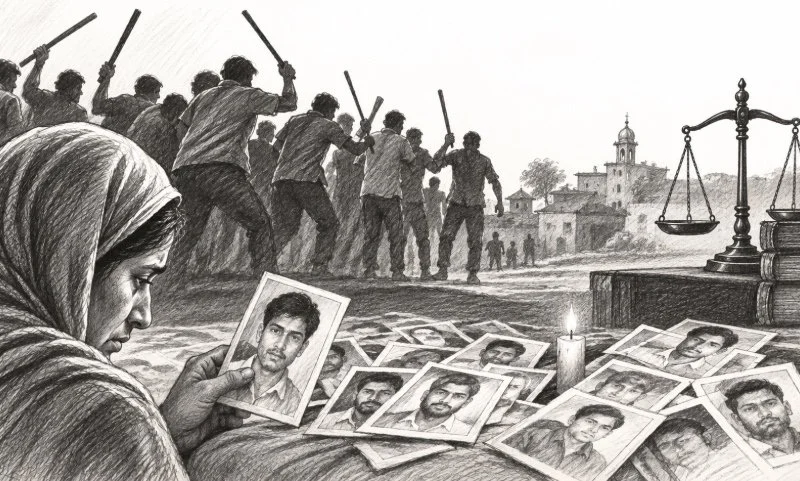
France moved in a similar direction after the coordinated Islamist militant attacks in Paris in November 2015, where gunmen and suicide bombers struck multiple crowded civilian locations, including the Bataclan concert hall, restaurants and the national stadium, killing 130 people and injuring hundreds. The French government first imposed a nationwide state of emergency and later transferred several of those exceptional counter terrorism powers into ordinary law in 2017, including expanded search authority and movement restrictions under administrative control. Rights organisations and legal scholars subsequently questioned the breadth of administrative searches and the limited judicial pre-clearance in some cases.
India can draw a practical lesson from these trajectories. Clear statutory thresholds, independent oversight and periodic legislative review help keep preventive authority tightly focused on genuine security threats.
The second caution relates to intelligence-led prevention in digital spaces. Prahaar flags the growing use of encrypted communication, the dark web and online recruitment by extremist networks, all of which present genuine security challenges. However, experience from other democracies shows that early intervention tools in the digital domain often carry difficult trade-offs.


For example, the United Kingdom’s programme, called Prevent, is designed to identify individuals at risk of radicalisation at an early stage. The system places a legal duty on schools, universities and public bodies to refer concerning cases. However, independent reviews and parliamentary scrutiny later recorded instances where ordinary classroom discussion, academic research topics or online expression led to referrals, raising questions about proportionality and clarity of thresholds.
Australia’s mandatory metadata retention regime provides a related example. It requires telecommunications companies to store certain user data for access by security agencies, a move that has produced sustained public and legal debate over privacy protections, access controls and the breadth of authorised use.
The experience across countries points to a recurring pattern. Once governments build digital surveillance systems for counter terrorism, the use of these tools often grows wider over time. Powers that begin with a narrow security purpose can gradually start touching everyday online activity.
Public trust stays stronger where three safeguards remain clearly visible. Courts should approve access before agencies use these powers. Governments should regularly publish how often the tools are used. The law should also clearly spell out the threshold for action so that routine speech, academic work and normal online behaviour remain outside the security net.
The third caution relates to efforts to counter radicalisation. Prahaar refers to addressing conditions that enable extremist recruitment, which many countries have also tried to tackle. Experience elsewhere shows how easily the line can blur. Reviews of the United Kingdom’s Prevent programme found referral patterns fell heavily on Muslim communities, prompting concerns among researchers and parliamentary committees about how risk indicators were interpreted on the ground. The key risk in such cases arises from definitions that are framed too broadly, which can draw ordinary religious or political expression into the security net.
The fourth caution involves Prahaar’s “whole of society” strategy, which calls for the involvement of psychologists, doctors, lawyers and community leaders in prevention and rehabilitation efforts. International experience shows that such programmes work best where community trust remains the foundation.
Singapore’s Religious Rehabilitation Group offers one example often cited by policymakers. The initiative brings together religious scholars and counsellors to work voluntarily with individuals linked to extremist networks, with an emphasis on dialogue, counselling and reintegration. However, in the United States, surveillance mapping carried out by the New York Police Department after 2001 drew sustained legal and public scrutiny after monitoring expanded into routine observation of Muslim neighbourhoods, student groups and places of worship. In 2016, a federal district court in New Jersey allowed key civil rights claims in the case to move forward. After years of litigation and public pressure, New York City agreed to reforms in its investigative practices. Independent reviews and journalistic investigations reported that the programme produced few actionable terrorism leads despite its broad scope.
These international examples show that counter terrorism policies evolve through continuous review and adjustment rather than through a single act of adoption. Their long-term credibility and operational effectiveness rest on the strength and independence of the review mechanisms that accompany implementation.
India’s Prahaar programme would benefit from incorporating the kinds of safeguards that many Western democracies have developed over time, including robust judicial authorisation, independent oversight and regular public reporting. Strong safeguards help sustain public trust, improve the quality of intelligence inputs and keep enforcement focused on genuine threats rather than diffused suspicion.
You have just read a News Briefing, written by Newsreel Asia’s text editor, Vishal Arora, to cut through the noise and present a single story for the day that matters to you. We encourage you to read the News Briefing each day. Our objective is to help you become not just an informed citizen, but an engaged and responsible one.

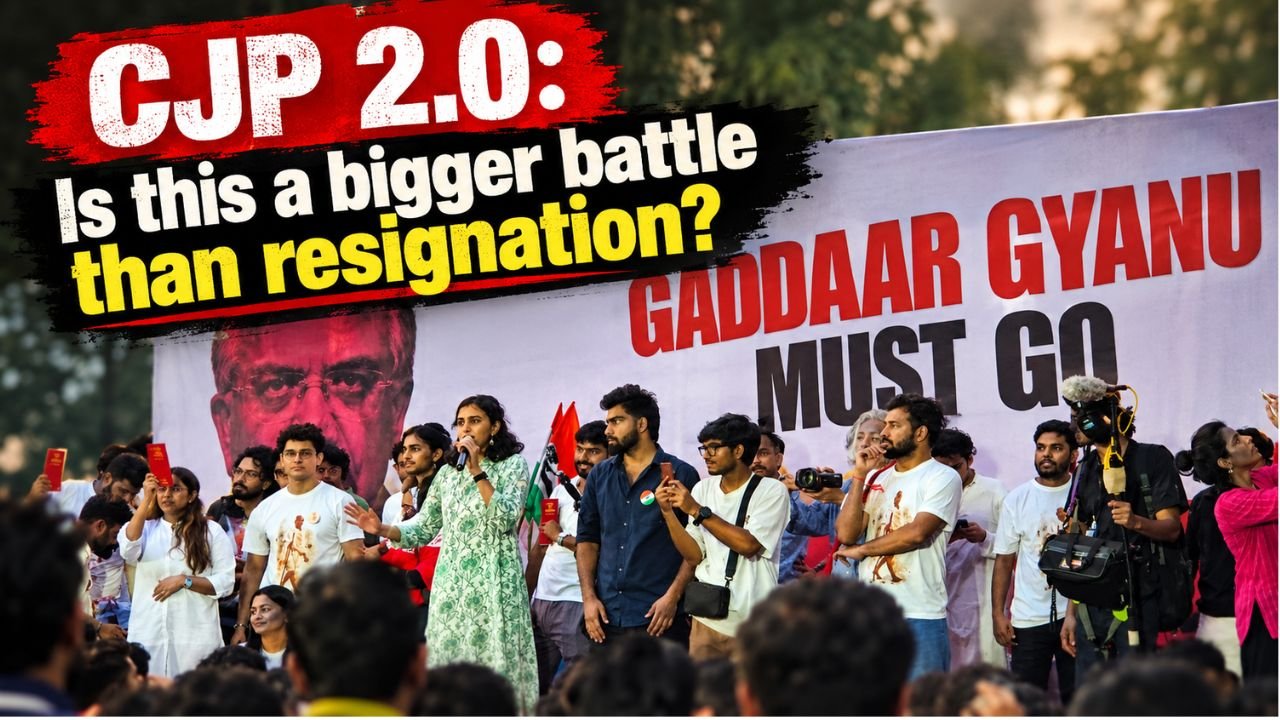
On October 12, opposition leaders, MPs, MLAs, student organisations and political workers came together in a massive march against Chief Election Commissioner Gyanesh Kumar, raising serious concerns over the Special Intensive Revision (SIR) of electoral rolls and the alleged mass deletion of voters’ names. The march brought together a broad coalition, including the INDIA bloc, AISA, SFI and other student unions, as part of a wider nationwide mobilisation against the SIR exercise and concerns surrounding electoral integrity.