
India’s Dalits, Muslims Live in Isolated Housing With Poor Services: Study
From the Editor’s Desk
February 19, 2026

Dalits and Muslims across India live in sharply segregated neighbourhoods that receive weaker access to essential public services. Evidence drawn from nationwide administrative and census data shows that inequality is most severe at the smallest geographic scale of settlement.
In urban areas, the average Muslim lives in a neighbourhood that is about 49% Muslim, while the average Scheduled Caste resident lives in a neighbourhood that is about 43% Scheduled Caste, showing strong separation in everyday living patterns, according to a February 2026 working paper published by the National Bureau of Economic Research.
Strong clustering appears at the extreme end as well. About 26% of urban Muslims live in neighbourhoods where Muslims make up more than 80% of residents, compared with 17% of urban Scheduled Castes living in similarly concentrated areas. This shows that segregation is widespread and deeply rooted in parts of Indian cities.
Researchers built a neighbourhood-level dataset by linking the 2011 Population Census, the 2012 Socio-Economic and Caste Census, and the 2013 Economic Census. The resulting database covers about 1.5 million urban and rural neighbourhoods and represents roughly 63% of India’s population.
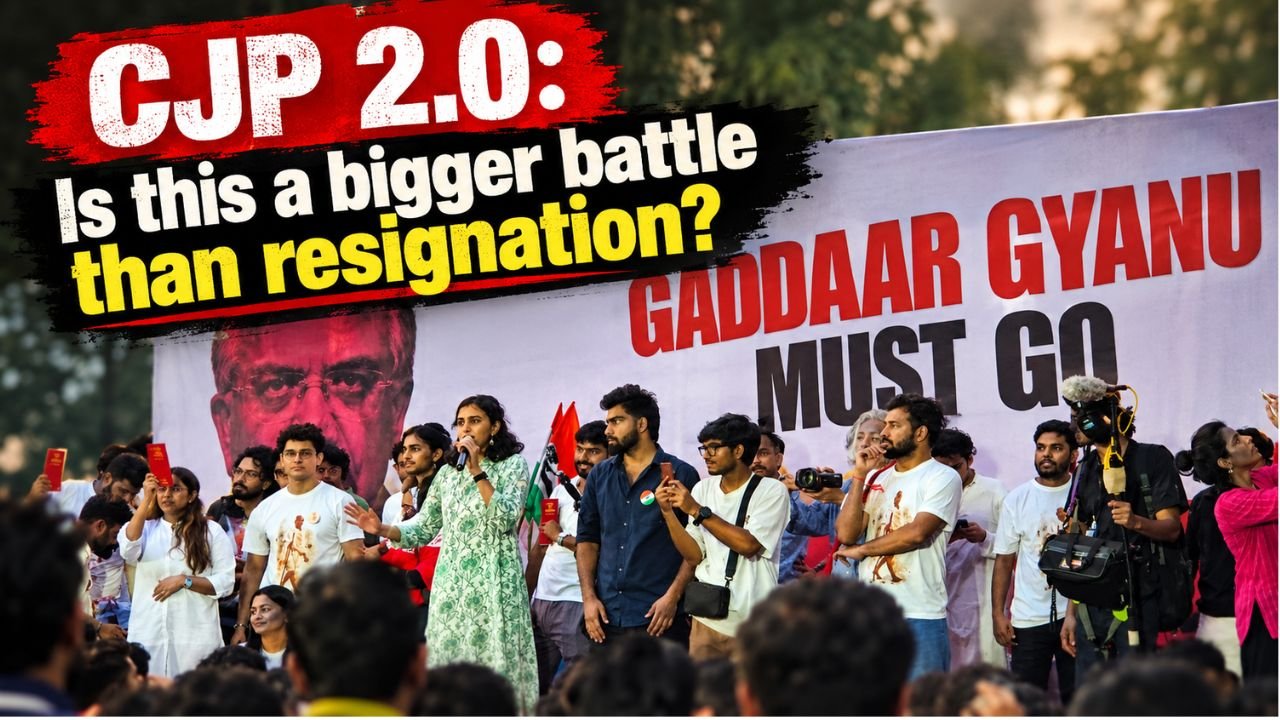

A second measure of uneven distribution shows that about 52% of Muslims and 59% of Scheduled Castes would need to move to different neighbourhoods for cities to become evenly mixed. By international comparison, the study finds Muslim segregation in India is similar to but slightly lower than Black-White segregation in the United States after adjusting for neighbourhood size.
Scheduled Caste segregation also remains strong at the neighbourhood level, meaning many residents live mainly among members of their own community, though the separation appears less sharp when larger areas of a town are examined together. Changes over time have been limited. Between 2001 and 2011, the urban Scheduled Caste isolation measure fell only slightly from about 45.5% to 44.5%, while the dissimilarity measure shifted marginally from 0.602 to 0.606, indicating little overall change in residential separation during the decade.
Neighbourhoods made up entirely of Muslim residents are about 10% less likely to have piped water and are only about half as likely to have a secondary school as neighbourhoods without Muslim residents. Differences of this scale affect everyday life, including schooling, health and sanitation.
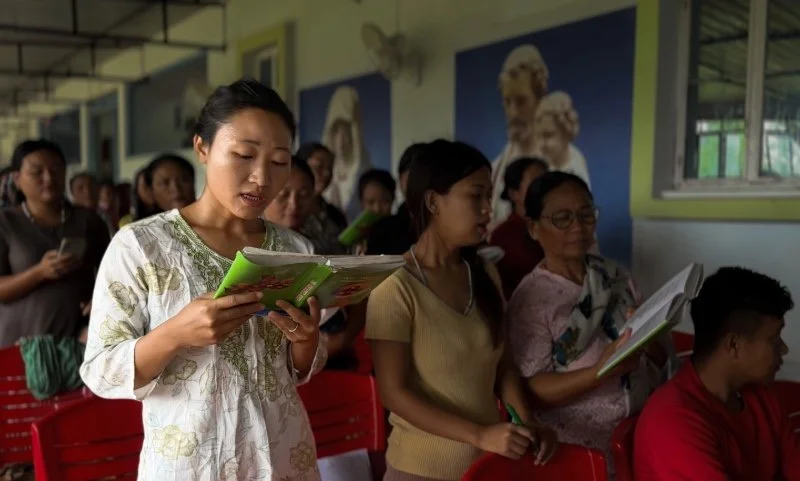


In urban neighbourhoods, a higher Muslim population is associated with 1.9 fewer primary schools, 2.3 fewer secondary schools, and 2.4 fewer health centres per 100,000 people compared with other neighbourhoods in the same cities.
In contrast, higher Scheduled Caste concentration in urban areas is linked to about 27.7 percentage points lower access to piped water and about 31.3 percentage points lower access to closed drainage, showing large infrastructure gaps within the same towns rather than only across districts.
Differences also appear in education and health facilities for Scheduled Castes, though the urban pattern is uneven. In cities, higher Scheduled Caste concentration is associated with 8.2 more primary schools per 100,000 people, while secondary schools increase by about 0.5 and health centres by about 0.1, indicating minimal change in these services. Stronger shortfalls appear in rural schooling, where higher Scheduled Caste concentration is linked to about 9.7 fewer primary schools per 100,000 people.
The findings show that what matters most is the neighbourhood where a person lives. Government services such as schools, clinics, water supply and drainage are planned and delivered at very local levels. However, Dalit and Muslim neighbourhoods receive fewer of these services, and the promise of equal citizenship written in the Constitution does not translate into equal living conditions.
Gradually, this impacts everyday life in powerful ways. Children growing up in areas with weaker schools and health care begin their lives with fewer opportunities. Limited services affect education, health, employment and income, and these effects can continue across generations.
This pattern also reveals something important about how the state functions. Inequality does not appear only in national policies or state budgets. It often emerges through small, local decisions about where a school is built, where a road is paved or which settlement receives water connections first. Because these choices happen at the neighbourhood level, the resulting inequality can remain hidden in district or state statistics that appear balanced on paper.
You have just read a News Briefing, written by Newsreel Asia’s text editor, Vishal Arora, to cut through the noise and present a single story for the day that matters to you. We encourage you to read the News Briefing each day. Our objective is to help you become not just an informed citizen, but an engaged and responsible one.
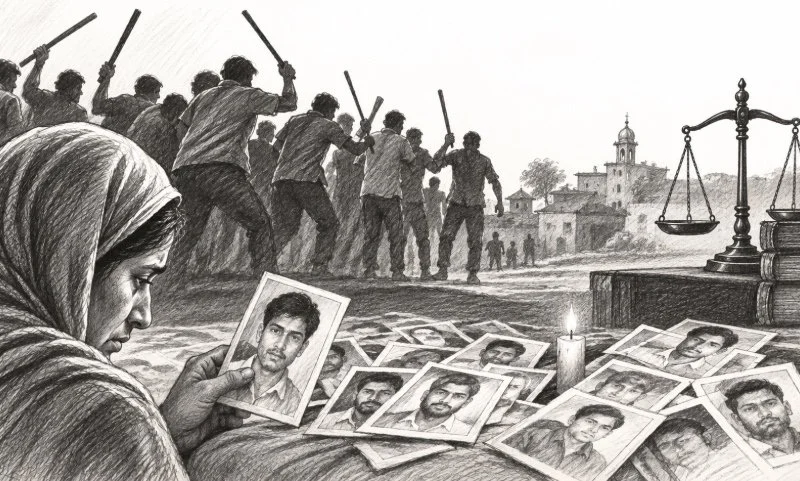
On October 12, opposition leaders, MPs, MLAs, student organisations and political workers came together in a massive march against Chief Election Commissioner Gyanesh Kumar, raising serious concerns over the Special Intensive Revision (SIR) of electoral rolls and the alleged mass deletion of voters’ names. The march brought together a broad coalition, including the INDIA bloc, AISA, SFI and other student unions, as part of a wider nationwide mobilisation against the SIR exercise and concerns surrounding electoral integrity.