
Ordinary Indians, More Than Business Elites, Sustain India’s Generosity
From the Editor’s Desk
February 20, 2026
A new study estimates that India’s household giving totals about 540 billion (54,000 crore) rupees a year across cash, in-kind support and volunteering, with about 68% of surveyed households reporting some form of giving. Read alongside evidence of highly concentrated corporate and wealthy donor philanthropy, the findings indicate that India’s culture of generosity is sustained in large measure by widespread participation among ordinary households.
Participation in giving appears wide across the income spectrum, according to the study, “How India Gives 2026,” by the Centre for Social Impact and Philanthropy at Ashoka University, and as reported by BBC.
Around half of households report giving even at low consumption levels of about 4,000 to 5,000 rupees per month, and participation rises to about 70% to 80% as household consumption increases. As consumption rises, the amount donated also tends to increase, and education correlates with generosity, with participation peaking among graduates and postgraduates.
The study is based on more than 7,000 interviews across 20 states and covers urban and rural India. The researchers combined the survey results with National Sample Survey consumption figures, the government’s large household spending dataset, to map giving behaviour across income groups and arrive at national estimates. Participants recalled how frequently they gave and the amounts involved over the previous three months, which the researchers then converted into annual figures.

In the report’s framework, everyday giving covers direct personal assistance to beggars, relatives or acquaintances as well as contributions to organised secular bodies. The study also looks at retail giving, meaning donations made by ordinary individuals rather than wealthy philanthropists, and it takes a wider view that counts informal help together with contributions to religious institutions and registered nonprofit organisations.
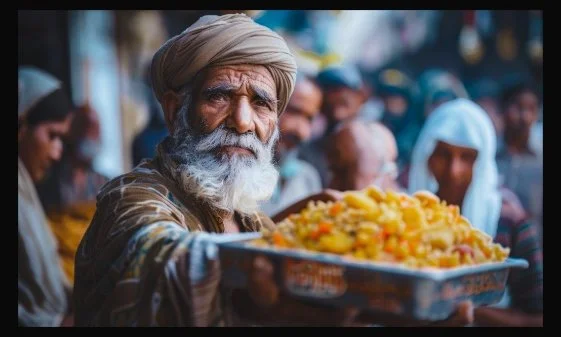
Among those who report giving in some form, in-kind accounts for 48%, cash donations account for 44%, and volunteering accounts for 30%. Food giving often flows to communal free kitchens, and volunteering most often takes the form of service at religious institutions, including disaster relief organised by them.
External philanthropy data places the CSIP household estimate in useful perspective. The India Philanthropy Report 2025 by Bain and Dasra puts total corporate social responsibility spending at about 300 billion (30,000 crore) rupees a year, with private sector firms contributing about 85 percent of that amount and with CSR contributions concentrated among a relatively small group of large firms.
By comparison, the CSIP estimate of about 540 billion (54,000 crore) rupees in annual household giving comes to around twice the CSR stream. Bain and Dasra also report that family-owned or family-run firms contribute about 65 percent to 70 percent of private sector CSR spending, and that the top 2 percent of family-owned or family-run firms contribute about 50 percent to 55 percent of CSR spending within the family-owned group, showing strong concentration within the corporate donor base.

Set against these figures, the CSIP survey records participation in giving across a broad social base, including about half of households even at monthly consumption levels of 4,000 to 5,000 rupees and rising to roughly 70% to 80% at higher consumption levels. Read alongside Bain and Dasra’s finding that CSR contributions are heavily concentrated among a small group of firms, the data points to two distinct structures within India’s giving economy: elite philanthropy that is financially significant yet concentrated among a narrow donor base, and household generosity that operates through widespread participation and cumulative small contributions.
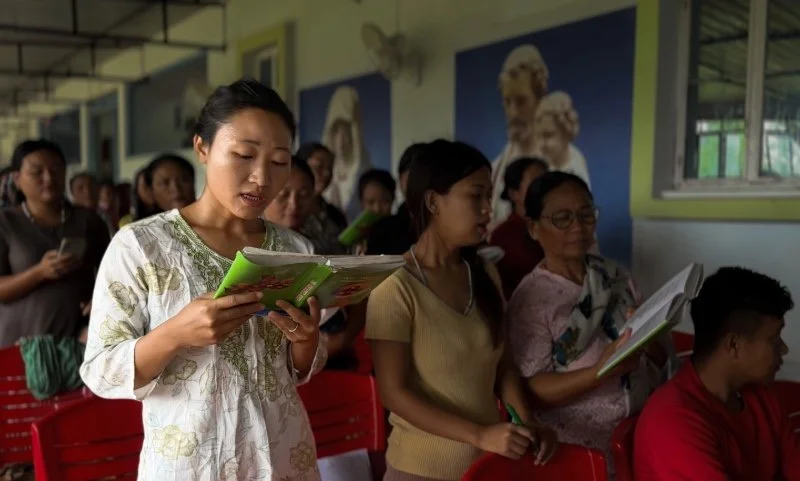
According to “How India Gives 2026,” the direction of giving is strongly tied to proximity and faith. About 40% to 45% of giving flows to religious organisations, with a comparable share directed to beggars and destitute individuals, especially in urban areas.
In rural India, religious institutions receive the largest share. The most common encounter with giving opportunities occurs through direct in person requests at homes, religious sites or public spaces rather than through digital campaigns or formal fundraising drives.
Taken together, these patterns show generosity functioning as a widely distributed social behaviour rather than an activity confined to a narrow affluent segment. The fact that roughly half of low consumption households report giving indicates that participation in generosity spreads deeply across the population, even where financial capacity remains limited.
The structure of everyday giving further reinforces this broad base. Contributions often take the form of food, clothing or small cash transfers delivered through face to face encounters. Such patterns typically emerge in systems where many individuals give modest amounts repeatedly, producing scale through volume of participants rather than through a small pool of very large donors.
Religious institutions strengthen this distributed model by providing trusted and routine channels for contribution, it seems. Regular visits to temples, mosques, churches and gurdwaras create repeated opportunities to give, which sustains participation across income groups. This routine lowers the cognitive effort required to decide whether to give and keeps generosity embedded in ordinary social practice.
The survey’s estimate that everyday giving accounts for about 15% of total giving in India while contributing nearly one-third of private donations to the organised social sector also carries analytical weight. A stream composed of many small donors supplying such a large share of private support indicates that the country’s giving ecosystem relies substantially on cumulative household participation.
Gender differences in the survey align with this same pattern of socially embedded generosity. Male-headed households show a slightly higher tilt toward religious giving, while female-headed households show a marginally higher tilt toward supporting destitute individuals.
CSIP head Jinny Uppal was quoted as saying, “How India Gives 2025–26 brings visibility to a form of generosity that has always existed in India but is rarely measured. Everyday giving — through in-kind support, cash contributions and volunteering — is foundational to India’s development story. By anchoring our analysis to national consumption data and tracking patterns over time, we are able to understand not just how India gives, but how giving evolves as the country develops. The opportunity ahead lies in strengthening the bridges between everyday generosity and organised social impact.”
You have just read a News Briefing, written by Newsreel Asia’s text editor, Vishal Arora, to cut through the noise and present a single story for the day that matters to you. We encourage you to read the News Briefing each day. Our objective is to help you become not just an informed citizen, but an engaged and responsible one.

On October 12, opposition leaders, MPs, MLAs, student organisations and political workers came together in a massive march against Chief Election Commissioner Gyanesh Kumar, raising serious concerns over the Special Intensive Revision (SIR) of electoral rolls and the alleged mass deletion of voters’ names. The march brought together a broad coalition, including the INDIA bloc, AISA, SFI and other student unions, as part of a wider nationwide mobilisation against the SIR exercise and concerns surrounding electoral integrity.