
From the Editor’s Desk
June 23, 2026

The Union Home Ministry has amended the rules governing how non-governmental organisations receive foreign money, requiring them to select their stated purpose from a government-prescribed list and barring them from proselytising under several categories of activities eligible for registration.
The changes revise the Foreign Contribution Regulation Rules, 2011, the regulations that implement the Foreign Contribution Regulation Act, or FCRA, the primary law controlling foreign funding to civil society. The amended rules were published in the official gazette on June 22, according to Hindustan Times.
Under the revised rules, every organisation applying for registration must specify the exact purpose for which it seeks foreign funds, choosing from a schedule of permitted purposes set out by the government, and must also name the state or Union Territory where it intends to operate. Those details will appear on the registration certificate issued to the organisation, Mint reported.
The purposes have been categorised into religious, cultural, economic, educational and social. Within the religious category, permitted activities include constructing, renovating and maintaining places of worship, providing religious instruction, and promoting devotional music. The rules specify that three purposes, namely religious education, documentation of faith traditions and preservation of indigenous beliefs, must be carried out “excluding proselytisation.” The same exclusion applies to the documentation and revival of indigenous and tribal faith practices and to the conduct of religious education, moral instruction, devotional gatherings, and meditation retreats, according to Business Line.

The amended rules introduce significant new restrictions on who may lead a registered organisation. Associations whose key functionaries include foreign nationals, other than persons of Indian origin, will “ordinarily not be considered” for FCRA registration or prior permission to receive foreign funds. The government may, through a formal order, specify circumstances in which foreign nationals are permitted to serve as key functionaries for the purpose of obtaining registration.
The amendments also expand the definition of “key functionary in relation to a person other than an individual” to cover company directors, partners in firms, trustees, and any person exercising control over the management of an association. The definition now also includes the Karta, the head of a Hindu Undivided Family, which is a joint-family ownership structure recognised under Indian law.
Organisations will now be required to disclose their social media accounts in applications for registration or renewal. Where foreign contributions arrive through “intermediary remittance vehicles” or “Donor Advised Funds,” the applicant must identify the ultimate donor and the original source of the money. Annual returns must also include a detailed activity report alongside financial statements.
Organisations must additionally declare whether they or their key functionaries have published books, articles, or similar material, as those receiving foreign contributions are barred from producing or broadcasting news or current affairs content.



Associations registered before 2026 have one year to notify the government of the specific purposes and states they wish to retain on their registration certificates.
A new fee applies for applications covering more than one state or purpose. Each additional state or purpose included in an application will carry a charge of 300 rupees.
To prevent inactive organisations from holding FCRA registrations without meaningful activity, the government has introduced a minimum spending requirement. Associations must demonstrate that they spent at least one million (10 lakh) rupees of foreign contributions on their declared activities during the previous two financial years to renew their registration or avoid cancellation.
For organisations receiving foreign contributions under the Prior Permission route, a separate FCRA mechanism for single-purpose, project-specific funding, subsequent instalments of funds will be released only after at least 75 percent of the earlier instalment has been used. Authorities will conduct field inspections to verify that funds have been deployed as claimed.
You have just read a News Briefing, written by Newsreel Asia’s text editor, Vishal Arora, to cut through the noise and present a single story for the day that matters to you. We encourage you to read the News Briefing each day. Our objective is to help you become not just an informed citizen, but an engaged and responsible one.



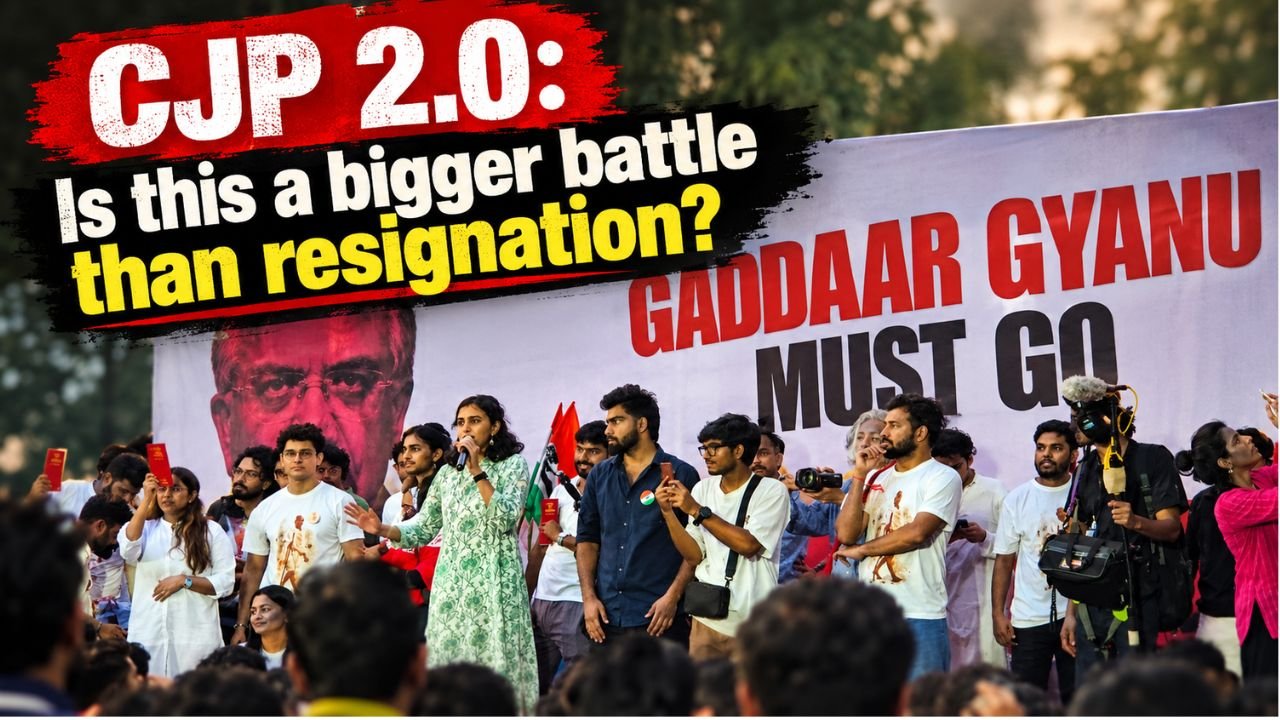
Hundreds of protesters gathered at Bangla Sahib in Delhi at 1 PM on October 23 for a protest called by People Against SIR, a collective of over 100 organisations mobilising against the Election Commission of India’s Special Intensive Revision (SIR) of electoral rolls across the country. Along with detentions and use of force, security personnels are using another tactic - blowing whistles to silence the voices.