
Muslim Gig Workers: His Name Was Bad for Business, So He Buried It
By Asad Ashraf
May 13, 2026
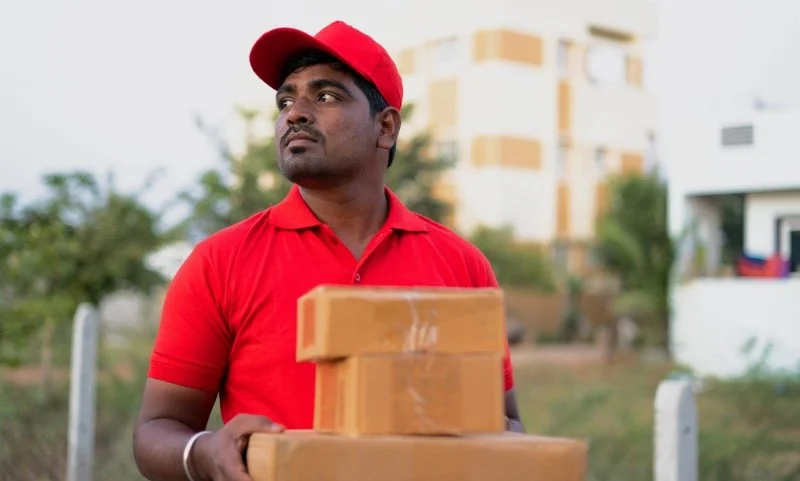
There is a specific kind of humiliation that disguises itself as practicality. Gig workers, especially Muslims, have been changing their names on professional apps, not for amusement, but because their real names cost them customers. The decision has become larger than a personal adjustment, pointing to a larger social reality hidden behind these choices. I have come across this issue at least three times in recent months.
A bike rider appeared on my app as “Bittu Bittu.” I asked for his real name, and he said it was Salman Mohammad. He explained it in the flat tone of someone speaking from experience. Displaying his Muslim identity, he said, reduced his rides.
Another rider called himself simply “MD,” using initials for Mohammad. He recalled a customer looking at his name, then at him, and saying bluntly that he did not want Muslim riders.
A third case involved a home service worker booked for a job at a residence in Delhi. The customer asked her to simply leave after she shared her OTP (one-time password) and her name appeared on the screen. The booking had already been confirmed. The service had already been expected. Her name changed everything.
I have been reflecting on these experiences, not only because of the obvious prejudice they reveal, but because of what the systems surrounding them quietly enable.

The Infrastructure That Doesn’t Notice
The gig economy was supposed to make work fairer. By removing middlemen and allowing ratings to guide decisions, the market was expected to become more equitable. But it overlooked the basic truth that markets are never neutral. They absorb the prejudices of their users, and without safeguards against those prejudices, platforms become part of the problem, whether intentionally or otherwise.
India’s gig economy employs more than 7.7 million workers today and is expected to reach 23.5 million by 2030, according to NITI Aayog. Most of these workers, employed in delivery, transport, and home services, already live with economic insecurity. Added discrimination is creating immediate and tangible harm for people already living with insecurity.
In 2022, a Swiggy customer in Ahmedabad sent a message through the app requesting not to have a Muslim delivery worker. The message spread widely on social media. Lawmakers demanded action. The worker concerned, Sadam Kureshi, contacted Swiggy’s helpline, only to be offered a cancellation. No action was taken against the customer.
Filtering discriminatory language, where terms such as Hindu, Muslim, or Dalit are used inappropriately, is hardly difficult in technical terms. Such measures still have not been implemented perhaps because this discrimination does not hurt the platforms and may even support their revenues.
Digital payment systems have created a related problem. Following the push towards UPI (Unified Payments Interface) and QR codes after demonetisation, Muslim street vendors and small shopkeepers discovered that when a customer scanned a code and saw a Muslim name, the interaction could quickly turn hostile. Journalists have documented several incidents in which vendors faced abuse or physical assault after their name appeared on a payment screen.
In one widely reported case in 2024, a right-wing activist visited a juice stall, paid through Google Pay, saw the name Ali on the screen, and began shouting at the young man working there. In a video later shared online, she remarked that they had not realised he was Muslim until the payment was processed.
Technology did not create this bigotry. It merely removed whatever buffer may once have existed. A name on a screen takes only a second to read. That second is all it takes.
What a Name Carries
In our country, names reveal religion, caste and often region in ways that are difficult to separate. A name signifies identity, but it also sends a signal before anything else, even before a face, work history or physical presence.
Erving Goffman, one of the most influential sociologists of the 20th century, especially in the study of identity, social interaction and stigma, wrote that certain traits, once known, eclipse everything else about a person; the individual recedes and the label takes over. That appears to be happening the moment a service provider’s name appears on a customer’s screen. Before that moment, the person is simply a worker with a confirmed booking. Afterwards, they are reduced to their religion.
What makes platform work especially difficult for Muslim workers is that it removes whatever control they may once have had over this information. The displayed name on an app is compulsory. The name on a QR code is equally unavoidable.
Research published by Al Jazeera found that many Muslim women in domestic work adopt Hindu-sounding names. Some even wear bindis and saris to appear Hindu and continue working during Muslim religious festivals to avoid suspicion.

A Familiar Pattern
There is an obvious parallel here. Audit studies in the United States have shown for decades that identical CVs receive fewer responses if they carry names associated with Black Americans. A research by Marianne Bertrand and Sendhil Mullainathan found that white sounding names received 50 percent more callbacks than Black sounding names on otherwise identical applications.
Muslim workers in India experience a similar dynamic in wider society as well. A detailed audit study of Delhi’s rental housing market, published by United Nations University World Institute for Development Economics Research, found that landlords responded to 35 percent of upper caste Hindu applicants, while the response rate for Muslim applicants fell to 22 percent.
For smaller and more personal living arrangements, the gap was even wider. A research by academics at O.P. Jindal Global University and the Centre for Policy Research, based on more than 200 interviews in Delhi and Mumbai, found that the discrimination was systematic, with tenants being asked to leave mid-month once their religious identity became known.
The responses in both cases also follow the same pattern. Black Americans anglicised their names on CVs. Muslim workers in India alter their names on apps. Salman Mohammad becomes Bittu Bittu. The pattern has been repeating itself across countries and eras.
The Bigger Picture
The individual stories point to a larger truth. Muslims make up more than 14 percent of India’s population, yet occupy fewer than 3 percent of director and senior executive roles in BSE 500 companies, according to a study by the Economic Times Intelligence Group. It shows that discrimination runs through every level of professional life, from the gig worker trying to secure a ride to the applicant whose CV receives no reply.
In 2024, Zomato announced plans to create separate vegetarian and non-vegetarian delivery teams with distinct uniforms. The proposal drew immediate criticism because of the atmosphere surrounding violence over beef-related rumours and the reality that Muslim workers disproportionately handle non vegetarian orders. Critics argued that the plan could expose Muslim delivery workers to greater risks of harassment. Gig worker unions mobilised, and Zomato eventually withdrew the proposal. The announcement itself, however, revealed how casually the safety of Muslim workers could be weighed against customer sentiment.
Meanwhile, in some states, government directives requiring restaurants to display employee names have led business owners to dismiss Muslim staff in order to avoid becoming targets themselves. Here, the discrimination operates indirectly, but it remains discrimination nonetheless, directed at the same community.
What the Renaming Costs
When Salman Mohammad types “Bittu Bittu” into a name field, he is acknowledging that society has turned his real name into a liability and he has to adjust himself accordingly. The cost falls on him alone, not on the customer, the platform or his colleagues.
The platforms are not powerless here. They could filter delivery instructions containing discriminatory language, and they could allow workers to report such incidents without financial penalties. They simply need the willingness to do so. Instead, they appear willing to sustain a system that treats discrimination as an ordinary part of customer behaviour and leaves those affected to deal with it quietly on their own.
Amid this unwillingness, “Bittu Bittu” is coping. Millions of others are coping too. They do so invisibly every day, at enormous personal cost and without acknowledgement.
You have just read a News Briefing, written to cut through the noise and present a single story for the day that matters to you. We encourage you to read the News Briefing each day. Our objective is to help you become not just an informed citizen, but an engaged and responsible one.
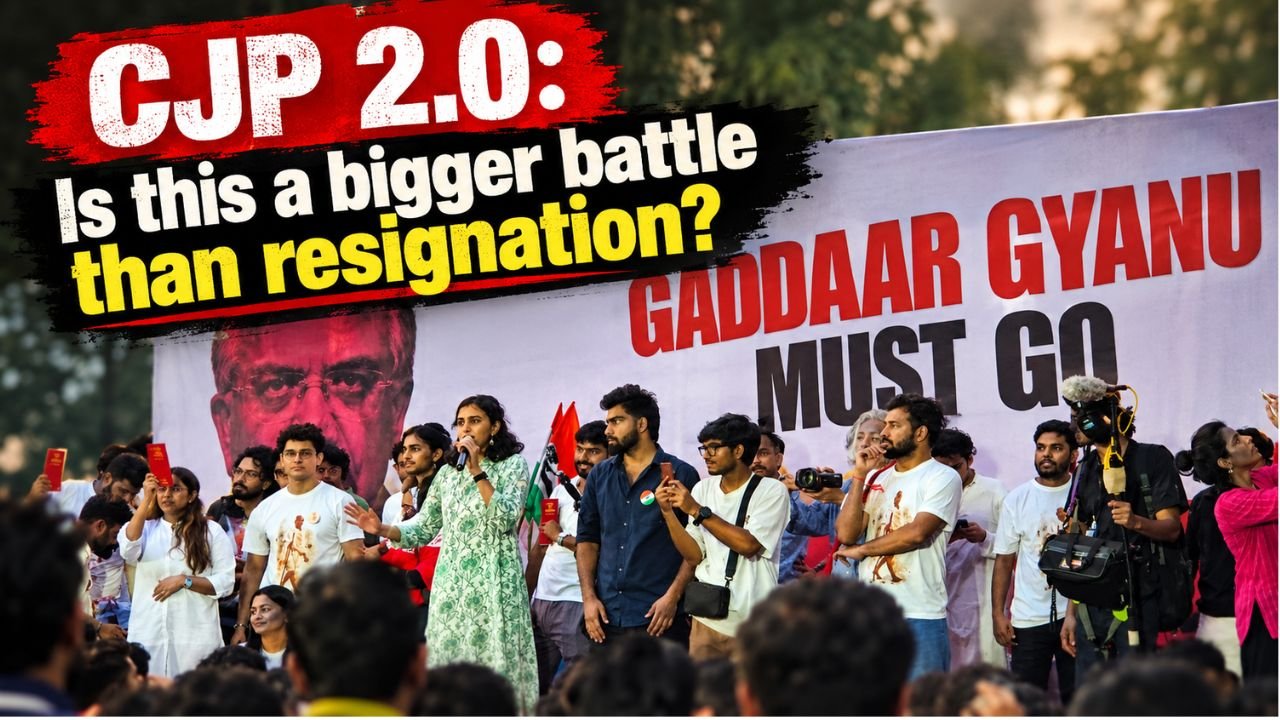
On October 12, opposition leaders, MPs, MLAs, student organisations and political workers came together in a massive march against Chief Election Commissioner Gyanesh Kumar, raising serious concerns over the Special Intensive Revision (SIR) of electoral rolls and the alleged mass deletion of voters’ names. The march brought together a broad coalition, including the INDIA bloc, AISA, SFI and other student unions, as part of a wider nationwide mobilisation against the SIR exercise and concerns surrounding electoral integrity.