
For India’s Informal Workers, Heatwaves Expose the Limits of the Labour Codes
By Asad Ashraf
June 1, 2026

Summers in much of India have always been tough, but what is happening now is far more severe. It is a public health emergency unfolding under the guise of a weather event. In recent years, temperatures have remained above 40°C for days at a stretch, leading to tens of thousands of suspected heatstroke cases across the country. And those who face the greatest risk are workers in the informal sector, who spend long hours outdoors and continue to lack strong, enforceable protections against extreme heat under India’s labour framework.
Think of those who serve us in the informal sector, people such as construction labourers, delivery riders, street vendors and sanitation workers. The four Labour Codes, enacted between 2019 and 2020, were promoted as a major effort to simplify and modernise labour laws. They include the Code on Wages, the Industrial Relations Code, the Code on Social Security and the Occupational Safety, Health and Working Conditions Code (OSHWC).
However, for a worker standing for hours under a 44°C Delhi sky, the promise of reform can feel distant. The new framework carries few specific and enforceable protections against extreme heat, leaving many, if not most, outdoor and informal workers exposed to growing climate risks.
What the Law Looks Like from the Ground
Mohammad Irfan has been laying bricks at a construction site near Okhla Phase II in Delhi for three years. He lives in Jamia Nagar, a 10-minute walk from the site, a convenience that offers little relief once the workday begins. By 9 a.m., the metal scaffolding he handles becomes hot enough to burn the skin. The site has no shaded rest areas and no dedicated water station. Each time he slows down to cope with the heat, the contractor, also operating outside the formal economy, reminds him that his daily wage depends on how much work he completes.
“There is no shed, no cooler, nothing. If I ask the contractor for a break, he says to sit at home then,” Irfan told Newsreel Asia.
There is no written contract between Irfan and his employer. There is no ESI registration, no provident fund contribution, and no way to file a complaint. The OSHWC Code theoretically covers him. But in practice, its protections do not reach him because there are no enforcement mechanisms to make them effective.
A few kilometres south, near Delhi’s Jasola Apollo area, Salim Ansari begins his day at a labour chowk, waiting for whatever work may come his way. Some days he loads and unloads goods. On others, he takes whatever casual work is available. He has no fixed employer, no guaranteed income and little recourse if work disappears. Hot days often bring fewer contractors to the chowk. On those days, Ansari earns nothing. And there is no compensation for the lost income, no heat allowance and no provision in the four Labour Codes that recognises the economic impact of a 44°C day on a worker paid by the task.
“The government made new laws, people say. But nothing reached us,” Ansari told Newsreel Asia.
These stories may reflect the experience of roughly 400 to 490 million informal workers in the country. For many of them, the Labour Codes remain a distant idea, written into law and announced as reform, but rarely felt in their daily working lives.

The Legal Architecture
The most relevant law is the OSHWC Code. Section 23 gives the government the power to establish safety standards, including standards related to heat exposure. However, the provision gives the government discretion rather than imposing a clear legal obligation to introduce such standards. As a result, the law recognises the issue of workplace safety but does not require specific heat protection measures for workers.
The older Factories Act, 1948, the law the Codes were meant to improve, applied only to indoor workplaces, completely excluding outdoor workers. The OSHWC Code was expected to fix this. It has not. Nearly 57% of Indian districts are now deemed heat-stressed, while informal outdoor workers remain completely outside any enforceable legal protections, as the Council on Energy, Environment and Water found last year.
The Code on Social Security formally recognises gig and platform workers for the first time. However, it contains no specific provisions addressing income loss caused by extreme heat or other climate-related disruptions. The law provides no entitlement to paid leave during declared heatwaves, no requirement for heat-related compensation and no enforceable right to rest breaks during periods of extreme temperature. Recognition exists in the law, but meaningful protection against heat-related economic hardship remains absent.
The Industrial Relations Code may make this situation worse. The law raises the threshold at which employers must seek government permission before layoffs and retrenchment, and it places stricter conditions on strikes and industrial action. Extreme heat protections often depend on workers being able to organise collectively and negotiate for rest breaks, drinking water, shaded work areas and changes in working hours. As climate stress increases economic insecurity, workers may find it harder to secure such protections.

What the Research Shows
Santosh Mehrotra, a Research Fellow at the IZA Institute of Labour Economics and former Professor of Economics at Jawaharlal Nehru University, co-authored one of the most important evaluations of the Codes with economist Kingshuk Sarkar. Writing for The Wire in February 2026, they argued that the four new Labour Codes continue to exclude most of the workforce by maintaining employee and worker thresholds, showing no real intention to reverse the growing informalisation of the labour force.
Regarding the OSHWC Code, the law most relevant to Irfan’s daily life on the Okhla scaffolding, Mehrotra and Sarkar raised significant concerns about the shift from labour inspectors to “inspector-cum-facilitators.” The change moves enforcement from deterrence to self-certification and advisory compliance. In other words, the law now assumes that employers will voluntarily follow safety standards, an assumption that fails in any unregistered construction site in South-East Delhi I have visited.
In a separate article in The India Forum, Mehrotra noted that the Social Security Code missed a chance to use social security provisions to formalise the workforce, and criticised how the Code does not stress the role of employers in providing social security to their workers.
The Economics of Thermal Injustice
Some may argue that heat is a natural phenomenon and therefore falls outside the scope of labour law. However, the real question is why the burden of extreme heat should be distributed so unevenly. Why should the greatest risks be borne by those with the least protection, the fewest resources and the least ability to seek redress?
A study published in Demography Journal of Duke University found that members of marginalised caste groups, who make up a large share of India’s informal outdoor workforce, experienced up to 150% greater occupational heat exposure than members of dominant caste groups. Extreme heat is therefore more than a climate issue. It is also closely linked to caste, class and gender, because exposure to risk is often determined by the kind of work people do and the social and economic positions they occupy.
Women workers face a dual burden. They risk financial loss on heatwave days while also being expected to take on more domestic labour as household conditions worsen due to extreme heat. The Labour Codes, which lack any gender-specific heat provisions, completely ignore this double burden.
The Constitutional Dimension
What makes this a legal issue, rather than just a policy failure, is India’s own constitutional framework.
In the 2024 case of M.K. Ranjitsinh v. Union of India, the Supreme Court held that the adverse effects of climate change can affect fundamental rights protected under Articles 14 and 21 of the Constitution, including the rights to equality, life and health. The judgment has been widely interpreted as recognising protection from extreme heat and other climate-related harms as part of the constitutional guarantee of a dignified life under Article 21. Some legal scholars have referred to this emerging principle as a “Right to Cool.”
If protection from deadly heat is a fundamental right, then the lack of enforceable heat-safety rules in the OSHWC Code is a failure of constitutional duty. Irfan and Ansari are not just unprotected. They are denied rights that the highest court in the country has said they possess. No seasonal advisory from the Ministry of Labour, and no rebranding of old laws as new codes, can mask that gap.
What Reform Must Look Like
A meaningful response would require mandatory enforcement of occupational safety standards for heat stress, including shaded rest areas, hydration breaks and financial penalties for non-compliance, rather than advisories without legal backing.
States should implement heat allowances for informal workers tied to officially declared heatwave days. Kerala has partially adopted this model by declaring heatwaves a state-specific disaster and requiring safety measures for outdoor workers during such events. Tamil Nadu has gone further by providing relief payments to families of workers who die from heat exposure. Neither model is perfect, but both offer more than what the four Labour Codes currently include.
The recognition of gig workers under the Code on Social Security must be significantly expanded, not just to acknowledge their existence on paper, but to ensure income protection during climate-related emergencies and enforceable rest rights that do not cut earnings. The Industrial Relations Code also needs a serious review.
India has plenty of laws. The problem lies not in their number but in their enforceability, the political will behind them and who they really protect. The four Labour Codes present an opportunity to modernise India’s relationship with its workers. Right now, however, for the men and women waiting at labour chowks in Jasola, laying bricks in Okhla and performing similar work across the country, these laws signify the opposite. They offer more flexibility to those who hold economic power and more instability to those at the bottom, precisely at a time when climate change is making that instability increasingly deadly.
Irfan hopes it rains soon. Ansari will be back at the chowk tomorrow morning. And the law, as it stands, will not be there for them.
You have just read a News Briefing, written to cut through the noise and present a single story for the day that matters to you. We encourage you to read the News Briefing each day. Our objective is to help you become not just an informed citizen, but an engaged and responsible one.
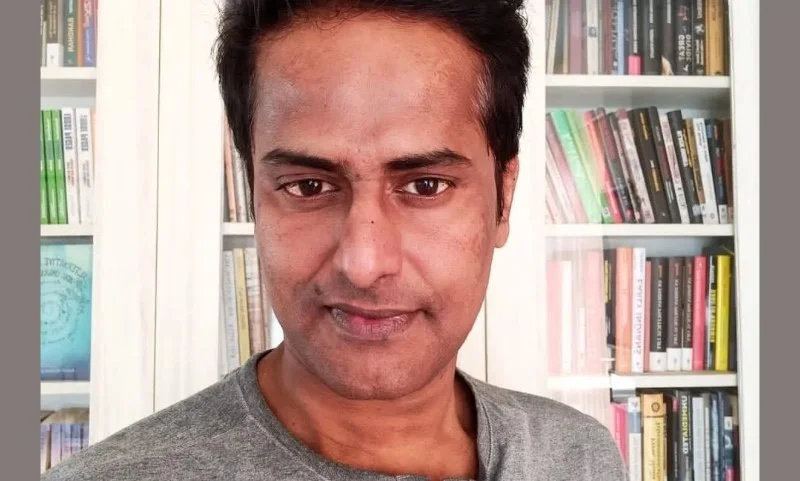

On October 12, opposition leaders, MPs, MLAs, student organisations and political workers came together in a massive march against Chief Election Commissioner Gyanesh Kumar, raising serious concerns over the Special Intensive Revision (SIR) of electoral rolls and the alleged mass deletion of voters’ names. The march brought together a broad coalition, including the INDIA bloc, AISA, SFI and other student unions, as part of a wider nationwide mobilisation against the SIR exercise and concerns surrounding electoral integrity.