
Why Kerala Rejected Communist Rule After a Decade
By Mariya Rajan
May 12, 2026
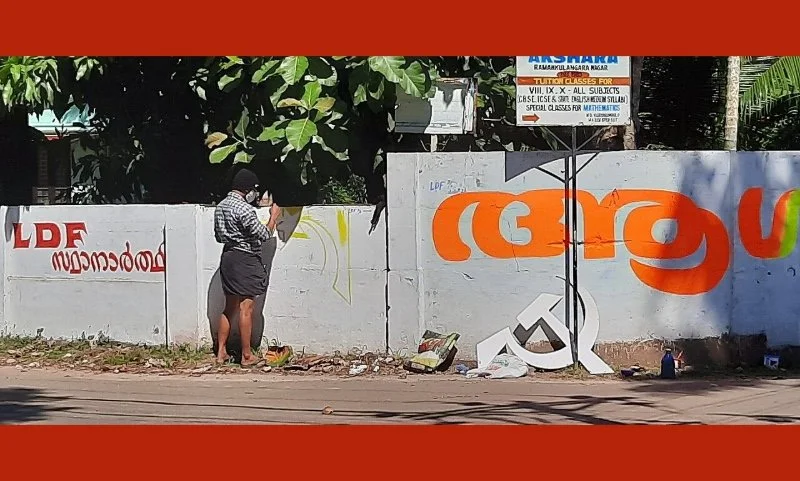
Photo by Fotokannan under a Creative Commons licence
The Congress-led United Democratic Front (UDF) has won 102 seats in Kerala’s 140-member Assembly, ending 10 years of Left Democratic Front (LDF) government. The defeat of the LDF also means that no communist party now leads a state government anywhere in India. In Kerala itself, the scale of the result suggests that something more than a usual swing between two evenly matched alliances was underway.
Within the winning alliance, Congress won 63 seats and the Indian Union Muslim League 22. On the other hand, the LDF, which had won 99 seats in 2021, collapsed to 35 in 2026. The Communist Party of India (Marxist), or CPI(M), finished with 26 seats and the Communist Party of India, or CPI, with eight. The Bharatiya Janata Party (BJP) won three seats, Nemom, Kazhakoottam and Chathannoor, a small tally in absolute terms but still its best assembly performance in Kerala so far.
Let’s look at the scale of the LDF defeat, which becomes clearer through vote share rather than seat counts alone. According to post-result analyses by Onmanorama, the CPI(M)’s vote count fell from about 5.28 million (52.8 lakh) in 2021 to about 4.7 million (47 lakh) in 2026, with its vote share sliding from 25.38 percent to 21.77 percent. This is important because seat swings in Kerala can sometimes come from narrow constituency margins or alliance arithmetic. A decline in both raw votes and percentage share means something more serious happened. It suggests that a section of people who had previously voted for the CPI(M) either moved away from the party or did not vote for it this time.
Many voters appeared to view the election as a referendum on Chief Minister Pinarayi Vijayan and his attempt to secure a third consecutive term, something no Kerala government had achieved in decades. Kerala’s electorate has historically alternated between the UDF and LDF every five years, with the pattern remaining largely intact for four decades until the LDF broke it by winning a second consecutive term in 2021. Vijayan broke that pattern in 2021 during the Covid period, largely because the government was viewed as administratively effective during a public health emergency. The 2026 verdict suggests that the exception ended there.

The second term of Vijayan increasingly came to be viewed, even within sections of the Left, as excessively centralised. Ministers appeared politically diminished beside the Chief Minister’s Office. Local party structures, which historically gave the CPI(M) its resilience and grassroots discipline, increasingly looked less influential in governance. Critics within the Left argued that such centralisation may produce administrative efficiency in the short term, while weakening the internal participation on which cadre-based parties depend. It’s not surprising that a communist party whose workers felt bypassed eventually weakened at the booth level.
The extent of the damage appeared in the losses suffered by ministers and senior figures. According to post-result tallies, 13 of the 21 ministers in the outgoing LDF cabinet lost their seats. Cabinet defeats on that scale usually indicate anger that has spread well beyond isolated local grievances. It means voters were willing to reject the government across regions and departments rather than punish only individual legislators.
Post-result public remarks from within the LDF made the crisis harder to dismiss as anti-incumbency. Minister Saji Cherian called the outcome one of the biggest defeats in the alliance’s history and referred openly to organisational and administrative failures. Kerala Congress (M), an LDF ally, stated that CPI(M) workers had cross-voted and that the government had failed to carry its development narrative to its own support base. Cross-voting by party workers is politically more damaging than voter dissatisfaction alone. Ordinary voters may drift temporarily, but cadres are supposed to remain loyal because they form the machine through which campaigns operate.
The result also reflected how different sections of voters appeared to reassess their political choices. Post-result analyses and political commentary suggested that many Muslim and Christian voters who had moved partially toward the LDF in recent years shifted back toward the Congress-led UDF in this election. Part of this appeared linked to a perception among sections of minority voters that the Congress-led alliance was better positioned politically to resist the BJP at the national level, especially at a time of heightened national political polarisation and debates around minority rights and representation.

However, the election should not automatically be read as a sweeping ideological endorsement of Congress either. The UDF benefited from accumulated fatigue against the incumbent government, resentment inside the Left organisation and Kerala’s long-standing habit of rotating power. Even after the election results, Congress has still not finalised its chief ministerial choice, with names such as V.D. Satheesan, Ramesh Chennithala and K.C. Venugopal all under discussion simultaneously. The delay has drawn attention because the election itself reflected voter frustration with concentrated authority and closed internal functioning. A coalition that was elected partly on the promise of greater responsiveness risks sending the opposite signal if its first visible act after victory became prolonged factional bargaining behind closed doors.
Kerala voters have historically shown little hesitation in removing governments they believe have become distant, overconfident or internally rigid. The same electorate that gave Vijayan an unprecedented second term has removed him decisively five years later. This pattern should be seen as a warning for the incoming UDF government too.
Kerala’s political culture rewards competence and punishes complacency quickly. The scale of the UDF’s seat victory could easily encourage overconfidence. But the state’s electoral history suggests the opposite.
You have just read a News Briefing, written to cut through the noise and present a single story for the day that matters to you. We encourage you to read the News Briefing each day. Our objective is to help you become not just an informed citizen, but an engaged and responsible one.

On October 12, opposition leaders, MPs, MLAs, student organisations and political workers came together in a massive march against Chief Election Commissioner Gyanesh Kumar, raising serious concerns over the Special Intensive Revision (SIR) of electoral rolls and the alleged mass deletion of voters’ names. The march brought together a broad coalition, including the INDIA bloc, AISA, SFI and other student unions, as part of a wider nationwide mobilisation against the SIR exercise and concerns surrounding electoral integrity.