
Tamil Nadu Didn’t Vote for Vijay Simply Because He’s a Celebrity
By Ganesh Rajaraman and Vishal Arora
May 11, 2026
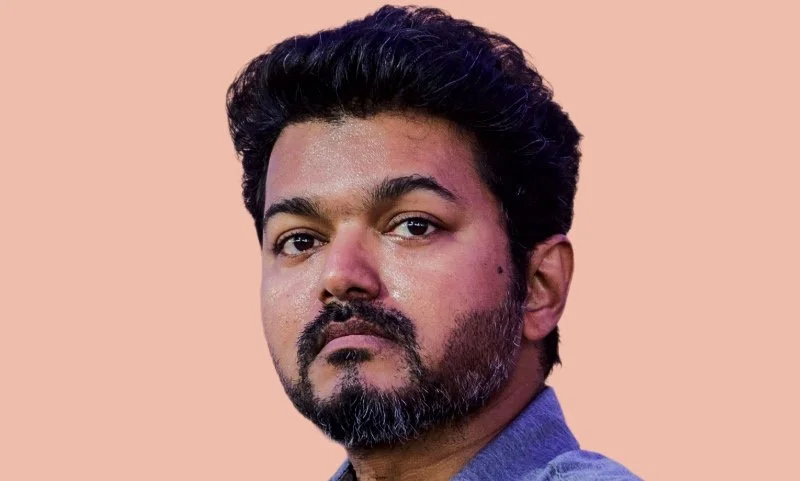
Photo by Dani Charles, Silverscreen Media Inc., via Creative Commons licence
Actor-turned-politician C. Joseph Vijay was sworn in as Chief Minister of Tamil Nadu on May 10, ending nearly six decades of alternating rule between two dominant parties. Film celebrities winning elections is not a new phenomenon in the state, but a first-time political party winning a legislative majority on its debut is. That is what was surprising, and it had nothing to do with any tendency for celebrity worship. The answer lies in how Tamil audiences have long viewed cinema.
Vijay's party, the Tamilaga Vettri Kazhagam (TVK), launched only in 2024, secured 108 seats, and with Congress, CPI, CPI(M), VCK and IUML extending support, it had the numbers to form a government. Vijay contested from two constituencies, Perambur and Trichy East, and won both. What surprised most analysts is that TVK emerged bigger than the Dravida Munnetra Kazhagam (DMK) and the All India Anna Dravida Munnetra Kazhagam (AIADMK), parties that have traditionally held power in the state.
Vijay is one of several prominent political figures in Tamil Nadu with a background in commercial films, including M.G. Ramachandran (MGR), M. Karunanidhi, J. Jayalalithaa and Vijayakanth. None of them was elected merely because they were admired as film actors.
Tamil voters are not susceptible to spectacle, and they have not treated the ballot as a form of fan endorsement. Those who think otherwise misread the structural role that Tamil cinema has played in this state’s political culture for more than seven decades.
Tamil cinema has functioned, since at least the 1950s, as a space where arguments about caste hierarchy, religious authority and economic exploitation were rehearsed in front of mass audiences. The 1952 film “Parasakthi” used a story of displacement to mount a direct critique of the caste order, and the DMK used precisely this grammar of cinema to win political power, with figures like Annadurai and MGR crossing from screen to legislature.

What the cinema trained Tamil audiences to do was to read a film star’s screen persona as a political statement, not simply as entertainment. By the 1980s, films dealt obliquely with agrarian class conflict, framing struggles between Dalit communities and landed elites in the language of proletariat against capitalist. This sustained a political vocabulary among working-class audiences that the formal parties had not managed to generate on their own.
This means that Vijay’s films, which dealt with corruption, drugs and governance failures, were also received by Tamil audiences through a long-established interpretive habit. They were reading his screen work the way an earlier generation read Ramachandran’s films, as evidence of a political commitment, rather than as mere drama.
The sight of injustice being defeated on screen, charged with emotional intensity, might look to an outsider like escapism, but in Tamil political culture it has served as a kind of moral rehearsal, keeping alive a set of expectations about what public life ought to look like. That habit of expectation is what Vijay was apparently able to mobilise in 2026, not simply his fame.
What the election result demonstrates is that Tamil voters distinguished between Vijay’s public persona, which is rooted in that cinematic tradition, and the two legacy Dravidian parties, which have governed the state continuously since 1967 and whose accumulated record voters evidently decided to move away from. The support from smaller parties including the VCK, which draws its base from Dalit communities, and from the left formations suggests that TVK assembled a coalition along the lines that Vijay’s stated ideological influences would predict.
In his first major political speech in October 2024, Vijay named Periyar E.V. Ramasamy, the father of the Dravidian social reform movement, as his ideological guide. He invoked C.N. Annadurai, the founder of the DMK, K. Kamaraj, the former Chief Minister and Congress leader, and B.R. Ambedkar as anchors for his politics of social justice. He openly identified as a Christian while simultaneously arguing for secular public life, a combination that TVK made central to its political identity.
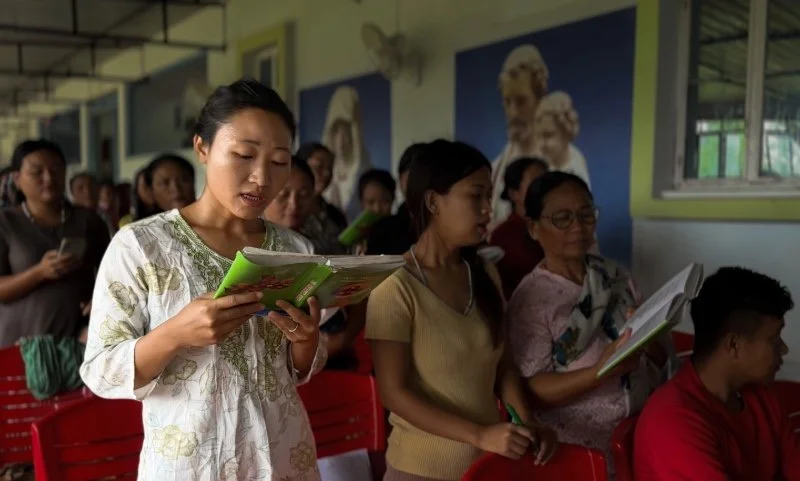
In Tamil political culture, Periyar and Ambedkar represent distinct but related traditions of anti-caste politics, and the combination signals to specific constituencies that the party’s commitments run deeper than campaign rhetoric.
The comparison drawn during the election between Vijay and MGR was less about two film stars following the same path and more a reminder that Tamil Nadu has a documented history of treating cinema as preparation for political leadership. Ramachandran built a welfare-state politics that survived his death by several years because it was rooted in a genuine set of claims about the relationship between the state and the poor.
The question that now faces Vijay is whether the political capital he accumulated through film and welfare work will translate into governing capacity, or whether the expectations his career has generated will eventually collide with the ordinary constraints of administration.
Tamil political culture has high tolerance for the mythology of the protector-figure, but it has also, over the course of six decades, demonstrated a capacity to vote out governments it considers to have failed.
You have just read a News Briefing, written by Newsreel Asia’s text editor, Vishal Arora, to cut through the noise and present a single story for the day that matters to you. We encourage you to read the News Briefing each day. Our objective is to help you become not just an informed citizen, but an engaged and responsible one.
On October 12, opposition leaders, MPs, MLAs, student organisations and political workers came together in a massive march against Chief Election Commissioner Gyanesh Kumar, raising serious concerns over the Special Intensive Revision (SIR) of electoral rolls and the alleged mass deletion of voters’ names. The march brought together a broad coalition, including the INDIA bloc, AISA, SFI and other student unions, as part of a wider nationwide mobilisation against the SIR exercise and concerns surrounding electoral integrity.