
What to Make of Karnataka’s Ban on Social Media for Children
From the Editor’s Desk
March 6, 2026

Karnataka has banned social media use for children under the age of 16, becoming the first state in the country to do so, according to Reuters. The move responds to real psychological concerns about how social media platforms are designed to keep young users hooked, but can age-based bans alone address the deeper forces that shape children’s online behaviour?
Let’s start with the psychological concern first.
Researchers in developmental psychology have found that early adolescence is a stage when the brain becomes especially sensitive to rewards, approval from others and comparisons with peers. Brain imaging studies have shown that teenagers’ reward systems respond strongly to signals of social approval such as likes, comments and shares because these cues trigger the release of dopamine, a chemical produced in areas deep inside the brain that helps regulate motivation, pleasure and learning by signalling that something feels rewarding and worth repeating.
Platforms built around constant feedback therefore interact directly with the brain’s reward system. Psychologists describe this pattern as variable reward reinforcement, a process in which rewards appear at unpredictable moments. The same principle operates in casino machines where a person pulls a lever again and again because the next pull might produce a prize. Social media works in a similar way. Each notification may bring attention or approval, and because the brain never knows when that reward will appear, people keep checking their phones repeatedly.

Evidence linking heavy social media use with anxiety, sleep disturbance and depressive symptoms among teenagers has also grown in recent years, though the research remains debated. Some studies show small effects while others show stronger associations. Psychologist Jean Twenge, who studies generational behaviour, has argued that rising smartphone use among teenagers coincided with rising mental health concerns in the United States. Other researchers point out that many factors influence youth mental health, including school pressure, family environment and economic stress. Scientific consensus therefore remains cautious.
Still, few psychologists dispute that very high levels of screen exposure can disturb sleep, shorten attention span and intensify social comparison.
From that psychological perspective, governments reacting to children’s digital environment reflects a real concern.
Now, let’s deal with the question whether age-based bans work.
Age verification by platforms mostly relies on self-reported data. Children frequently enter false birth dates during account creation. A ban therefore reduces access mainly for younger children who follow rules closely. Teenagers who actively seek social media often find ways around restrictions.



Enforcement would require stronger identity verification systems, and that raises another concern. Strict age verification systems would require personal identification documents or biometric data. From the perspective of privacy, such systems create large databases of personal identity information and introduce a different set of risks.
Keeping this in mind, Karnataka’s decision may work less as a complete solution and more as a signal about concerns over children’s digital well-being, one that could prompt wider conversations among parents, schools and technology companies.
Another issue concerns the focus on social media alone. Children’s digital exposure includes far more than social networking platforms. Video streaming services, online games, short video apps, messaging services and search engines occupy large portions of young people’s screen time. Research from the Organisation for Economic Co-operation and Development and other studies on digital behaviour shows that teenagers spend several hours each day online using multiple types of digital services. Social media forms only one part of that larger digital landscape.
From a psychological standpoint, the deeper issue concerns digital design rather than one specific platform category. Many modern digital services rely on attention maximisation systems, including YouTube, Netflix, Spotify and online games. Algorithms recommend content-based on engagement patterns. A ban targeting only social media therefore addresses a visible symptom rather than the entire environment influencing children’s attention.
Another factor is digital literacy. Children grow up inside digital environments that influence identity formation, friendships and learning. A purely restrictive strategy may reduce exposure temporarily. Long-term resilience often comes from teaching children how digital systems influence behaviour. This includes understanding persuasive design, recognising online manipulation and developing self-regulation habits.
Educational psychologists compare this challenge to nutrition. Governments regulate harmful substances and restrict certain products for minors. Parents and schools also teach children how to develop healthy habits around food. Digital well-being may require a similar balance between regulation and education.
Parental involvement may also play a major role. Parents could set time boundaries, discuss online content and encourage and incentivise offline activities.
You have just read a News Briefing, written by Newsreel Asia’s text editor, Vishal Arora, to cut through the noise and present a single story for the day that matters to you. We encourage you to read the News Briefing each day. Our objective is to help you become not just an informed citizen, but an engaged and responsible one.



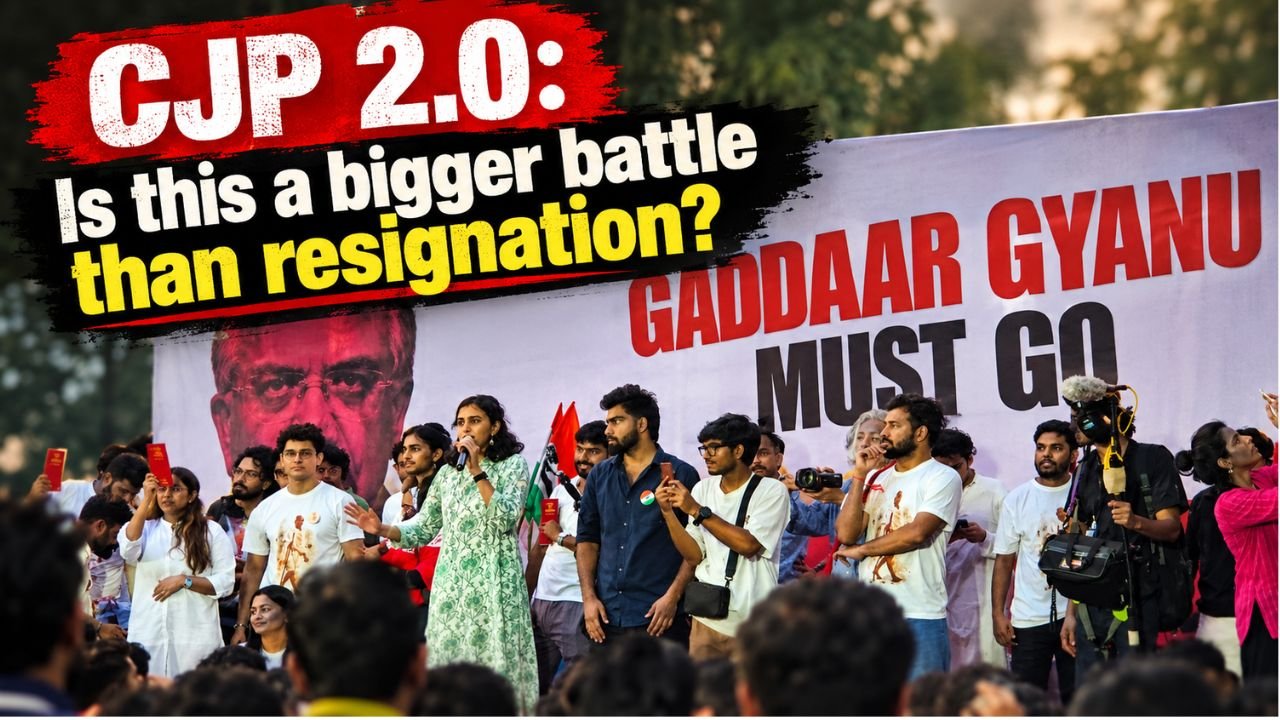
On October 12, opposition leaders, MPs, MLAs, student organisations and political workers came together in a massive march against Chief Election Commissioner Gyanesh Kumar, raising serious concerns over the Special Intensive Revision (SIR) of electoral rolls and the alleged mass deletion of voters’ names. The march brought together a broad coalition, including the INDIA bloc, AISA, SFI and other student unions, as part of a wider nationwide mobilisation against the SIR exercise and concerns surrounding electoral integrity.