
Nepal’s Gen Z Dismantles the Old Cycle of Elite Circulation
From the Editor’s Desk
March 7, 2026

Nepal’s 2026 parliamentary election has produced a major political upset, with Balendra Shah, a former rapper who rose to prominence as Kathmandu’s mayor despite having no traditional political background, leading his new Rastriya Swatantra Party (RSP) to sweeping gains. The surge suggests that Gen Z voters have finally disrupted the long-standing cycle of “elite circulation” through which Nepal’s political leadership has rotated among the same parties for decades.
Early results from Nepal’s Election Commission, as of noon on March 7, show the RSP winning 20 seats and leading in another 98 constituencies out of the 165 filled through direct first-past-the-post contests, according to PTI. Nepal’s House of Representatives contains 275 seats in total. Of these, 165 members are elected through constituency voting while 110 are allocated later through proportional representation based on national party vote share.
One of the most striking contests occurred in the Jhapa 5 constituency, the long-standing political base of former prime minister K.P. Sharma Oli. Balendra Shah, fondly known as Balen, secured more than 15,000 votes in early counting, while Oli received about 3,300.
The election recorded roughly 60 percent voter turnout, with officials noting unusually strong participation among younger voters. RSP candidate Ranju Neupane also secured the first declared parliamentary victory from the Kathmandu 1 constituency.
Now, let’s turn to why these results resonate with the political science concept of “elite circulation.” The idea comes from Italian economist and sociologist Vilfredo Pareto, who wrote in the early twentieth century about how every society is governed by a small minority of people who control political institutions. These individuals form what he called the ruling elite.
Pareto observed that elites rarely disappear entirely. Instead, they tend to circulate. Members of the ruling elite gradually lose influence and are replaced by a small number of newcomers who manage to enter the elite circle. Entry into that circle is usually difficult and selective, and most people remain outside it. The system renews itself by absorbing some new actors while preserving the overall structure of power.
Nepal’s politics during the past three decades fits this pattern remarkably well.
Since the monarchy ended in 2008, national power has largely rotated among three major parties and their leaders. The Nepali Congress led by Sher Bahadur Deuba, the Communist Party of Nepal Unified Marxist Leninist led by Oli, and the Communist Party of Nepal Maoist Centre led by Pushpa Kamal Dahal Prachanda dominated government formation.
Coalitions shifted frequently, governments rose and collapsed, and prime ministers changed. But the same political leadership continued to occupy the centre of power. Many observers in Nepal called this system a game of musical chairs. Elections changed which party sat in the prime minister’s office, while the larger political elite remained largely unchanged.
Another Italian theorist, Gaetano Mosca, who studied political sociology and constitutional systems, also argued that a small organised minority always governs the majority. Political change, he maintained, usually occurs through gradual entry of new members into that class rather than through complete displacement of the ruling group. Nepal has now become an exception.
The process in Nepal accelerated in 2025, as younger citizens increasingly questioned the political arrangement that existed at the time. The “Nepo Kid” campaign (borrowed from the English word “nepotism”) that spread across social media exposed the lifestyles of children of powerful politicians as just one manifestation of elite circulation amid corruption and increasing authoritarianism.
The campaign gained momentum because it connected visible inequality with everyday frustrations faced by young Nepalis. High unemployment, rising costs of education and economic uncertainty created the sense that opportunities were shrinking for ordinary citizens while political families prospered.
However, the government responded by banning 26 major social media platforms under a regulatory framework that required digital companies to register with the state, rather than reassuring young citizens that their concerns would be addressed. Many young people interpreted the ban as an attempt to silence criticism rather than enforce technical rules.
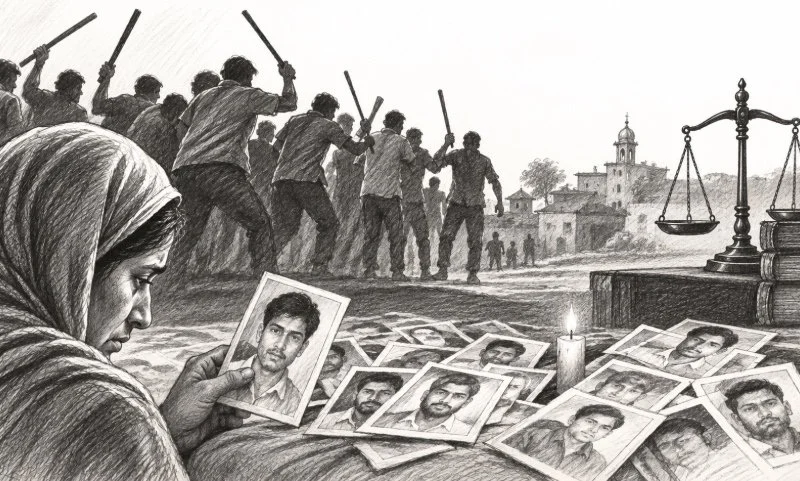
Larger protests followed. Students organised demonstrations through online networks, music performances and marches. The movement grew quickly, drawing thousands into the streets. The government responded with a violent crackdown. Police used tear gas, batons, water cannons and live ammunition, killing and injuring young protesters, most of them students and teenagers.
The crisis weakened the legitimacy of the political leadership. The shock of the killings now turned the youth-led protest into a larger national uprising that eroded the government’s authority and forced Oli and his ministers to resign.
Meanwhile, Shah, as mayor of Kathmandu, had cultivated an image of administrative discipline and direct engagement with citizens. His earlier career as a rapper also gave him cultural visibility among younger audiences. Through social media he developed a communication style that bypassed traditional party structures.
It can be argued that youth participation in the 2026 election, which brought a level of mobilisation that election officials described as unprecedented, aimed to make it clear that elite circulation had to stop. And they did it.
Nepal’s election carries a lesson for governments across the world. Political systems may no longer remain resilient unless they allow regular entry of new leaders, ideas and social groups into positions of power. By closing those doors for too long, such systems risk accumulating pressure that may eventually produce abrupt political shifts.
You have just read a News Briefing, written by Newsreel Asia’s text editor, Vishal Arora, to cut through the noise and present a single story for the day that matters to you. We encourage you to read the News Briefing each day. Our objective is to help you become not just an informed citizen, but an engaged and responsible one.
What happened in Mumbai on October 2 may have been only one day of protest, but the issues behind it are unlikely to disappear with the dispersal of the crowd. The protest was centred around concerns over the Election Commission, electoral rolls and the Special Intensive Revision (SIR) exercise, with protesters demanding accountability from Chief Election Commissioner Gyanesh Kumar. At the same time, similar mobilisation has been taking place across different parts of the country, with student groups, Opposition parties and civil society organisations raising concerns over the electoral process. Newsreel Asia spent the day at Mumbai Protest capturing the preparations, the police presence, conversations with protesters, the atmosphere on the streets and how the day unfolded. The speech of Cockroach Janta Party's leaders and sentiment of protestors seemed larger than the concerns regarding the electoral process. Will this lead to something bigger?