
Detention Without Accurate Evidence Threatens Constitutional Liberty in Wangchuk’s Case
From the Editor’s Desk
February 17, 2026

Photo by Sonam Wangchuk, licensed under Creative Commons
India’s Supreme Court is scrutinising the preventive detention of climate activist Sonam Wangchuk after noticing a prima facie discrepancy between the Ladakhi speech he delivered and the translated transcript relied upon by government authorities to justify his confinement, along with a possible failure to supply the complete evidentiary record to him. The main constitutional concern arising from this development is whether the extraordinary executive power to detain without trial has been exercised on the basis of material that is accurate, genuine and procedurally fair.
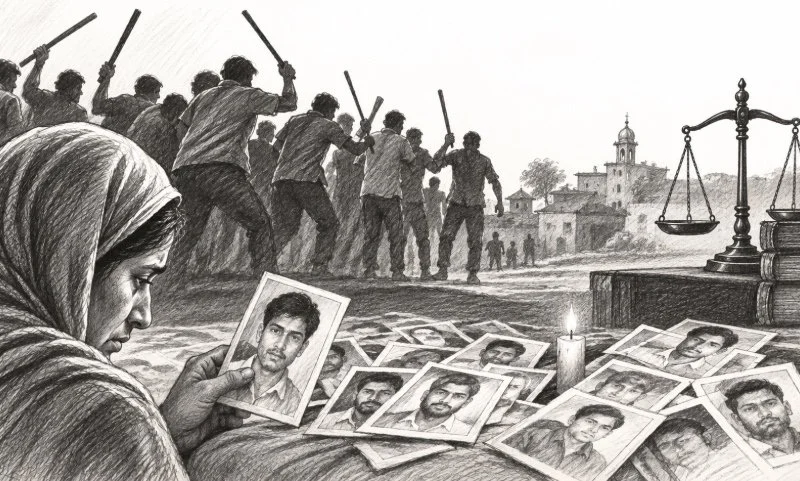
Wangchuk was arrested in September 2025, under the stringent National Security Act (NSA), following large protests in Leh demanding statehood for Ladakh and extension of constitutional safeguards under the Constitution’s Sixth Schedule. Protests at the time turned violent, with reported clashes between demonstrators and security forces and damage to public and private property. Media reports at the time said at least four civilian protesters had died in the unrest. Authorities accused Wangchuk, who had been leading the agitation and had earlier been on a hunger strike, of making speeches they claimed were “provocative” that allegedly contributed to unrest and could threaten public order and security.
In the latest Court hearing on February 16, 2026, a bench of Justices Aravind Kumar and P.B. Varale questioned the Centre over the accuracy of the transcripts and translations of speeches submitted in support of Wangchuk’s detention order, as reported by The Times of India. The court noted that the government’s translated transcript of one of Wangchuk’s speeches ran for seven to eight minutes, even though the original speech lasted about three minutes.

Senior advocate Kapil Sibal, for Wangchuk’s wife, submitted that some statements in the translated transcript were never spoken by Wangchuk and urged the court to insist on the actual transcript. The bench directed the Centre to produce a sealed copy of the storage device given to Wangchuk in custody to verify the material supplied, and stressed the need for precise and faithful transcription, especially given modern translation tools.
Preventive detention, such as that of Wangchuk, occupies an uneasy place within India’s constitutional order. Ordinary criminal law requires proof of a past offence before liberty can be restricted. Preventive detention reverses that logic by permitting confinement based on anticipated future harm. The Constitution allows this departure from the normal rule, yet subjects it to strict discipline.
Article 21 protects personal liberty and requires that any deprivation follow a procedure that is fair, just and reasonable. Article 22 creates limited but crucial safeguards even within preventive detention, including communication of grounds and supply of relied-upon material so that the detainee may make an effective representation. In this legal architecture, procedure substitutes for trial as the principal safeguard of freedom.

This dispute goes to a basic rule in preventive detention law, that a person can be detained only on the basis of real and relevant facts. The Supreme Court has repeatedly said that the government’s belief that detention is necessary cannot rest on facts that do not exist, on distorted records or on material unrelated to the alleged threat. Courts have, in the past, set aside many detention orders for exactly these reasons.
A second serious concern arises from the claim that the video recordings mentioned in the detention order were missing from the storage device given to the detainee. Preventive detention law treats full disclosure of all relied-upon material as essential, because the detainee’s right to challenge the detention is the only immediate protection available in the absence of a criminal trial. Courts have repeatedly cancelled detention orders where even one important document was withheld, since an incomplete record makes any meaningful defence impossible and therefore violates basic constitutional fairness.
Questions of language and translation carry special constitutional weight in this situation. India functions through many languages in administration and public life, yet once spoken words enter a legal proceeding, their translation becomes legal evidence. Therefore, evidence must convey the original meaning with complete accuracy. Even small changes in wording can shift a statement from disagreement to danger, or from opinion to alleged incitement. Where personal liberty is involved, the state is required to maintain the highest level of precision.
The dispute also sits within a longer legal history. Preventive detention in India developed from colonial-era emergency laws aimed at controlling political mobilisation. After independence, the Constitution retained the power but placed it under judicial supervision. Courts usually refrain from second-guessing the government’s assessment of security threats, recognising limits on their institutional role. Instead, they apply strict scrutiny to procedure, relevance of material, authenticity of evidence and completeness of disclosure.
Preventive detention remains constitutionally tolerable only so long as the state demonstrates scrupulous fidelity to truth, evidence and fair procedure. Detention grounded in distorted language, incomplete material or defective disclosure risks crossing from preventive governance into arbitrary confinement.
You have just read a News Briefing, written by Newsreel Asia’s text editor, Vishal Arora, to cut through the noise and present a single story for the day that matters to you. We encourage you to read the News Briefing each day. Our objective is to help you become not just an informed citizen, but an engaged and responsible one.
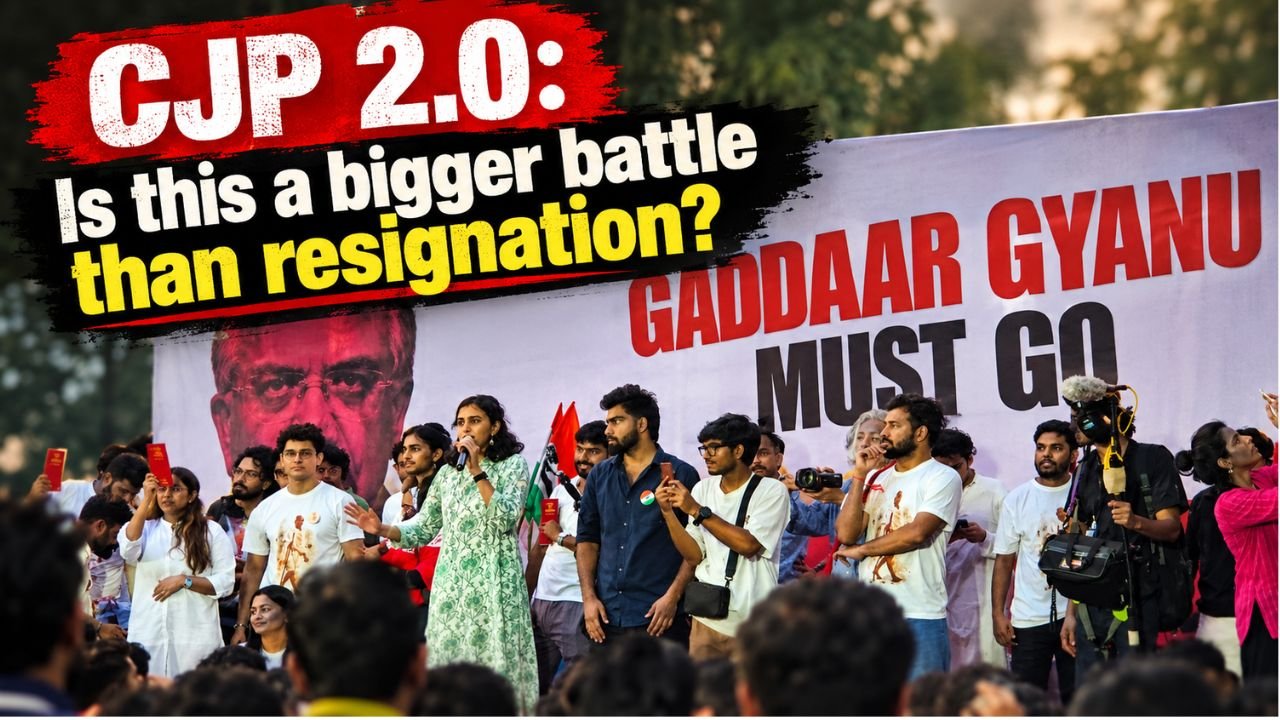
On October 12, opposition leaders, MPs, MLAs, student organisations and political workers came together in a massive march against Chief Election Commissioner Gyanesh Kumar, raising serious concerns over the Special Intensive Revision (SIR) of electoral rolls and the alleged mass deletion of voters’ names. The march brought together a broad coalition, including the INDIA bloc, AISA, SFI and other student unions, as part of a wider nationwide mobilisation against the SIR exercise and concerns surrounding electoral integrity.