
India Be Designated ‘Country of Particular Concern’ on Religious Freedom: US Panel
From the Editor’s Desk
March 10, 2026

A screenshot of the world map in the USCIRF report showing countries categorized by levels of religious freedom violations.
An independent U.S. government advisory body on international religious freedom said in its 2026 annual report that India should be designated a “Country of Particular Concern” for religious freedom violations, citing “worsening conditions” for religious minorities during 2025.
The 2026 report by the U.S. Commission on International Religious Freedom (USCIRF) said the deterioration came as authorities introduced and enforced legislation affecting minority communities and their houses of worship, while vigilante attacks, detentions and expulsions involving religious minorities occurred across several states during the year.
The report recommended that the U.S. State Department designate India among five new Countries of Particular Concern, a category reserved under U.S. law for governments that engage in or tolerate severe violations of religious freedom. A CPC designation can lead the U.S. government to impose measures such as diplomatic pressure, economic sanctions, or other policy actions under the International Religious Freedom Act.
The commission also urged redesignation of 13 other countries already on the list, including China, Iran, North Korea, Pakistan and Russia.
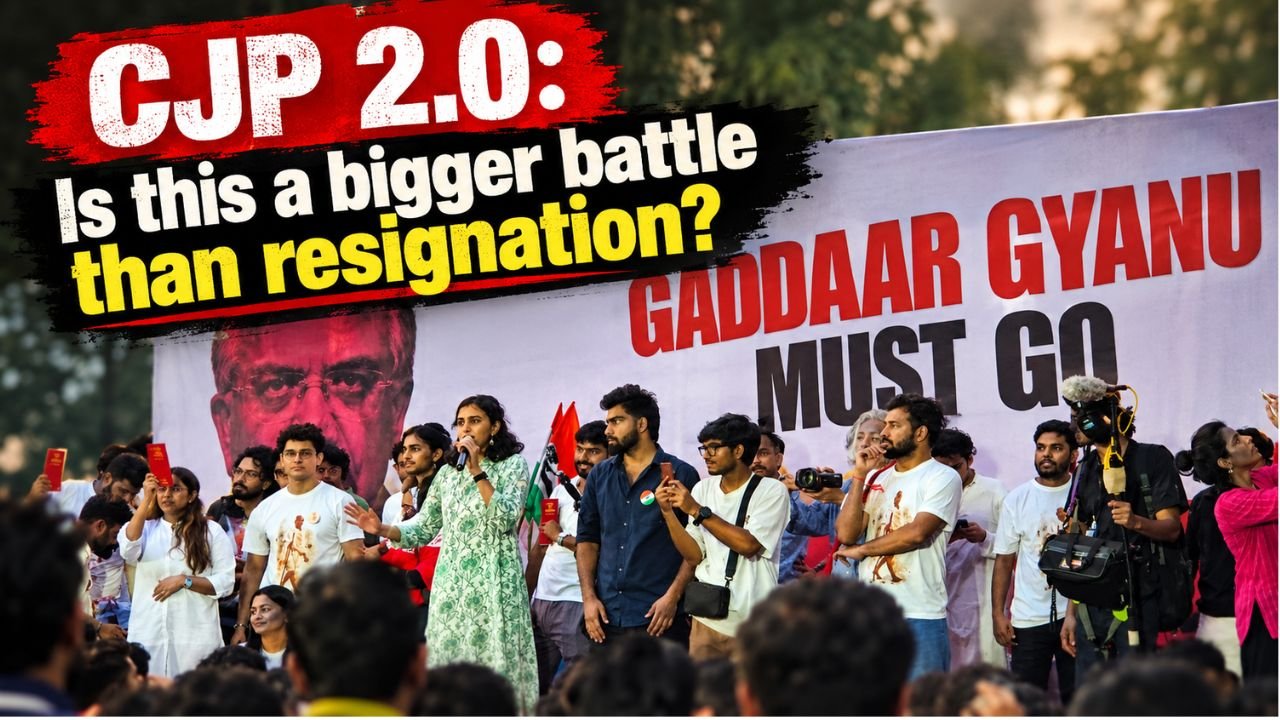

USCIRF cited a series of developments in India during 2025, including new or strengthened state laws regulating religious conversion, commonly known as “anti-conversion” laws.
Twelve of India’s 28 states currently maintain such laws, and several governments expanded penalties or broadened definitions of what constitutes unlawful conversion, it notes.
Civil liberties groups and constitutional scholars in India argue that such laws raise constitutional concerns because the Indian Constitution guarantees freedom of religion, including the right to profess, practice and propagate faith, and that in practice the laws can enable police complaints and arrests based on allegations of coercion even in cases of voluntary religious conversion.
In August, Uttarakhand passed legislation criminalising certain digital speech related to religion and increasing prison terms for “illegal conversions” from 10 to 14 years. Rajasthan adopted legislation allowing life imprisonment as a possible punishment for conducting religious conversions and requiring individuals planning to change religion voluntarily to notify the government two months in advance. The law also requires anyone conducting a conversion to give one month’s notice.
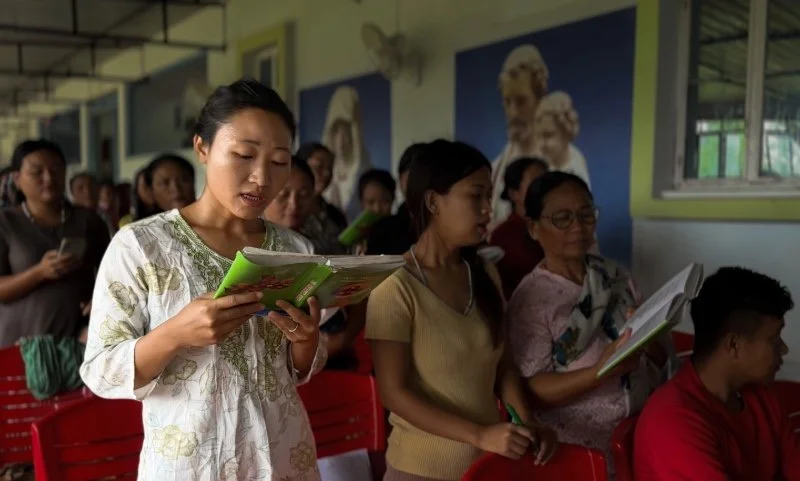
Arunachal Pradesh moved in March to implement a decades old anti-conversion law that had long remained dormant, prompting protests by hundreds of thousands of Christians. Other states also considered tougher measures, with Maharashtra announcing plans to introduce a stricter anti-conversion law and Chhattisgarh proposing legislation targeting faith healing meetings.

The report cites Assam’s government as saying it would introduce legislation to curb conversions associated with interfaith marriages, often described by supporters as “love jihad,” a term used by some political groups to refer to alleged religious conversions occurring through marriage.
The report also cites legislation affecting religious institutions.
India’s Parliament passed the Waqf Bill in May, adding non-Muslims to boards that manage Waqf land endowments, which include Islamic religious properties such as mosques, seminaries and graveyards. The report notes that deadly protests erupted in West Bengal over the bill, leaving three people dead. India’s Supreme Court later suspended key provisions of the law in September, including a clause allowing the government to decide whether disputed properties qualify as Waqf, and limited the number of non-Muslim members on the federal Waqf board to four.
In the same month, the Uttarakhand legislative assembly passed the State Authority for Minority Education Act, dissolving the Madrasa Board and placing madrasas and educational institutions associated with several religious communities under state control, the report says.
The commission’s report also refers to incidents of violence and tensions involving religious communities.
In March, violence broke out in Maharashtra after the Vishwa Hindu Parishad called for the removal of the tomb of Aurangzeb, a Mughal ruler who died in 1707. Dozens of people were injured and authorities imposed a curfew after rumours circulated that Qur’ans had been desecrated during protests, according to the report.
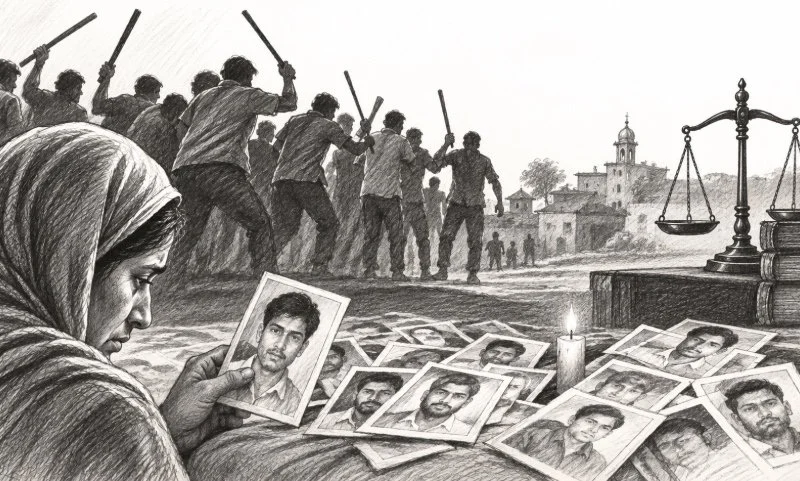
In June, a mob attacked 20 Christian families in Odisha after they refused to convert to Hinduism, leaving eight people injured and hospitalised. Police did not intervene during the attack, the report says.
Another episode cited in the report involved an April shooting attack in Kashmir in which three gunmen killed 26 people from a group of predominantly Hindu tourists. The attackers asked victims to recite the Kalma, an Islamic declaration of faith, and killed those who were unable to do so, says the report. The attack triggered a five-day conflict between India and Pakistan and heightened communal tensions in India, the report says, adding that anti-Muslim sentiment intensified afterward, with Muslims reportedly killed in alleged hate crimes in Karnataka and Uttar Pradesh.
USCIRF also cites government actions involving migrants and refugees.
In May, authorities detained 40 Rohingya refugees, including 15 Christians, and transported them into international waters near the coast of Myanmar, where they were forced to swim to shore with life vests, it says.
In July, authorities expelled hundreds of Bengali speaking Muslims from Assam to Bangladesh despite being Indian citizens, while officials from the ruling Bharatiya Janata Party described those expelled as Muslim “infiltrators” threatening the country’s national identity according to the USCIRF.
The government also issued new rules under the Foreigners Act in September expanding the authority of Foreigner Tribunals, quasi-judicial bodies that determine citizenship status, to issue arrest warrants and send people suspected of being foreigners to holding centres without due process, says the report.
The report further cites arrests of individuals accused of conducting religious conversions and the continued imprisonment of people linked to protests against the 2019 Citizenship Amendment Act, including Umar Khalid and Sharjeel Imam, who remained in jail for a fifth year without trial.
Police also arrested a Muslim university professor, Ali Khan Mahmudabad, in May over social media comments about Kashmir and subsequent attacks on Muslims, after a complaint filed by a junior member of the ruling party, according to the report.
USCIRF operates independently of the U.S. government’s foreign policy machinery, which often creates a visible distance between its recommendations and the actions of the State Department. The Commission has recommended since 2020 that the State Department designate India as a Country of Particular Concern for religious freedom violations, though Washington has not adopted the recommendation.
Religious freedom is widely understood in political theory and human rights law as closely tied to human dignity and social progress. The idea rests on the principle that individuals must be free to hold, change or reject beliefs without coercion from the state or society. Scholars of political philosophy often trace this principle to early modern debates about liberty of conscience, while modern international law embeds it in instruments such as Article 18 of the Universal Declaration of Human Rights.
According to scholars, societies that protect freedom of belief tend to allow greater space for intellectual debate, civil participation and peaceful coexistence among different communities. Restrictions on religious freedom, by contrast, often intersect with broader limits on expression, association and minority rights, which can slow social and institutional development.
You have just read a News Briefing, written by Newsreel Asia’s text editor, Vishal Arora, to cut through the noise and present a single story for the day that matters to you. We encourage you to read the News Briefing each day. Our objective is to help you become not just an informed citizen, but an engaged and responsible one.
On October 12, opposition leaders, MPs, MLAs, student organisations and political workers came together in a massive march against Chief Election Commissioner Gyanesh Kumar, raising serious concerns over the Special Intensive Revision (SIR) of electoral rolls and the alleged mass deletion of voters’ names. The march brought together a broad coalition, including the INDIA bloc, AISA, SFI and other student unions, as part of a wider nationwide mobilisation against the SIR exercise and concerns surrounding electoral integrity.