
What Exactly Would an Astrologer-Advisor Do in Tamil Nadu CM’s Office?
By Vishal Arora
May 19, 2026
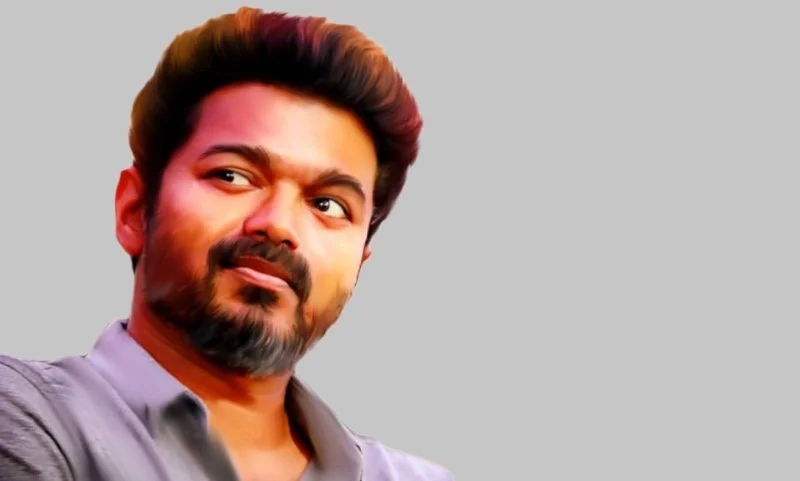
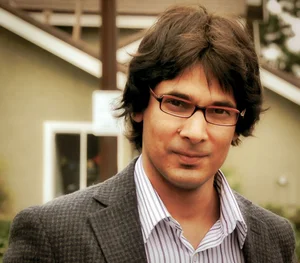
Photo by MotivationMaze, licensed under Creative Commons.
Tamil Nadu Chief Minister Joseph Vijay has finally rolled back his decision to appoint astrologer Radhan Pandit Vetrivel as an Officer on Special Duty, as reported by The Hindu, after the appointment drew criticism. The rollback did not come with any acknowledgement that it risked mixing constitutional governance with an unscientific basis for decision-making.
The problem with the appointment never lay in Vijay privately consulting an astrologer. Politicians across India might be consulting astrologers, priests, spiritual advisers, numerologists, vastu experts, and perhaps occasionally even people who read parrots pulling cards from tiny boxes at railway stations. Indian democracy has survived all of this with admirable stamina. The problem began once astrology appeared ready to enter the chief minister’s office through an official designation carrying state authority, institutional legitimacy and taxpayer money.
A chief minister’s office is supposed to contain people who can explain budgets, laws, administration, media strategy, public health, infrastructure, or governance. Citizens generally expect an Officer on Special Duty to possess expertise connected to governance and administration.
TVK’s defence made the controversy harder to justify. After appointing Vetrivel as OSD, party leaders explained that he was really functioning as a media spokesperson and that his profession was irrelevant, as reported by NDTV. By this logic, Tamil Nadu could theoretically appoint a dentist as irrigation adviser, a magician as finance consultant, or a wedding DJ as constitutional expert because professions apparently carry no relation to responsibilities anymore. The argument stretched institutional logic to the point where almost any appointment could be defended as long as the designation sounded administrative enough.
What exactly was an astrologer expected to contribute inside the chief minister’s office? If the role truly involved media management, Tamil Nadu has thousands of journalists, communication professionals, political strategists, editors and public relations experts who have spent decades dealing with public messaging.
In politics, appointments are rarely viewed as accidental. No government can realistically expect such an appointment to be separated from its symbolism. That symbolism becomes especially awkward in Tamil Nadu, a state whose Dravidian political tradition spent decades attacking superstition and promoting rationalism, scientific temper and social reform.
The entire rationalist movement in Tamil Nadu, with E.V. Ramasamy, known widely as Periyar, as a central figure, emerged from the belief that modern governance should rely on reason, education and institutional thinking. This contradiction explains why the backlash spread so quickly. Critics saw a collision between Tamil Nadu’s rationalist political identity and a government appearing willing to blur the line between personal belief and public administration.
Some defenders argued that astrology forms part of Indian culture and therefore critics were overreacting. Culture, however, cannot automatically become administrative qualification. Cricket also forms part of Indian culture. That does not mean the chief minister should appoint a left-arm spinner as economic adviser because he once predicted rain correctly during an IPL match.
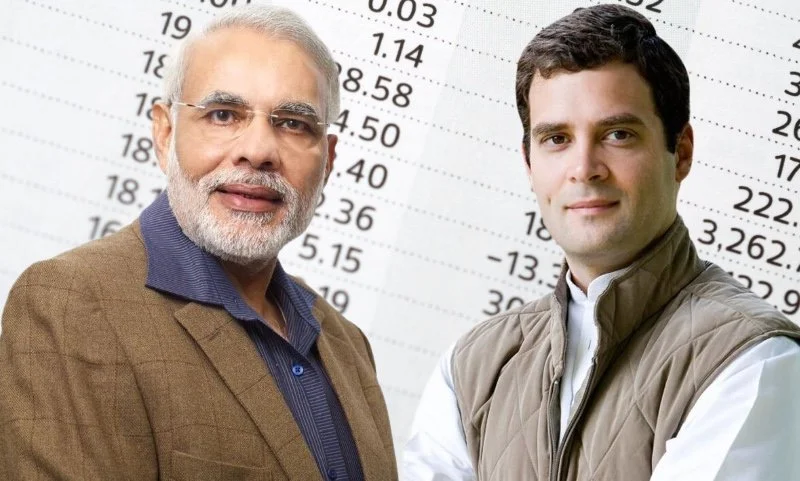
The concern also lies in how modern states derive legitimacy. German sociologist Max Weber argued that modern governments function through “rational legal authority.” This simply means that citizens obey institutions because they believe decisions emerge from law, expertise, procedures, evidence and accountability.
India’s Constitution itself encourages scientific temper and the spirit of inquiry. This does not mean citizens cannot believe in astrology. Democracies certainly and rightly protect personal belief and its various expressions. A minister has the right to carry lucky charms, wear gemstones, pray before speeches, or refuse to travel during Rahu Kaalam, an inauspicious period in astrology. Public life contains endless human quirks. However, constitutional governance requires state institutions themselves to function through publicly accountable reasoning.
Vijay entered politics projecting himself as a fresh alternative capable of renewing Tamil Nadu's political culture. But one of the first controversies surrounding his government revolved around astrology entering the machinery of state through an official designation. To his credit, he listened, though reluctantly.
You have just read a News Briefing, written by Newsreel Asia’s text editor, Vishal Arora, to cut through the noise and present a single story for the day that matters to you. We encourage you to read the News Briefing each day. Our objective is to help you become not just an informed citizen, but an engaged and responsible one.
What happened in Mumbai on October 2 may have been only one day of protest, but the issues behind it are unlikely to disappear with the dispersal of the crowd. The protest was centred around concerns over the Election Commission, electoral rolls and the Special Intensive Revision (SIR) exercise, with protesters demanding accountability from Chief Election Commissioner Gyanesh Kumar. At the same time, similar mobilisation has been taking place across different parts of the country, with student groups, Opposition parties and civil society organisations raising concerns over the electoral process. Newsreel Asia spent the day at Mumbai Protest capturing the preparations, the police presence, conversations with protesters, the atmosphere on the streets and how the day unfolded. The speech of Cockroach Janta Party's leaders and sentiment of protestors seemed larger than the concerns regarding the electoral process. Will this lead to something bigger?