
Life Is Getting Harder for India’s Middle Class as Costs Rise and Jobs Shrink
From the Editor’s Desk
March 31, 2026
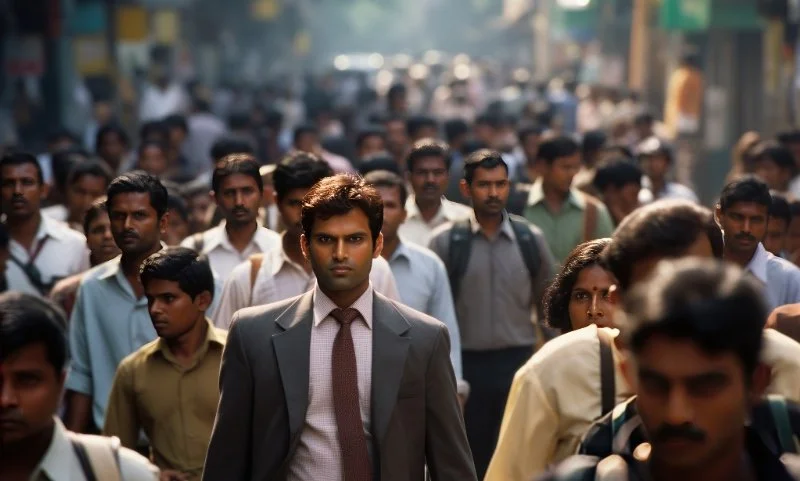
India’s middle class is getting economically squeezed as automation is destroying jobs, wages have stagnated and the cost of living has outpaced incomes, according to an analysis by the BBC. The class that pays the state’s taxes and drives its consumption is borrowing to cover basic expenses, putting the foundations of the post-1991 growth model under pressure.
White-collar job creation has fallen from 11% before 2020 to just 1% today, a decline concentrated in the sectors that India’s educated workforce was trained for, points out the BBC analysis, citing figured from the Naukri Jobspeak Index. India’s IT services sector, the country’s largest white-collar employer with 8 million workers, is in active retrenchment as companies are deploying AI to reduce costs, it notes. Further, Niti Aayog, the government’s planning body, estimates that the technology could eliminate close to 3 million IT and customer service jobs by 2031.
The CEOs of India’s most profitable companies have acknowledged using AI to cut salary bills by a third, and into this narrowing market, 8 million new graduates arrive every year, which is why the unemployment rate for graduates has reached 29.1%, nine times the rate for those who never attended school, says the BBC.
Over the past decade, the average middle-class taxpayer’s annual income has grown by around 50,000 rupees, roughly the price of a decent smartphone. However, the costs this class faces for basic necessities have risen far faster. The analysis notes an effective annual inflation rate of around 9% for this group, which means a family comfortable on 1 million rupees in 2016 would now need close to 2 million to maintain the same standard.

Further, nearly half of all Indian families have taken personal loans, with 67% of borrowers having their first loan before the age of 30; for those carrying debt, nearly 40% of annual income goes to servicing it, and between 5% and 10% of retail borrowers have reached the stage of taking new loans to repay old ones, what lenders call a debt trap, the analysis says.
The middle class appears to be in a tight economic position. A large number of educated workers are entering the labour market each year, while the number of stable, well-paying jobs is barely increasing. This has created a supply demand imbalance in skilled labour. Employers have gained bargaining power, wages have stayed flat, and many workers are accepting lower quality jobs that do not match their education. This will gradually weakens the link between education and upward mobility, which has been the focus of India’s middle class story.
Household budgets are also under pressure from rising costs that have grown faster than incomes. An effective inflation rate of around 9 percent means that expenses have doubled in about eight years. The result is a steady erosion of purchasing power. Families must be spending on essentials such as food, rent, healthcare and education, but discretionary spending has perhaps become harder to sustain. This is despite the fact that household consumption makes up about 60 percent of India’s GDP.
Borrowing seems to have become the main way to bridge this gap. Loans that were once taken for long-term investments such as homes or education are now being used for everyday expenses.


From a macroeconomic perspective, this combination of weak job growth, rising costs and high household debt places strain on the consumption-led growth model. Slower spending may affect demand for goods and services, which in turn may reduce incentives for firms to invest and hire. The feedback loop that once supported growth begins to lose strength. This helps explain why sectors linked to mass consumption are already showing slower growth.
The post-1991 bargain was that growth would reward those who educated themselves and worked within the formal economy. For a growing proportion of the 40 million who fulfilled that bargain, the rewards have been arriving with diminishing reliability.
Addressing this requires action on several fronts. Job creation needs to shift towards sectors that can absorb large numbers of educated workers, including manufacturing, services linked to domestic demand and new technology-driven roles that complement rather than replace human labour.
Skill development also needs to align more closely with actual market demand, so that education leads to employability rather than mismatch. At the same time, policies that reduce the cost burden on households, especially in healthcare and education, can ease pressure on incomes.
Financial stability at the household level is also needed. Expanding access to affordable credit with clear safeguards, along with stronger regulation of lending practices, can reduce the risk of debt cycles deepening. Encouraging savings and providing basic social protection, such as health coverage, can help families manage shocks without excessive borrowing. The middle class is key to India’s economic trajectory, and its ability to earn, spend and save with confidence will impact the direction of growth in the years ahead.
You have just read a News Briefing, written by Newsreel Asia’s text editor, Vishal Arora, to cut through the noise and present a single story for the day that matters to you. We encourage you to read the News Briefing each day. Our objective is to help you become not just an informed citizen, but an engaged and responsible one.


On October 12, opposition leaders, MPs, MLAs, student organisations and political workers came together in a massive march against Chief Election Commissioner Gyanesh Kumar, raising serious concerns over the Special Intensive Revision (SIR) of electoral rolls and the alleged mass deletion of voters’ names. The march brought together a broad coalition, including the INDIA bloc, AISA, SFI and other student unions, as part of a wider nationwide mobilisation against the SIR exercise and concerns surrounding electoral integrity.