
Over Half of India’s Young Adults Are Not in Paid Employment, Study Finds
From the Editor’s Desk
March 8, 2026
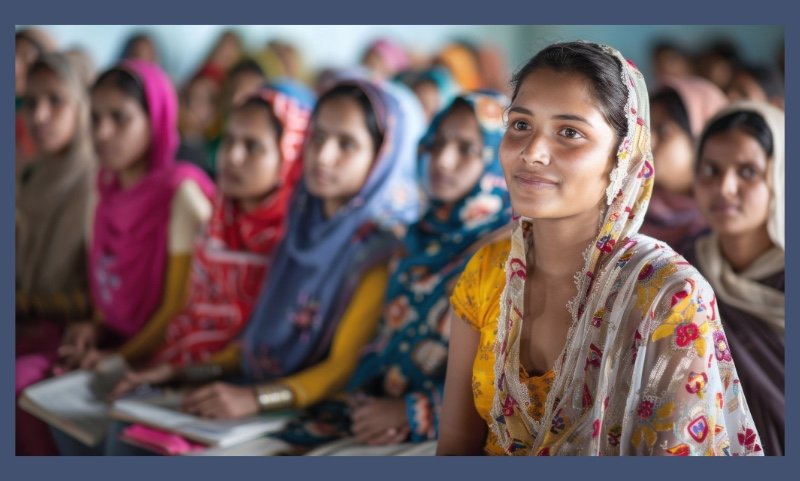
A recent study of how young Indians spend their working time has found that only 47 percent of adults aged 20 to 29 are in paid employment, women’s participation in paid work remains extremely low, and the overwhelming majority of young workers remain trapped in informal jobs. The findings raise serious questions about how widely economic opportunity is actually distributed in the country.
The study titled “Young Adults at Work in India,” conducted by the Great Lakes Institute of Management using data from the National Time Use Survey 2024, finds that the numbers vary slightly by location, as reported by The Print. In urban areas about 48.8 percent of young adults work in paid employment, while in rural areas the figure stands at 45.6 percent.
Large differences appear across gender and geography.
Nearly 79 percent of young men are in paid work, compared with about 18.2 percent of young women. In some states the gap becomes even wider. Bihar and Uttar Pradesh record employment rates of fewer than one in 10 young women. Employment rates across states range widely, from about 58.1 percent of young adults in Gujarat to roughly 37.5 percent in Bihar.

The study also finds that most young workers remain in informal enterprises.
Only about 9.5 percent of young adults work in formal organisations such as corporations, government bodies or non-governmental organisations. About 37.2 percent work in informal enterprises that include household farming, livestock rearing, construction work and small services.
Among college graduates, about 23.9 percent work in informal enterprises compared with about 22.5 percent in formal ones.
The low overall employment rate among young adults raises questions about the country’s ability to absorb its young population into productive work. In economics, the term “labour absorption” refers to how effectively an economy converts its working-age population into active workers. A healthy labour market steadily draws people into paid work as industries grow and businesses expand.
India is currently in a phase that demographers call “demographic dividend,” a period in which a country has a large share of people in the working age group compared with children and the elderly. In fact, large numbers of young people in India will remain part of the working age population for decades. During such periods, economies can grow faster because more people are capable of working and generating income. However, if employment opportunities remain limited, the demographic advantage becomes less meaningful. The economy then carries a large population capable of working but unable to contribute fully to production. Economists calls this situation “labour underutilisation.”

Further, a person who earns income participates in taxation, consumption and social life. Scholars studying political stability have long argued that economic participation helps anchor social order because it gives citizens a stake in the functioning of public institutions.
As regards the extremely low participation of women in paid employment, India displays one of the widest gender gaps in labour participation among large economies. This pattern reflects what sociologists call a “gendered division of labour,” a social arrangement in which different kinds of work tend to fall to men and women. In this case, men appear far more in paid employment while women’s time remains concentrated more within household responsibilities.
The study’s time use data shows that young women spend about nine hours and 31 minutes each day on unpaid domestic labour on average. In economics, this category forms part of the “care economy,” which includes activities such as cooking, cleaning and caregiving that sustain families and communities even though they rarely appear in official economic statistics.
Researchers who study labour markets from a sociological perspective argue that employment outcomes rarely arise from economic conditions alone. Cultural expectations, household arrangements and concerns about safety also influence who enters paid work and who remains within domestic responsibilities.
Regarding the dominance of informal employment among young workers, it raises questions about the structure of economic growth in India. In development economics, long-term economic transformation usually involves a gradual movement of workers from informal, low-productivity activities such as small household enterprises, casual labour and family-based work into formal sector employment where productivity, wages and job stability tend to be higher. This shift of workers from informal to formal employment forms a key part of what economists call “structural transformation” in labour markets.
The study’s finding that even college graduates remain almost equally split between formal and informal employment suggests that this shift from informal to formal work has remained limited.
You have just read a News Briefing, written by Newsreel Asia’s text editor, Vishal Arora, to cut through the noise and present a single story for the day that matters to you. We encourage you to read the News Briefing each day. Our objective is to help you become not just an informed citizen, but an engaged and responsible one.

On October 12, opposition leaders, MPs, MLAs, student organisations and political workers came together in a massive march against Chief Election Commissioner Gyanesh Kumar, raising serious concerns over the Special Intensive Revision (SIR) of electoral rolls and the alleged mass deletion of voters’ names. The march brought together a broad coalition, including the INDIA bloc, AISA, SFI and other student unions, as part of a wider nationwide mobilisation against the SIR exercise and concerns surrounding electoral integrity.