
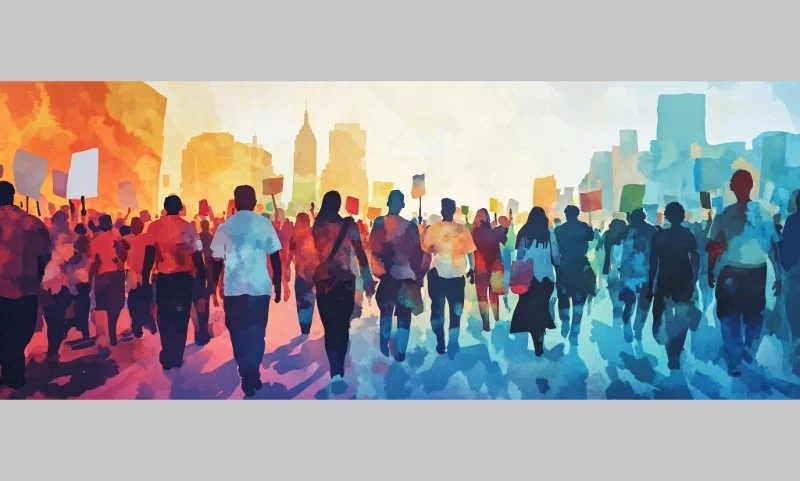
Research Suggests 5 Things Gen Z Should Do After a Successful Protest
Young protesters have helped remove political leaders, forced governments to abandon unpopular policies and made corruption and bad governance major political issues in countries around the world. Securing major concessions from a government, however, is only the first step toward lasting change, which requires five more tasks, according to an analysis by political scientists Erica Chenoweth and Matthew Cebul.
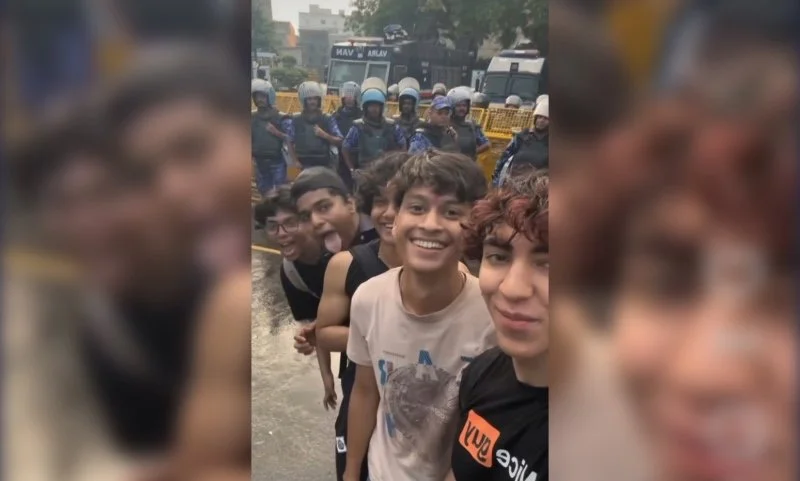
How Gen Z Outsmarted the Govt With a New Version of ‘Gandhigiri’
In the days after police used batons and tear gas on thousands of young protesters at Delhi’s Jantar Mantar on July 20, the youngsters responded with “reactance,” not the reaction authorities expected. Knowing their audience was on social media, especially Instagram, they posted videos of themselves joking, staged photographs beside the same officers who had charged them, and made reels that turned a shy Mumbai police constable into a viral heartthrob. While a crackdown is built to produce fear, they answered it with laughter instead: a version of “Gandhigiri” that turned the very officers meant to intimidate them into props for their own campaign.
AI is Changing How Indian Newsrooms Reach Audiences
Artificial intelligence is changing how Indian newsrooms reach their audiences, and the way outlets handle that change will affect what news people see, how well they can trust it and whether independent journalism can survive on platforms it no longer controls. This came out at a panel discussion at the India launch of the Digital News Report 2026, an annual study of global news consumption by the Reuters Institute for the Study of Journalism at the University of Oxford.

India’s Growing Creator Economy Is Changing Society for Better and Worse
Millions of Indians now create videos, podcasts, photographs and social media content for online audiences. A new study suggests that content creation is spreading to smaller cities, growing more professional and occupying an increasingly important place in young people's lives. This growth brings significant social benefits. It could also bring problems of mental health, misinformation and a culture increasingly driven by the pursuit of attention.
Is India’s $1 Billion Push for Influencers a Political Strategy?
The Indian government’s decision to allocate $1 billion (about 8,300 crore rupees) to promote the influencer economy may not reflect just economic aspirations, but also potential political calculations. Does this initiative purely aim to expand India's digital economy, or could it subtly serve to extend ideological influence in the rapidly evolving landscape of social media?
Why Journalists and Media Outlets Are Leaving X (Twitter)
Journalists and media outlets are leaving X, formerly known as Twitter, in large numbers. They cite shifting moderation policies, increased hate speech and concerns about misinformation as primary reasons for their departure.

The Hidden Financial Perils of the Influencer Dream
In an era where social media stardom seems to promise instant wealth and fame, thousands of aspiring influencers are pouring their life savings into a vision that, for most, remains frustratingly out of reach. Behind the glossy facade of perfectly curated Instagram feeds and viral TikTok videos lies a sobering reality: the path to influencer success is often paved with serious financial troubles.

Social media platforms linked to the spread of child sex abuse material in India
An investigative report by Boomlive’s Decode reveals a widespread sharing of child sex abuse videos in India. The report, which included undercover interactions with admins of Telegram channels that distribute such disturbing content, shows how easy it is for them to spread child sex abuse material (CSAM).

Report: Meta Approves Political Ads Inciting Violence in India
Meta, the owner of Facebook and Instagram, has approved AI-manipulated political adverts spreading disinformation and inciting religious violence during India’s election, according to a report that was exclusively shared with the U.K.’s The Guardian newspaper. The report reveals that Meta allowed inflammatory ads targeting India’s Muslim minority, containing hate speech, disinformation and calls for violence.

Can You Trace Misinformation on Social Media?
According to a study by the Mozilla Foundation and the Finnish company CheckFirst, the ad libraries of major social media platforms—where they keep information about the ads they show—lack transparency. The issue of transparency in ad libraries, involving platforms like Meta, LinkedIn, and X (formerly Twitter), is particularly critical as over 60 countries gear up for elections in 2024, a significant and historic election year.

Compelling Social Media to Better Moderate Hate Speech
A think tank in Sri Lanka has published a study suggesting methods to encourage social media platforms to undertake content moderation more responsibly, thus tackling hate speech and disinformation more effectively. The study offers an alternative to stringent legislative measures, which frequently result in excessive government control over content regulation.
Disinformation in the Age of Confirmation Bias
While we frequently scrutinise the creators of fake news and deepfake videos, we seldom question why consumers readily accept disinformation without verifying its accuracy. Evidently, the creators recognise that “confirmation bias” has likely reached unprecedented levels in recent years.