
Another Fuel Switch Issue on Air India Boeing 787, Still Departs on 10-Hour Flight
From the Editor’s Desk
February 4, 2026
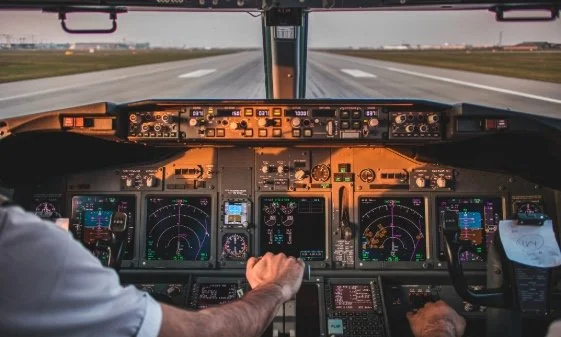
An Air India Boeing 787-8 aircraft departed from London and completed a 10-hour flight to Bengaluru despite the pilot encountering a fuel control switch malfunction during engine start. This indicates a decision was made to proceed with a long-haul international flight even after a critical cockpit control exhibited abnormal behaviour before takeoff, and less than a year after a Boeing 787 Dreamliner crash near Ahmedabad caused by a similar issue.
Earlier this week, Air India operated flight AI132 from London to Bengaluru using aircraft VT-ANX, a Boeing 787-8 Dreamliner. The flight carried over 200 passengers and landed in Bengaluru on Monday morning, according to Hindustan Times. After landing, the pilot-in-command recorded in the aircraft logbook that there had been an issue with the fuel control switch during engine start.
The Safety Matters Foundation, a platform focused on aviation safety, was quoted as saying that the pilot experienced abnormal behaviour with the left engine’s fuel control switch. During two attempts to start the engine, the switch failed to remain locked in the RUN position and moved toward the CUTOFF position.


The malfunction is significant because it could, under certain conditions, lead to an unintended engine shutdown while the aircraft is airborne.
Following the pilot’s report, Air India grounded the specific aircraft and began a precautionary inspection across its fleet of Boeing 787s. The airline also escalated the matter to Boeing for urgent evaluation.
As of the latest update, no irregularities had been found in the rest of the fleet, and Boeing was working with Air India to assess the issue.
From a civil aviation safety perspective, the decision to operate a 10-hour intercontinental flight after observing a fault in the fuel control switch during pre-flight engine start appears to be questionable. The fuel control switch governs fuel supply to the engine and plays a direct role in starting, sustaining, or cutting off engine function. A malfunction in this switch, especially one that causes it to slip toward the CUTOFF position, should trigger serious caution, as it introduces a known risk of engine shutdown. Continuing the flight without resolving or replacing the affected component may be interpreted as an operational compromise on safety margins.



Under Indian and international aviation rules, an aircraft can only take off if it is considered safe to fly. If there is a known technical problem, the flight can only proceed if that issue is listed in an official document called the Minimum Equipment List (MEL), which allows certain minor defects under strict conditions. The MEL must be approved by aviation authorities. A fuel control switch that doesn’t stay locked in the RUN position affects a critical engine function.
Publicly available versions of the Boeing 787’s equipment guidelines do not show this kind of malfunction as a standard deferrable item under the MEL. If the problem was known before takeoff and had not been rectified or formally cleared by maintenance under MEL-approved procedures, the decision to dispatch the aircraft could conflict with airworthiness requirements. Whether that clearance occurred in this case has not been confirmed by Air India or the regulator. In general, pilots are only permitted to operate an aircraft with a known defect if it is explicitly listed in the MEL and officially signed off by engineering staff.
The malfunction occurred twice during engine start. That suggests the issue was not transient or accidental but potentially reproducible. In aviation safety protocol, especially in Extended-range Twin-engine Operational Performance Standards (ETOPS) operations such as this London–Bengaluru route, systems related to engine function are considered critical. Any observable anomaly in these systems before takeoff, no matter how minor it may seem, demands resolution on the ground.
The rationale is that once airborne and committed to an oceanic or remote segment of the route, access to diversion airports is limited, and resolving such an issue mid-flight could involve complex and risky manoeuvres.
That the aircraft was grounded immediately after landing in Bengaluru further confirms that the issue was considered serious enough to pull the plane out of service. If that was the correct decision after arrival, it raises a sharper question: why was that decision not made before the flight departed London?
There was even more reason to delay departure in this case because of what happened less than a year ago. On June 12, 2025, Air India Flight 171, also a Boeing 787-8, took off from Sardar Vallabhbhai Patel International Airport in Ahmedabad bound for London Gatwick. Just 32 seconds after takeoff, the aircraft crashed, killing 241 passengers and crew onboard. Only one passenger survived. Another 19 people on the ground were also killed. Preliminary findings pointed to both fuel control switches moving to the CUTOFF position shortly after takeoff, shutting down both engines. In light of that tragedy, any fresh malfunction involving the same component should have warranted maximum caution.
Air India’s decision to initiate a fleet-wide inspection is a responsible follow-up step, as is the escalation of the issue to Boeing. However, these measures are reactive rather than preventive. The regulator, Directorate General of Civil Aviation (DGCA), should consider issuing a formal advisory or air safety circular directing airlines on handling abnormal engine control switch behaviour.
You have just read a News Briefing, written by Newsreel Asia’s text editor, Vishal Arora, to cut through the noise and present a single story for the day that matters to you. We encourage you to read the News Briefing each day. Our objective is to help you become not just an informed citizen, but an engaged and responsible one.



What happened in Mumbai on October 2 may have been only one day of protest, but the issues behind it are unlikely to disappear with the dispersal of the crowd. The protest was centred around concerns over the Election Commission, electoral rolls and the Special Intensive Revision (SIR) exercise, with protesters demanding accountability from Chief Election Commissioner Gyanesh Kumar. At the same time, similar mobilisation has been taking place across different parts of the country, with student groups, Opposition parties and civil society organisations raising concerns over the electoral process. Newsreel Asia spent the day at Mumbai Protest capturing the preparations, the police presence, conversations with protesters, the atmosphere on the streets and how the day unfolded. The speech of Cockroach Janta Party's leaders and sentiment of protestors seemed larger than the concerns regarding the electoral process. Will this lead to something bigger?