
Supreme Court Orders Full Forensic Test of ‘Manipur Tapes’ on CM Biren Singh
From the Editor’s Desk
January 8, 2026
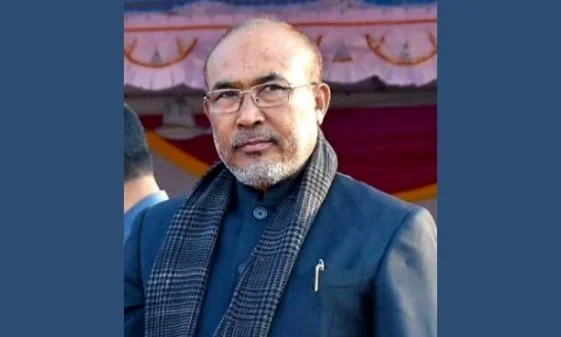
N. Biren Singh. Photo courtesy of IndianPolitics-Bihar, licensed under Creative Commons
The Supreme Court has directed the Manipur government to send the full 48-minute audio recording, allegedly featuring former chief minister Biren Singh discussing his role in the 2023 ethnic violence, to the National Forensic Science Laboratory (NFSL) in Gujarat for voice analysis and authentication. The violence left over 250 people dead, displaced tens of thousands, and areas inhabited by the Kuki-Zo tribes remain cut off from Meitei-dominated regions to this day.
A bench of Justices Sanjay Kumar and Alok Aradhe on January 7 instructed the forensic lab to examine the authenticity of the clip, determine whether the voice matched Singh’s, and submit its findings in a sealed cover, The Telegraphreported.
The recordings known as the “Manipur Tapes” are alleged to have been made during a private meeting with former chief minister Biren Singh. A whistle-blower claimed the audio captures Singh either encouraging or permitting violencebetween the Meitei community, which forms the majority in the Imphal valley, and the Kuki-Zo community based in the surrounding hill districts.

The petitioners, including the Kuki Organisation for Human Rights Trust, have maintained that the content of the tapes suggests direct involvement by political authorities in the outbreak of violence and should therefore be subject to independent forensic scrutiny.
Ethnic violence broke out in Manipur on May 3, 2023, after a tribal rally in the hill areas protested a court order perceived as supporting Meitei demands for Scheduled Tribe status. That designation would have enabled Meiteis to buy land in the hills, which the Kuki-Zo community considers ancestral territory.
The recordings were first made public in August 2024 by The Wire, which reported that Singh could be heard discussing the use of commandos and explosives during the unrest. The Manipur government dismissed the recordings as doctored and denied any link to Singh.
The Supreme Court’s directive came after earlier forensic tests failed to confirm the clip’s authenticity. In a previous hearing, the Gujarat lab had said the portion it received was “tampered with” and unsuitable for voice comparison. The petitioners accused Manipur police of forwarding edited versions of the audio file, which they said compromised the accuracy of forensic testing. They requested a fresh analysis based on the complete, unedited recording.
Senior advocate Prashant Bhushan, appearing for the petitioners, told the court that the full 48-minute clip had been available since the case was filed and was already included in the petition’s transcript. He said the matter had come up in court repeatedly and the state government was aware of the recording’s content. Asked why the full clip had not been sent directly to the government, Bhushan said there was no formal court order requiring the petitioners to do so.
Additional Solicitor General Aishwarya Bhati, representing the Manipur government, said the petitioners had only handed over the complete 48-minute clip after the December 15, 2025 hearing. She said that until then, the state had received only short or edited versions, and now that the full recording had been submitted, the government would send it to the forensic lab for a fresh analysis.
Bhushan pointed out that the government had delayed action for over a year despite the presence of damaging content in the tapes. He also noted that the NFSL was a government-run lab, raising concerns about impartiality. Justice Kumar responded that the court would rely on NFSL’s assessment as it was the country’s premier forensic institution.
In August, the Supreme Court had ordered the recordings to be sent to the Gujarat lab after the Guwahati Forensic Sciences Laboratory did not give a clear opinion on whether the voice belonged to Singh.
Bhushan said that a private lab, Truth Labs Forensic Services in Hyderabad, had already analysed the full clip. The lab compared the leaked audio to two public videos featuring Singh and concluded that the probability the voices matched was 93 percent. The result was reached using a statistical test that measured features such as pitch, loudness and rhythm, and compared the likelihood that two different people would produce similar patterns. The petitioners noted that the lab’s findings have previously been accepted by the Supreme Court, several high courts, the Central Bureau of Investigation and other agencies.
You’ve just read a News Briefing written by Newsreel Asia’s Text Editor, Vishal Arora, meant to cut through the noise and bring you one important story of the day. We invite you to read the News Briefing daily. Our aim is to help you become a sharp, responsible and engaged citizen who asks the right questions.
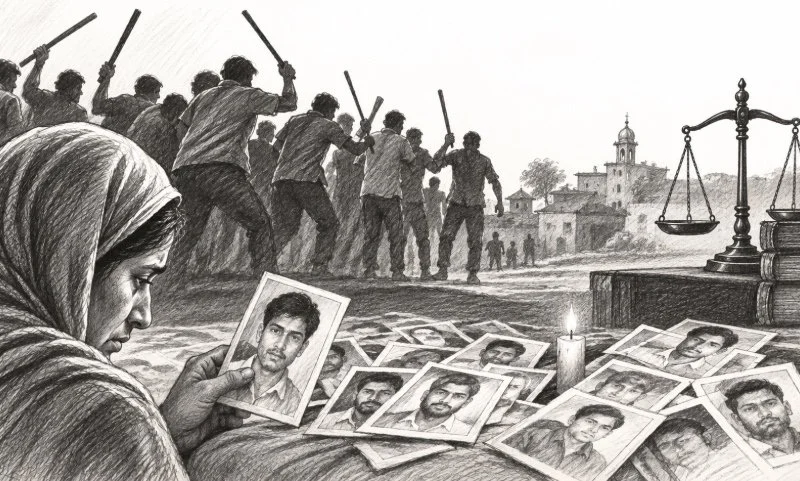
What happened in Mumbai on October 2 may have been only one day of protest, but the issues behind it are unlikely to disappear with the dispersal of the crowd. The protest was centred around concerns over the Election Commission, electoral rolls and the Special Intensive Revision (SIR) exercise, with protesters demanding accountability from Chief Election Commissioner Gyanesh Kumar. At the same time, similar mobilisation has been taking place across different parts of the country, with student groups, Opposition parties and civil society organisations raising concerns over the electoral process. Newsreel Asia spent the day at Mumbai Protest capturing the preparations, the police presence, conversations with protesters, the atmosphere on the streets and how the day unfolded. The speech of Cockroach Janta Party's leaders and sentiment of protestors seemed larger than the concerns regarding the electoral process. Will this lead to something bigger?