
Why the Supreme Court’s Bail Ruling in the Delhi Riots Case Raises Legal Concerns
From the Editor’s Desk
January 6, 2026
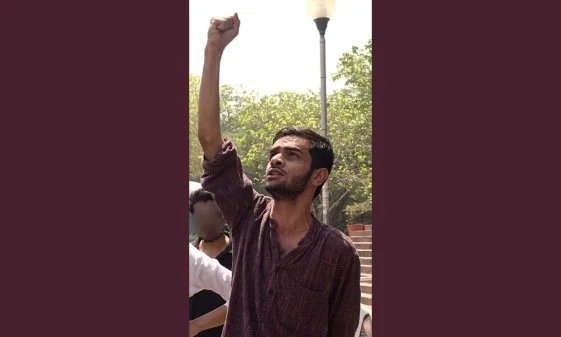
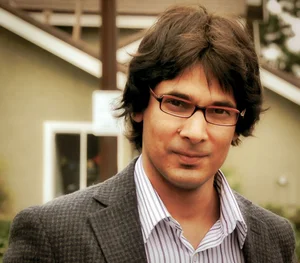
Umar Khalid at a May Day event, 2016. Photo by Payasam (Mukul Dube), licensed under CC BY-SA 4.0 via Wikimedia CommonsThe Supreme Court has granted bail to five people accused in the 2020 Delhi riots case but refused bail to two, Umar Khalid and Sharjeel Imam. The court said these two played a more central or “higher” role in the events leading to the violence, and based on that, should remain in jail. But this distinction, between so-called leaders and others, is deeply concerning, as it assigns degrees of guilt before a trial has even begun.
The law requires that every accused person be treated as innocent until proven guilty. The state must establish its case through a full trial, where evidence is tested, witnesses are cross-examined, and the defence has the opportunity to respond. In this matter, though the arrests were made five years ago, the trial is yet to begin and charges have not been framed. The Supreme Court’s decision to deny bail to Khalid and Imam appears to rely on the claim that they had a more central role in organising the protests that preceded the violence, as noted by The Hindu. That raises concerns about drawing such inferences at the bail stage, when the evidence has not yet been examined in open court.
The law applied in this case is the Unlawful Activities (Prevention) Act, or UAPA, which is intended for matters involving terrorism and threats to national security. Bail under this law is especially restrictive. Courts are required only to assess whether the allegations appear prima facie true, that is, whether they seem credible on the surface. Even within this limited framework, judicial caution is essential. If bail is denied based on the assumption that an accused person played a leading role, without establishing what that role entailed through evidence, it risks turning the bail stage into a substitute for trial. Such an approach may result in prolonged detention without the safeguards of full judicial scrutiny.
The continued custody of Khalid and Imam appears to rest on the state’s claim that they were part of a broader plan to coordinate protests across Delhi, which, according to the prosecution, contributed to the eventual violence. A significant part of this claim relies on participation in WhatsApp groups and protest meetings. However, organising or planning protests, including through digital platforms, falls within the scope of constitutional rights. Treating such activity as a basis for terrorism charges risks blurring the line between legitimate dissent and criminal conduct, with serious consequences for democratic freedoms.
Under the UAPA, the definition of a “terrorist act” includes not only acts of violence but also conduct that is seen to threaten the disruption of essential services or public order. The court has accepted this wide interpretation. This raises concern that even peaceful acts of civil disobedience might fall within the scope of terrorism if they cause disruption. Laws intended to address grave threats such as bombings or armed attacks may then be applied to protest activity or political speech. Such an expansive reading risks bringing constitutionally protected forms of expression within the reach of anti-terror legislation.
By refusing bail to Khalid and Imam while granting it to others, the court has effectively judged them as more guilty than the rest, based on their visibility or outspokenness. This is especially harsh because there is no claim that either of them carried out violence or incited it directly. Their speeches, writings and involvement in protest planning are being treated as signs of a deeper conspiracy. But in a democracy, speech and protest are not crimes in themselves.
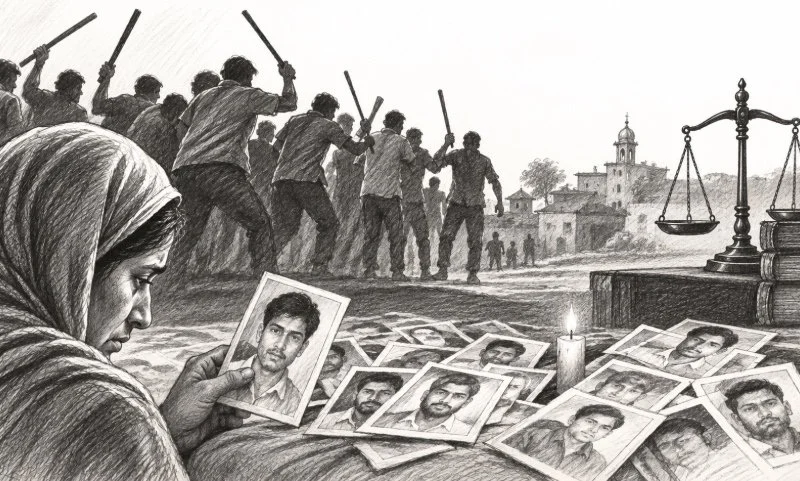
This ruling could set a precedent where simply being seen as a leader in a protest is enough to keep someone in jail under UAPA for years. With over 700 witnesses listed in the case, and the trial yet to start, there is no timeline for when justice might actually be delivered. In the meantime, those denied bail could end up spending most of their youth behind bars, not because they were proven guilty, but because the system allows delay to act as punishment.
Bail is simply the recognition that until someone is found guilty, they should not be locked up unless there is a strong reason to believe they might flee, tamper with evidence or pose a threat. In this case, there is no such claim. The only reason given is their alleged leadership role, which has not been proven.
There is a need to reflect on the application of anti-terror laws in cases involving political protests. If the perception of leadership in a protest is treated as sufficient reason to deny bail, it may have a chilling effect on the exercise of the constitutional right to dissent. It is the responsibility of the judiciary to safeguard that right, regardless of the state’s interpretation of individual roles within a movement. For the integrity of the legal process, it is essential to maintain a clear distinction between mere allegation and established proof.
You’ve just read a News Briefing written by Newsreel Asia’s Text Editor, Vishal Arora, meant to cut through the noise and bring you one important story of the day. We invite you to read the News Briefing daily. Our aim is to help you become a sharp, responsible and engaged citizen who asks the right questions.
What happened in Mumbai on October 2 may have been only one day of protest, but the issues behind it are unlikely to disappear with the dispersal of the crowd. The protest was centred around concerns over the Election Commission, electoral rolls and the Special Intensive Revision (SIR) exercise, with protesters demanding accountability from Chief Election Commissioner Gyanesh Kumar. At the same time, similar mobilisation has been taking place across different parts of the country, with student groups, Opposition parties and civil society organisations raising concerns over the electoral process. Newsreel Asia spent the day at Mumbai Protest capturing the preparations, the police presence, conversations with protesters, the atmosphere on the streets and how the day unfolded. The speech of Cockroach Janta Party's leaders and sentiment of protestors seemed larger than the concerns regarding the electoral process. Will this lead to something bigger?