
Study Finds 40% of Graduates Seeking Work Are Unemployed
From the Editor’s Desk
March 21, 2026
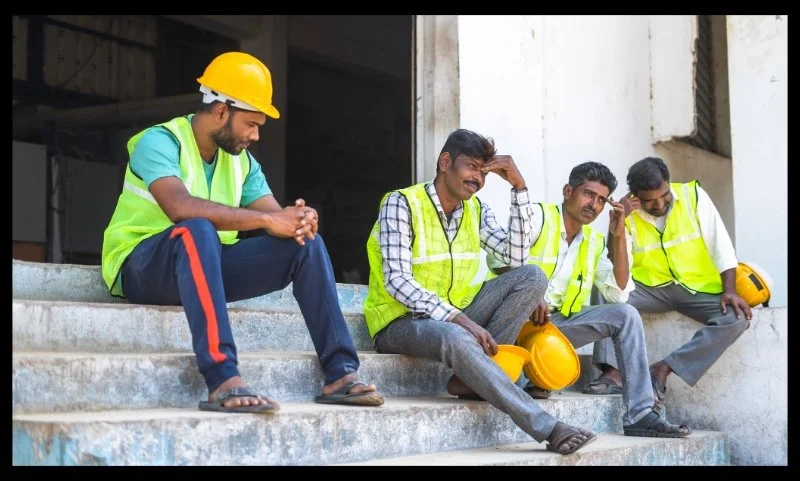
A major labour study from Azim Premji University reports that about 40 percent of graduates in India’s labour force are unemployed, a level that has remained largely unchanged for four decades. The finding shows that economic growth has failed to create enough skilled jobs for the number of graduates the country now produces.
The State of Working India 2026 report puts graduate unemployment at about 40 percent of the labour force, with 11 million of 63 million graduates aged 20 to 29 unemployed in 2023.
About half of unemployed graduates find some kind of work within a year of entering the labour market, according to the report. Around 7 percent secure permanent salaried employment in that period, placing most of those who find work in informal or temporary jobs instead of stable professional employment.
The share of young men citing the need to support household income as the reason for dropping out of education rose from 58 percent in 2017 to 72 percent in 2023, according to the report, which adds that the share of young men enrolled in education fell from 38 percent in 2017 to 34 percent in 2024.
India added 83 million jobs between 2021–22 and 2023–24, and 40 million of those jobs were in agriculture. Women accounted for 38 million of those agricultural jobs, according to the report.


The report notes that India now has 69,534 higher education institutions, up from 1,644 earlier, and about 80 percent of them are private. It also says newer Industrial Training Institutes perform worse on measures such as enrolment, pass rates and diversity of trades.
The report calculates that for the poorest households, the cost of a professional degree such as engineering or medicine can exceed their entire annual per capita expenditure. It also says India has 367 million people aged 15 to 29, about one-third of the working-age population, and projects that the demographic dividend, meaning the economic gain that can come from a large working age population, will peak around 2030.
Now, let’s analyse these findings.
There’s a deep mismatch between education, jobs and household survival. The graduate unemployment points to a labour market that is generating degrees faster than it is generating suitable work.
The problem is actually larger than “open unemployment,” a person actively seeking work and available to work, but has no job at all. About half of unemployed graduates finding some work within a year but only about 7 percent securing permanent salaried work shows that much of the adjustment is happening through insecure, low-quality employment. A graduate who moves into casual, temporary or poorly matched work may count as employed, but the economy gets less value from the time and money spent on higher education.
We can also see signs of “underemployment,” a situation in which people work below their skill level, below their income needs, or in jobs that use only a fraction of what they learned. This means the economy is failing to use human capital fully. India has spent years expanding access to education, families have spent large sums to send children into higher studies, but the labour market outcome suggests a weak payoff for a large share of that investment.
The rise in young men leaving education to support household income is also concerning. It shows that labour market weakness and household poverty feed each other. Dropping out may ease the present month’s burden for a family, but it reduces future earnings over the life cycle.

Moreover, fewer young people staying in education during a period of high graduate unemployment may cause families to doubt the value of education itself, especially expensive professional education. It’s a problem of incentives and expectations, and can reduce demand for education among poorer groups, even though education remains vital for long-term development.
Further, adding 83 million jobs in a short period is a large figure, but nearly half of them came in agriculture. That suggests employment growth was concentrated in a low-productivity sector, where output per worker is generally lower than in manufacturing and many modern services. Economists usually see long-term progress in labour moving gradually from agriculture into more productive sectors, because that movement may raise wages, productivity and living standards. A rise in agricultural employment can signal distress absorption, with agriculture serving as a fallback for people who were unable to secure better work elsewhere.
The fact that women accounted for 38 million of those agricultural jobs deepens the concern. We ned to ask whether these were productive, decently paid roles with security, or whether many women entered agriculture because other parts of the economy failed to offer viable work close to home, safe work conditions or suitable wages. An increase in women’s employment can mean two very different things. It can show that women have more freedom and more access to decent work, or it can show that families are under financial pressure and women are taking whatever work they can find, often for low pay.
Regarding the sharp rise in higher education institutions, with around 80 percent of them private, it may have made college available to more people, but if institutions grow in number faster than quality checks improve, the market can fill with colleges that offer weak education alongside good ones. Economists sometimes call this a “lemons market,” a term made famous by the American economist George Akerlof, who used it to describe a market in which buyers cannot easily tell good quality from bad. In this case, families may spend large sums on degrees that carry limited value in the job market. Employers may then become doubtful about many degrees in general, which makes it harder even for capable graduates from strong institutions to prove their worth.
The point about newer Industrial Training Institutes performing worse on enrolment, pass rates and the range of courses they offer adds another layer. Vocational systems are supposed to bridge the gap between education and work. Weak performance here suggests that the pipeline into skilled technical work is also under strain. That has consequences for manufacturing growth, industrial upgrading and the larger goal of moving workers into more productive sectors.
Furthermore, the cost of professional degrees exceeding the entire annual per capita expenditure of the poorest households is equally alarming. It means access to high-return education is heavily filtered by class. In effect, the market is asking poor families to make a bet far larger than they can safely afford. If the job market then offers insecure returns, the burden becomes even heavier. This can widen inequality across generations.
You have just read a News Briefing, written by Newsreel Asia’s text editor, Vishal Arora, to cut through the noise and present a single story for the day that matters to you. We encourage you to read the News Briefing each day. Our objective is to help you become not just an informed citizen, but an engaged and responsible one.



On October 12, opposition leaders, MPs, MLAs, student organisations and political workers came together in a massive march against Chief Election Commissioner Gyanesh Kumar, raising serious concerns over the Special Intensive Revision (SIR) of electoral rolls and the alleged mass deletion of voters’ names. The march brought together a broad coalition, including the INDIA bloc, AISA, SFI and other student unions, as part of a wider nationwide mobilisation against the SIR exercise and concerns surrounding electoral integrity.