
Heard of ‘Hindutva Pop’ Music? Report Maps How It’s Spreading Hate
From the Editor’s Desk
June 17, 2026
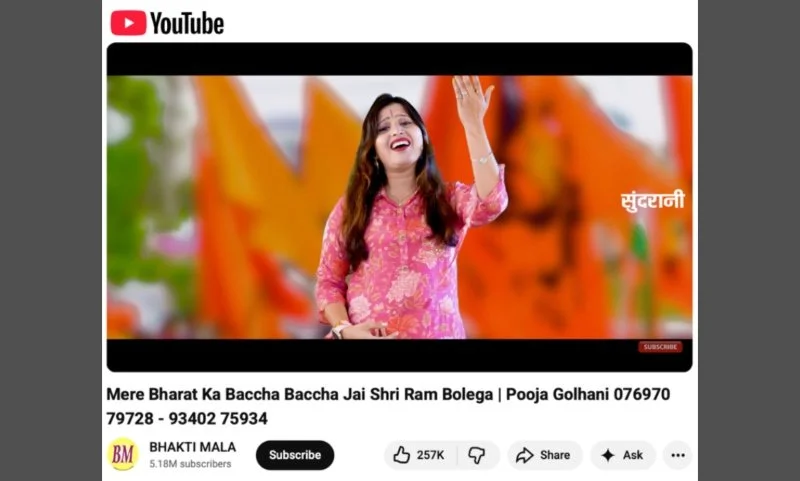
A genre of Indian music, called “Hindutva pop,” or H-Pop, is being used to vilify and dehumanise Muslim and Christian minorities on four of the world’s largest digital platforms, according to a new report by the U.S.-based research group Center for the Study of Organized Hate (CSOH).
The genre promotes beliefs aligned with Hindu nationalist, or Hindutva, ideology and is deployed to stoke anger and fear among India’s Hindu majority, said the CSOH report, released on June 15.
One of the most viewed songs, “Bharat Ka Bacha Bacha Jai Shri Ram Bolega,” warns Muslim “enemies” that they will be slain if they obstruct Hindus. Another song, “Topi Wala Sar Jhuka Ke Jai Shri Ram Bolega,” uses a slur for Muslim men who wear skullcaps and says they will be forced by violence to chant “Jai Shri Ram.”
Another song, “Cheer Ke Rakh Denge,” warns Muslims to leave India or face being chopped up, while “Jago Hindu Jago” refers to Muslims as “black snakes” and calls for traitors to be shot in the chest. The report also cited “Hindu Chalisa,” a song on Spotify that tells listeners to kill non-believers and behead anyone who places another faith above the Hindu deity Shiv.
The report identified at least 523 Hindutva pop songs on YouTube, Spotify, Apple Music and Meta’s Music Library that violate each platform’s own content policies by promoting hatred, dehumanisation or incitement to violence against religious minorities.
Of the 523 songs, 210 were found on YouTube, 109 on Spotify, 103 on Meta’s Music Library and 101 on Apple Music, according to the report. YouTube songs in the dataset have been viewed more than 198 million times, while Meta Music Library songs were used in more than 5.9 million Instagram Reels. Half of the violative songs, 263 of 523, directly threaten or incite violence against religious minorities, while the remaining 260 promote or incite hatred through slurs and dehumanisation, as per the report.
Three YouTube channels account for more than 40 percent of the identified hate songs and continue to operate as verified accounts that monetise and grow their subscriber bases, the report said. The largest, Sangam Dhun, hosts 46 of the 210 YouTube songs and has more than 251,000 subscribers.
A second, Mayur Music, accounts for 25 songs and has received YouTube’s Silver Creator Award, given to channels that surpass 100,000 subscribers. A third, Prem Krishnvanshi Official, accounts for 15 songs and has 193,000 subscribers.
Ads for 103 brands appeared on hate music videos, including on 78 percent of violative YouTube videos and 83 percent of those calling for violence, according to the CSOH. Advertisers found on the videos included OpenAI’s ChatGPT, Google’s NotebookLM, Amazon Prime, Adobe, Dell, Levi’s, Kellogg’s, Flipkart and the Reserve Bank of India.
YouTube’s “Super Thanks” feature, which lets viewers pay creators directly through one-time tips, was enabled on 55 percent of violative videos, the report found. On Meta, 20 of 30 prominent Hindutva pop singers studied had monetized Facebook accounts, verified through the WHAT TO FIX Meta monetization archive, a publicly available record of monetized accounts on the platform.
A sample of 225 songs, or 43 percent of the dataset, was reported to the four platforms between October and November 2025 for policy violations, the CSOH said. By the end of April 2026, only 18 of those 225 songs had been removed, a takedown rate of 8 percent, while 207 remained live. Of 91 songs reported to YouTube specifically, only 13 were no longer available by May 2026, and at least three of those had simply been “unlisted” by their uploaders rather than removed by the platform.
Reporting mechanisms on Spotify and Apple Music are harder to use than those on YouTube and Meta, the CSOH said. Submitting a single report through Spotify’s live chat support took more than 33 minutes, and none of the 59 songs reported to Spotify had been acted on by the end of May 2026. Of 34 songs reported to Apple Music, 33 remained active, and of 41 Reels reported to Meta, 37 remained active as of April 2026.

Singer Sandeep Acharya’s YouTube channels have been suspended at least three times, the report said, but 21 of his 26 violative songs remain available on other YouTube channels he or others have created. Acharya is among the most prolific Hindutva pop artists in the dataset, with 20 of the 210 YouTube songs.
YouTube prohibits content that promotes violence or hatred against individuals or groups based on attributes including religion, age, caste, ethnicity, race, nationality or immigration status, and the platform says it terminates channels after three policy strikes, according to the report. Of the 210 YouTube songs, 104, or 49 percent, directly incite or threaten violence against Muslims and have been viewed at least 97 million times.
Spotify, the world’s largest audio streaming platform with more than 750 million users, hosts 109 Hindutva pop songs in violation of its Hate Content and Hateful Conduct policy, the report found. Of those, 51 include direct calls to violence against Muslims, while 44 incite hatred against the community without explicit calls to violence.
Meta’s Music Library hosts 103 violative songs despite the company’s Community Standards prohibiting direct attacks on people based on religion, the CSOH said. Of the 103, 46 actively encourage or incite violence and were used to create nearly 1.4 million Reels.
Apple Music, which has more than 108 million subscribers worldwide, does not publish distinct hate speech guidelines but requires content to be legal and “appropriate” for the country in which it is accessed, the report said. Applying Indian hate speech law as the relevant standard, the CSOH found at least 101 violative songs on the platform, of which 67 contained or encouraged calls to violence against minorities.
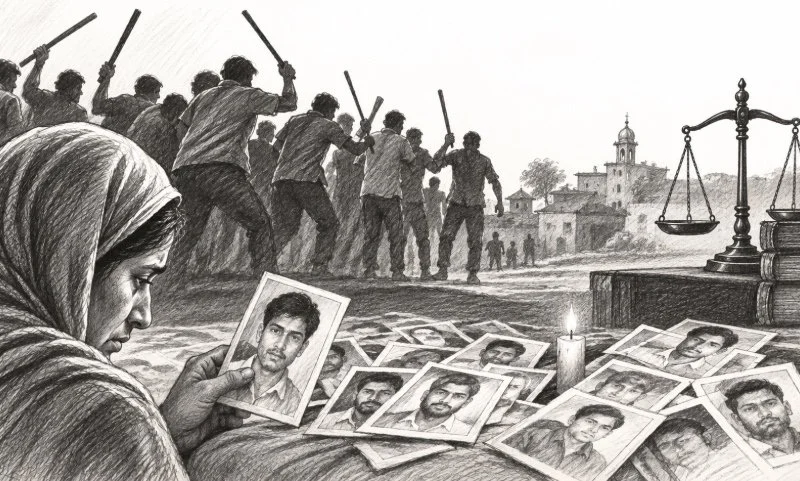
The report’s authors linked Hindutva pop to recent violence in India. A 2024 Hindu procession in Bahraich, Uttar Pradesh, turned violent and killed one person after participants played a song with violent innuendo toward Muslims despite protests from local Muslim residents, the CSOH said. A 2023 Ram Navami procession played a song outside a mosque in Mumbai calling on Hindus to take up swords against Muslims, leading to clashes between the two communities.
The Bharatiya Janata Party (BJP) and the Rashtriya Swayamsevak Sangh (RSS) provide active political patronage to Hindutva pop as a driver of hate and polarisation, the CSOH said.
Hate speech events targeting Christians, who make up 2.3 percent of India’s population, rose 41 percent from 2024 to 2025, according to the report. In December 2025, mobs vandalised and disrupted Christmas celebrations in seven Indian states.
You have just read a News Briefing, written by Newsreel Asia’s text editor, Vishal Arora, to cut through the noise and present a single story for the day that matters to you. We encourage you to read the News Briefing each day. Our objective is to help you become not just an informed citizen, but an engaged and responsible one.

On October 12, opposition leaders, MPs, MLAs, student organisations and political workers came together in a massive march against Chief Election Commissioner Gyanesh Kumar, raising serious concerns over the Special Intensive Revision (SIR) of electoral rolls and the alleged mass deletion of voters’ names. The march brought together a broad coalition, including the INDIA bloc, AISA, SFI and other student unions, as part of a wider nationwide mobilisation against the SIR exercise and concerns surrounding electoral integrity.