
Former Civil Servants Raise Concerns About Census 2027
From the Editor’s Desk
March 2, 2026
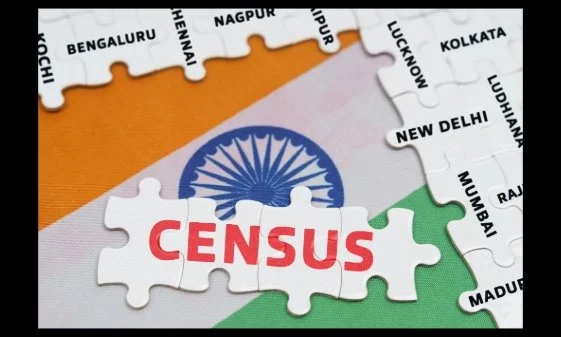
A collective of former senior civil servants has written to the Census Commissioner of India raising detailed concerns about the six year delay in the national Census, now scheduled for 2027. In their letter, they warn that the prolonged and unexplained postponement could lead the public to suspect that the exercise is being timed to facilitate the delimitation of parliamentary constituencies ahead of the 2029 Lok Sabha elections.
Addressed to Mritunjay Kumar Narayan, Registrar General and Census Commissioner of India, the letter by the Constitutional Conduct Group addresses the timing of the Census, as reported by The Wire.
The former officials note that India has conducted the decennial Census regularly every 10 years from 1951 through 2011. They say they understand why the 2021 Census could not take place on schedule because of the COVID pandemic. Their concern arises from what happened afterward.
According to the group, many other countries managed to complete their census exercises by about 2023 despite pandemic disruptions. They write that they “fail to comprehend” why India could not do the same.

A key point in the letter is the absence of a public explanation for the extended delay. The group states that the reasons for postponing the Census by roughly six years have not been made public. In their view, this lack of transparency risks creating suspicion among citizens. They say the timing could give rise to apprehensions that the Census is being aligned with the expected delimitation of parliamentary constituencies in 2027 to 2028 ahead of the 2029 Lok Sabha elections. The group apparently fears that conducting the Census in 2027 could provide fresh population data just in time to redraw parliamentary constituency boundaries, which may influence the composition of seats.
The former officials add that they would hope no such extraneous considerations have influenced the schedule, but they clearly indicate that public confidence requires clarity.
The group describes itself as comprising former officers from the All India Services and Central Services who have come together without any political affiliation. Their stated purpose, they write, is to promote the foundational values of the Republic and uphold constitutional norms.
After raising concerns about timing, the group moves to technical and procedural issues that could affect data quality. They stress that the upcoming Census must comply fully with the United Nations Principles and Recommendations for Population and Housing Censuses, Revision 4 of March 2025, to which India is a signatory.

The group expresses specific concern about the government’s plan to rely heavily on mobile phone-based data entry in the field. Under the proposed system, enumerators select responses from dropdown menus. The former officials warn that this method may lock in errors at the point of collection because it leaves little scope for later correction. Based on experience from the 2001 and 2011 Censuses, they caution that technological upgrades alone do not automatically speed up data release. What matters, they argue, is building strong error-detection and quality-control systems.
They also recommend reducing the number of questions in the Census schedule. In their view, removing items that are unnecessary, difficult to collect or available through other surveys would streamline fieldwork and reduce respondent fatigue. As an example, they say information on children born and surviving is better captured through the National Family Health Survey rather than the Census.
A substantial portion of the letter deals with caste enumeration. The group notes that Other Backward Classes (OBCs) have never been separately classified in the Census and that the methodology for counting caste in the upcoming exercise has yet to be announced. They cite two possible methods. One would involve providing a pre-prepared list of castes for respondents to choose from, similar to the Bihar caste survey. The second, which they prefer, would leave the caste field open ended, as was done in the 2011 Socio-Economic and Caste Census.
They say the Census can handle caste data the same way it has handled language data in the past. In earlier Censuses, people gave their mother tongue in their own words, and experts later grouped similar entries into standard language categories. The group believes a similar method can work for caste. For this to be trustworthy, they say the government should allow independent scholars to examine the raw Census data and involve bodies such as the Anthropological Survey of India. Their suggestion is that people should be allowed to state their caste freely, after which experts can sort and verify the entries using clues such as shared language, ancestry, lifestyle, marriage links and kinship ties.
The letter also raises the issue of tribal classification. The former officials point out that earlier Censuses collected detailed data mainly on communities listed as Scheduled Tribes. They argue that recording all tribal communities, including those outside the Scheduled Tribe list, would address what they describe as a long standing injustice faced by Denotified Tribe communities, which they say number more than 100 million people.
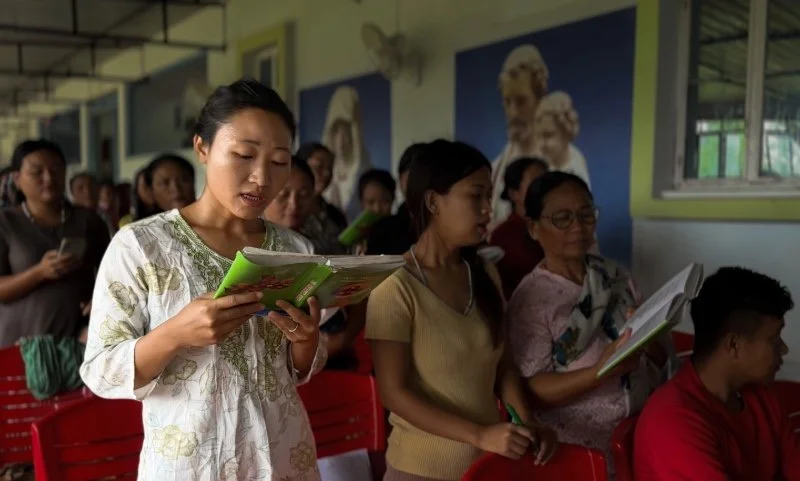
Religion is identified as another sensitive domain. The group warns that the Census must take particular care to ensure full and accurate counting of minority populations. They refer to recent political rhetoric about excluding so-called Bangladeshi Muslims from electoral rolls and say the Census must ensure that data on religion, caste and tribe are recorded comprehensively for all communities.
In closing, the signatories express confidence that the Census leadership will uphold the three essential goals of the exercise, accuracy, transparency and accessibility, and they end the letter with the phrase “Satyameva Jayate.”
You have just read a News Briefing, written by Newsreel Asia’s text editor, Vishal Arora, to cut through the noise and present a single story for the day that matters to you. We encourage you to read the News Briefing each day. Our objective is to help you become not just an informed citizen, but an engaged and responsible one.
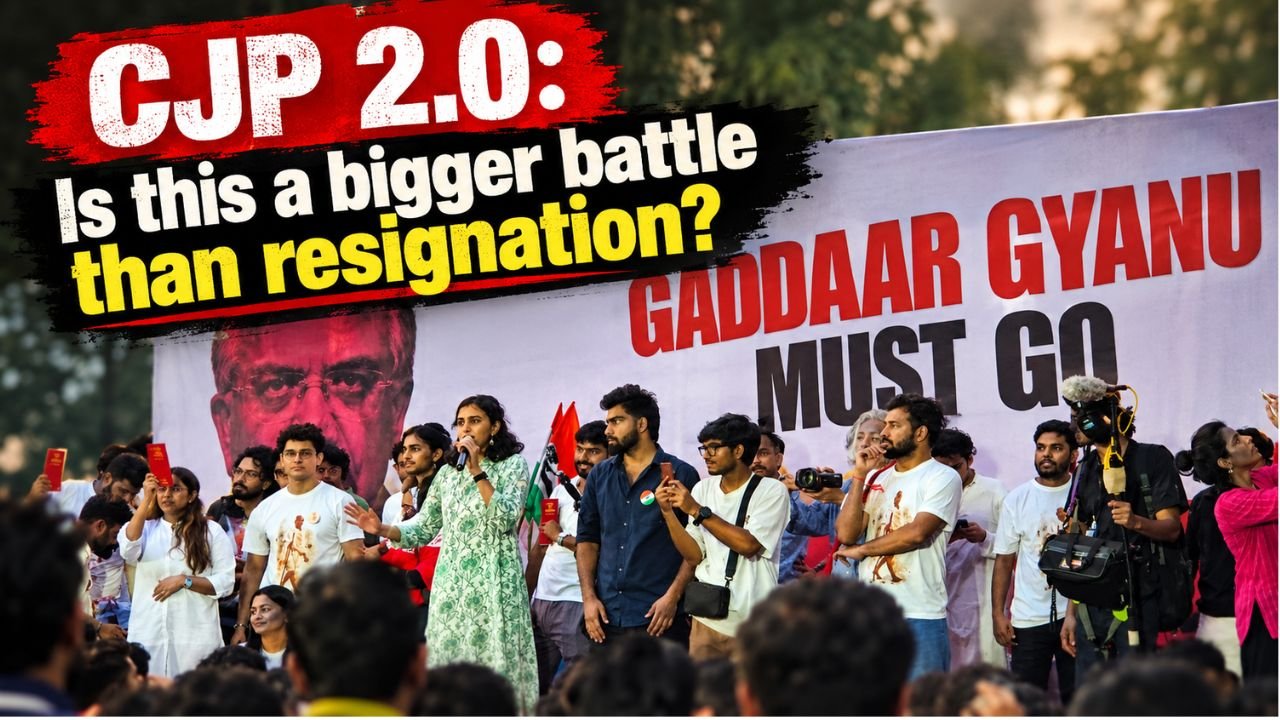
On October 12, opposition leaders, MPs, MLAs, student organisations and political workers came together in a massive march against Chief Election Commissioner Gyanesh Kumar, raising serious concerns over the Special Intensive Revision (SIR) of electoral rolls and the alleged mass deletion of voters’ names. The march brought together a broad coalition, including the INDIA bloc, AISA, SFI and other student unions, as part of a wider nationwide mobilisation against the SIR exercise and concerns surrounding electoral integrity.