
A Political Science View of Assam CM’s Threat Against Activist Harsh Mander
From the Editor’s Desk
February 2, 2026

Assam Chief Minister Himanta Biswa Sarma has threatened to file “at least 100 cases” against activist Harsh Mander after Mander lodged a legal complaint accusing him of hate speech against Bengali Muslims. The threat suggests that Sarma sees legal action as a means to settle political scores rather than address genuine legal concerns.
In a working democracy governed by a constitution, the state’s power to file cases is meant to enforce laws and maintain public order. It is not meant to be used by political leaders to target critics or settle personal scores. So when a Chief Minister threatens to file dozens of cases against a citizen just because that person used legal channels to file a complaint, it turns the system upside down. The government, which is supposed to answer to the people, begins to act as if it is above question and treats a lawful complaint as an attack.
The threat appears aimed at pressuring the complainant into silence and sending a warning to others who might consider taking similar legal steps. The Supreme Court has made it clear in several rulings, including State of Haryana v. Bhajan Lal (1992), that criminal law cannot be used as a tool to intimidate or punish individuals through false or retaliatory cases. If Sarma follows through on his threat, it would clearly cross into that prohibited territory.

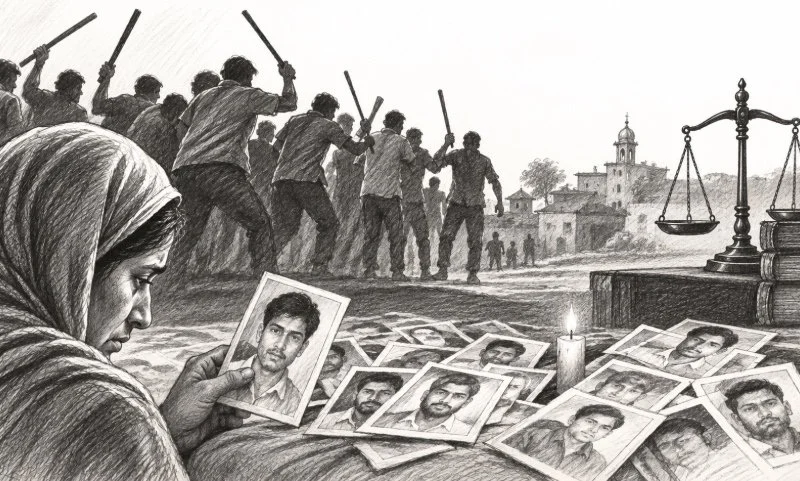
Such threats weaken the protections guaranteed by Article 19(1)(a) and (g) of the Constitution, which secure every citizen’s right to free speech and to pursue their profession, including work in public interest. They also violate the basic right to seek legal remedy. Filing a criminal complaint is a lawful and protected act. A response from state authorities that involves threats or retaliation turns legal participation into a risk and aims to shut down rights-based action altogether.
It resembles a classical move toward “authoritarian consolidation,” a term widely used in political science to describe the gradual subversion of democratic norms through legal and institutional means.
Scholars such as Juan Linz, a Spanish-American political scientist based at Yale University, and more recently Steven Levitsky and Daniel Ziblatt, professors at Harvard University and authors of “How Democracies Die,” have shown that democratic backsliding often occurs not through sudden coups but through elected leaders who preserve the appearance of legality while quietly subverting its purpose. State institutions are used not to uphold rights or ensure accountability but to entrench control, silence critics and delegitimise opposition. This becomes especially dangerous when the target is a human rights defender, as it sends a clear warning that even constitutionally protected actions, such as filing a legal complaint, can provoke retaliation from those in power.



Sarma’s assertion that the controversial National Register of Citizens (NRC) was “destroyed” by civil society actors, as reported by Scroll.in, represents an attempt to delegitimise the entire body of rights advocacy and legal aid work around citizenship. It also obscures the state’s own failure to finalise the NRC process. As of 2026, the National Register of Citizens in Assam, published on 31 August 2019, excluded about 1.0 million (19 lakh) applicants. Although the list was released as the outcome of the Supreme Court–monitored process, questions remain about its legal finality and implementation, as no official notification confirming it as the final legally binding document has been publicly issued.
There is a communal element here that adds to the legal threat. Mander’s complaint was about alleged hate speech directed at Bengali-origin Muslims. Sarma’s alleged remarks about “stealing Miya votes” and saying they “should vote in Bangladesh” come against the backdrop of longstanding ethnic and religious tensions in Assam. By targeting Mander, who has regularly defended the rights of this group, the Chief Minister carries that hostility into the legal arena, turning state power against those who speak for vulnerable minorities.
In a democracy governed by law, a Chief Minister retaliating against a legal complaint by threatening mass counter-cases is not just improper, it is dangerous. It undermines the core principle that every individual, regardless of position, is subject to scrutiny, and that legal rights do not depend on one’s political loyalties.
You have just read a News Briefing, written by Newsreel Asia’s text editor, Vishal Arora, to cut through the noise and present a single story for the day that matters to you. We encourage you to read the News Briefing each day. Our objective is to help you become not just an informed citizen, but an engaged and responsible one.

What happened in Mumbai on October 2 may have been only one day of protest, but the issues behind it are unlikely to disappear with the dispersal of the crowd. The protest was centred around concerns over the Election Commission, electoral rolls and the Special Intensive Revision (SIR) exercise, with protesters demanding accountability from Chief Election Commissioner Gyanesh Kumar. At the same time, similar mobilisation has been taking place across different parts of the country, with student groups, Opposition parties and civil society organisations raising concerns over the electoral process. Newsreel Asia spent the day at Mumbai Protest capturing the preparations, the police presence, conversations with protesters, the atmosphere on the streets and how the day unfolded. The speech of Cockroach Janta Party's leaders and sentiment of protestors seemed larger than the concerns regarding the electoral process. Will this lead to something bigger?