
India Listed as ‘Electoral Autocracy’ in Global Democracy Report
From the Editor’s Desk
March 19, 2026
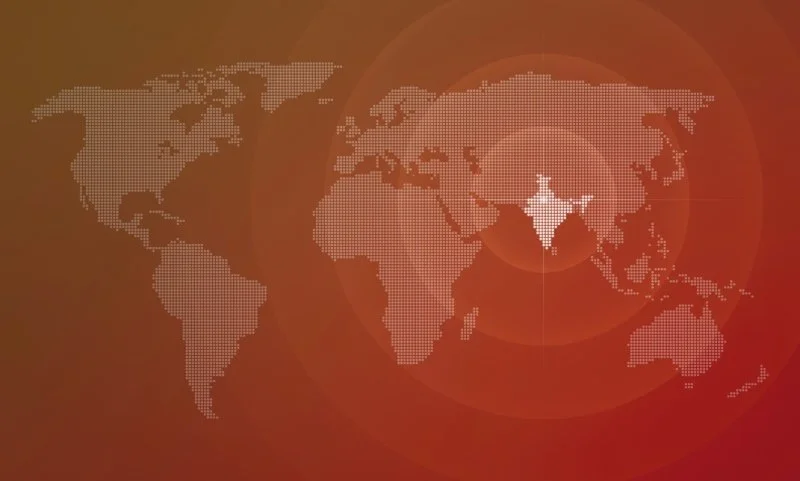
India is experiencing a decline in democratic standards and is now classified as an “electoral autocracy,” according to the Democracy Report 2026 published by the Sweden-based V-Dem Institute. The report places India in a political category where multiparty elections still take place but core democratic conditions, including freedom of expression, freedom of association and fair political competition, are judged to be insufficient.
The classification is part of the institute’s “Regimes of the World” framework, which divides political systems into four categories: liberal democracy, electoral democracy, electoral autocracy and closed autocracy. India falls into the third category.
The report states that India’s political trajectory carries global significance because of the country’s population size. Four of the five most populous countries in the world now fall under autocratic classifications, according to the report, which lists India alongside China, Indonesia and Pakistan. Because these countries contain hundreds of millions or billions of people, their regime types strongly influence global measurements of democracy.
Globally, the report says, the balance between democratic and autocratic systems has shifted significantly. By 2025, 74 percent of the world’s population, roughly six billion people, live under autocratic systems (electoral autocracies or closed autocracies), while 26 percent live in democracies.
Electoral autocracy is now the most populous regime category in the world, according to the report. About 46 percent of the global population, or around 3.8 billion people, live in countries in that category, including India, Pakistan and Indonesia.
Researchers also analyse democracy using population-weighted indicators, which estimate the level of democracy experienced by the average person. Using that measure, the report says global democracy levels have fallen to levels last recorded in 1978.
The report identifies South and Central Asia as the region where democratic deterioration for the average citizen is most pronounced. Democracy levels in the region, measured using population-weighted averages, have fallen to levels last recorded in 1976. India, which the report describes as the most populous country in the world, accounts for much of the regional trend because of its large share of the population.
Within South and Central Asia, the report estimates that 85 percent of the population lives in electoral autocracies, including India, Kazakhstan and Pakistan. Another 13 percent live in closed autocracies, such as Afghanistan and Turkmenistan. Only about 2 percent of the region’s population lives in electoral democracies, Nepal and Sri Lanka.
The institute says its population-weighted method gives greater influence to large countries when calculating global democracy averages. In such calculations, countries with large populations, including India, affect global scores more strongly than smaller states. By contrast, country average measures treat each country equally regardless of population size.
Western Europe and North America remain the most democratic region in the world, the report says, followed by Latin America and the Caribbean. South and Central Asia ranks lower on democracy indicators and shows pronounced trends of autocratisation when measured by the experience of the average citizen.
The report notes that the spread of democracy in the late twentieth century, known as the “third wave of democratisation,” began in 1974, when Portugal ended a dictatorship and introduced democratic rule. It was followed by many other countries adopting elections and democratic institutions. Over the next few decades, democracy expanded across parts of Europe, Latin America, Africa and Asia. The report says many of those gains have weakened in recent years. Seen with population-weighted measures, global democracy today is roughly at the same level as it was in the late 1970s, says the report.
You have just read a News Briefing, written by Newsreel Asia’s text editor, Vishal Arora, to cut through the noise and present a single story for the day that matters to you. We encourage you to read the News Briefing each day. Our objective is to help you become not just an informed citizen, but an engaged and responsible one.
What happened in Mumbai on October 2 may have been only one day of protest, but the issues behind it are unlikely to disappear with the dispersal of the crowd. The protest was centred around concerns over the Election Commission, electoral rolls and the Special Intensive Revision (SIR) exercise, with protesters demanding accountability from Chief Election Commissioner Gyanesh Kumar. At the same time, similar mobilisation has been taking place across different parts of the country, with student groups, Opposition parties and civil society organisations raising concerns over the electoral process. Newsreel Asia spent the day at Mumbai Protest capturing the preparations, the police presence, conversations with protesters, the atmosphere on the streets and how the day unfolded. The speech of Cockroach Janta Party's leaders and sentiment of protestors seemed larger than the concerns regarding the electoral process. Will this lead to something bigger?