Supreme Court’s Acceptance of New Definition Allows Mining
December 21, 2025
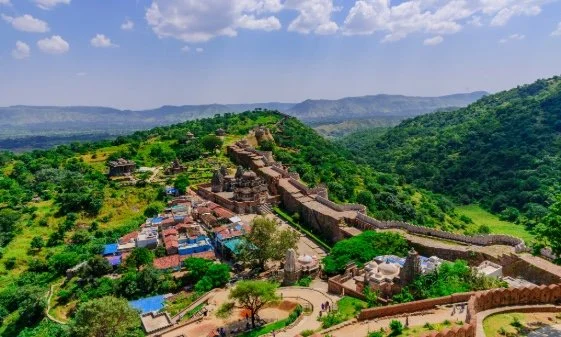
The Supreme Court has accepted a new definition of what constitutes the Aravalli Hills, a mountain range that stretches across western India through Gujarat, Rajasthan, Haryana and Delhi, limiting it to elevations over 100 metres and grouping only those within 500 metres of each other as part of the range. By excluding most smaller hills from protection, the change opens the door to mining and construction, threatening forests, wildlife, groundwater, rainfall, and air quality.
The new definition, approved by the Court based on recommendations from a central government committee, now identifies only those landforms rising 100 metres or more above local terrain as Aravalli Hills. Clusters of two or more such landforms within 500 metres are considered part of the Aravalli “Range.” The reclassification disregards the geological and ecological continuity of the range and instead reduces its identity to arbitrary measurements of height and proximity.
The definition excludes most of the smaller hills in the Aravalli system, especially in regions like Udaipur and Mewar, where the majority of hills are under 100 metres. Legal protection will no longer apply to these excluded formations, exposing them to construction, commercial projects and mining operations. Activists warn that this opens a legal pathway for exploitation on a large scale, especially as hills below the 100-metre threshold account for nearly 117,000 (1.17 lakh) hillocks in Rajasthan alone.
Environmentalists and civil society groups from Gurugram to Udaipur have raised strong objections. Peaceful protests have taken place outside government offices, and memorandums have been submitted to the President.
Protesters have stressed that the Aravalli Range is not only a source of natural beauty but a lifeline for entire ecosystems and human settlements. They are calling for the entire range to be declared a protected zone under a strict conservation policy.
The Aravalli is one of the oldest mountain ranges in India and plays a key role in keeping the region liveable. It blocks the Thar Desert from spreading further, protects Delhi and nearby areas from turning into dry land, refills underground water and helps clean the air in cities. The hills also support wetlands and help bring the rain needed for farming and drinking water.
Cutting out hills under 100 metres from the definition gives priority to business projects over the health of the environment. Once these hills are damaged or removed, they cannot be brought back. The change, in effect, makes it legal to destroy parts of nature that are critical to India’s survival.
The damage is already visible. In places like Alwar, entire sections of the Aravalli have disappeared under the impact of illegal mining. Dust, heat and pollution in surrounding regions have increased. Groundwater has fallen, and the loss of tree cover has made it harder for rain to seep into the soil.
According to environmentalists, about 35 percent of the Aravalli range has already been degraded in just two decades, according to The Week. If the Aravalli Range is further weakened, the impact will spread to Delhi, Haryana, Rajasthan and beyond.
Desertification is not a slow process anymore, especially with climate change increasing the frequency of droughts and erratic rainfall. The Aravalli’s protective role has been a major reason why Delhi has not already turned into a dust bowl.
The decision also contradicts scientific understanding of ecological systems. Hills, forests, rivers and wetlands work together as connected systems. Even small hills provide shelter for many species and help store rainwater.
The redefinition also sets a dangerous precedent for how environmental protection is determined. If the state can redefine nature by manipulating measurements, every vulnerable ecosystem is at risk. Forests can be redefined to exclude scrublands, wetlands can be redefined by water depth, and rivers can be reclassified by flow volume.
Any decision on such definition must include wide scientific consultation, transparent public hearings and long-term ecological studies. If there is no reversal, this could become one of the biggest environmental rollbacks in India’s recent history.
You have just read a News Briefing by Newsreel Asia, written to cut through the noise and present a single story for the day that matters to you. Certain briefings, based on media reports, seek to keep readers informed about events across India, others offer a perspective rooted in humanitarian concerns and some provide our own exclusive reporting. We encourage you to read the News Briefing each day. Our objective is to help you become not just an informed citizen, but an engaged and responsible one.