
Women Skipped Meals for Days to Feed Their Families During Covid-19 Lockdown: Study
From the Editor’s Desk
June 12, 2026
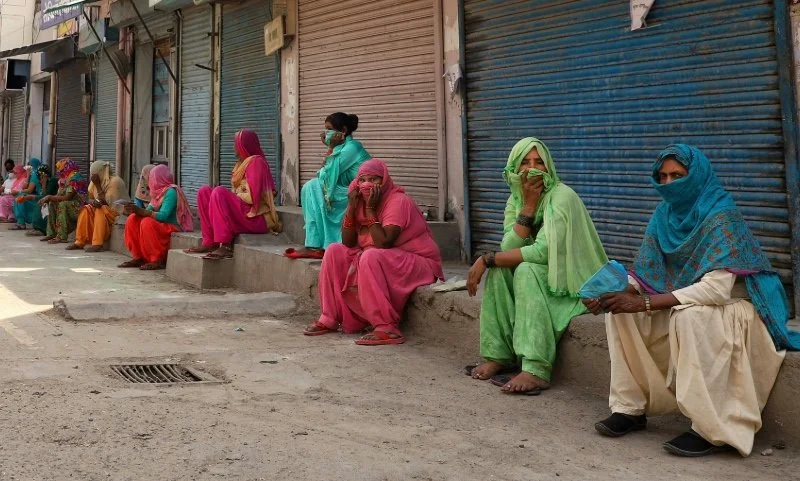
Women in economically precarious households in India went without food for days during Covid-19 lockdowns so children could eat and men could keep working, according to a new study based on interviews in Uttar Pradesh and Goa.
Researchers found that mothers frequently practiced “maternal buffering,” cutting their own food intake to manage scarce resources for the family, says the study, titled “Diverse Coping Strategies for Food Security, A Qualitative Study of Economically Precarious Households in India in the Context of COVID-19.”
Women told interviewers they survived on salt water or sugared water for two to three days, or ate only salted flatbread, so children could be fed and men could keep working or searching for jobs.
In several interviews, children said they went to sleep “just like that,” meaning hungry, says the study, published in PLOS One, a peer-reviewed open-access scientific journal. Fieldwork took place around 28 months after the last lockdown, in August 2020, with families recalling experiences retrospectively.
All families in the sample reported reducing dietary diversity during lockdown due to accessibility and affordability problems, with potatoes and cereals becoming the main fallback foods. As conditions worsened, families turned to borrowing for food, skipping meals, and reverse migration to rural areas.

One woman from Odisha, living in Goa for around 10 years, told researchers she bought groceries from a local shopkeeper also from Odisha and built up loans of 20,000 rupees during the lockdown, which she was repaying slowly.
A 38-year-old Hindu migrant woman in Goa said she managed everything alone for her four children, aged 8, 7, 6 and 5, because her husband, despite being a skilled worker, did not contribute to the household.
In one extended family, three households on the same premises began cooking together to conserve fuel and ensure the children did not go hungry, but the household could not raise enough money when the father fell ill, and he died during the pandemic. His daughter recalled selling masala, a betel nut mixture, all day while trying to save enough for painkillers and food for him.
A disabled single mother in the family remarried during Covid-19, against her mother’s wishes, hoping for financial stability. Her 10-year-old son said his stepfather could not find steady work and sometimes told his grandmother food had been cooked so she would not worry. He recalled that 500 rupees from his stepfather’s odd jobs would run the household, and sometimes there was only a little flour to cook.
A daughter-in-law in the extended family died shortly after the father’s death, leaving her children without support until their grandmother took over their care and secured a government loan for a small shop.
In another household in Goa, a woman from a rural migrant family from Karnataka said she was relieved schools were closed during lockdown, as it let her work while her elder daughter cared for her younger siblings.

The Indian government’s Pradhan Mantri Garib Kalyan Anna Yojana scheme, a pandemic-era food assistance program, supplemented the Public Distribution System, a subsidised ration network, by providing an additional 5 kilograms of free grain per person monthly, doubling the usual allocation, and added cooking oil, salt and chickpeas to allocations in both states.
Uttar Pradesh has continued providing free rations under its Atma Nirbhar UP Free Ration Scheme, a state food assistance program, as families continue to struggle for stable livelihoods, the study noted.
However, migrant brick kiln workers from Bihar said their ration registrations could not be used in Uttar Pradesh, though a hospital with a local charity provided two cooked meals daily for two months to families in their workers’ colony.
The study’s authors said the pandemic intensified risks linked to exclusion from government entitlements and pushed families toward debt, and that these pressures were especially hard for households already coping with longstanding inequities.
They recommended that policies should focus on providing timely support for vulnerable livelihoods during crises to reduce families’ need to rely on coping strategies that erode their long-term ability to recover.
The study was based on a purposive sample of lower-income households in Uttar Pradesh and Goa, and the authors said the findings cannot be generalised to any community, district, state or the country as a whole.
You have just read a News Briefing, written by Newsreel Asia’s text editor, Vishal Arora, to cut through the noise and present a single story for the day that matters to you. We encourage you to read the News Briefing each day. Our objective is to help you become not just an informed citizen, but an engaged and responsible one.

What happened in Mumbai on October 2 may have been only one day of protest, but the issues behind it are unlikely to disappear with the dispersal of the crowd. The protest was centred around concerns over the Election Commission, electoral rolls and the Special Intensive Revision (SIR) exercise, with protesters demanding accountability from Chief Election Commissioner Gyanesh Kumar. At the same time, similar mobilisation has been taking place across different parts of the country, with student groups, Opposition parties and civil society organisations raising concerns over the electoral process. Newsreel Asia spent the day at Mumbai Protest capturing the preparations, the police presence, conversations with protesters, the atmosphere on the streets and how the day unfolded. The speech of Cockroach Janta Party's leaders and sentiment of protestors seemed larger than the concerns regarding the electoral process. Will this lead to something bigger?