
States Can Now Prosecute Central Officials for Corruption, Says Supreme Court
From the Editor’s Desk
January 21, 2026
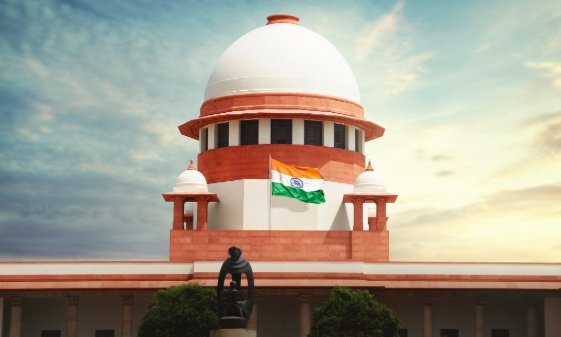
The Supreme Court of India has ruled that state governments have full legal authority to prosecute central government officials for corruption through their own police forces or Anti-Corruption Bureaus (ACBs), without needing any permission or involvement from the Central Bureau of Investigation (CBI). This is a welcome development for state governments, especially those run by opposition parties, and for citizens, because it strengthens legal accountability and curbs the Centre’s ability to delay or block investigations by claiming that only central agencies can act.
The petitioner, Nawal Kishore Meena, a central government employee, had argued that only the CBI could investigate and prosecute him, and that the chargesheet filed by Rajasthan’s ACB was legally invalid because it lacked the CBI’s approval, as reported by The Telegraph. Both the single-judge and division benches of the Rajasthan High Court had rejected this argument. The Supreme Court has now upheld those decisions.
The Court’s ruling reinforces the autonomy of state institutions, clarifies the relationship between central and state policing powers, and challenges long-standing assumptions about exclusive central control over corruption investigations involving Union government officials.

It relates to the federal structure of India as defined in the Constitution. India follows a “quasi-federal” system, meaning the Constitution recognises a strong central government while also granting significant powers to state governments. Police and public order fall under the State List (List II) in the Seventh Schedule of the Constitution. In contrast, anti-corruption agencies like the CBI operate under the Delhi Special Police Establishment Act, a central legislation. Historically, central control over the CBI, and its use by the Union government to investigate corruption, has been seen as a tool that can override state autonomy.
The ruling affirms that the Prevention of Corruption Act (1988) does not confer exclusive investigative powers on the CBI. Instead, Section 17 of the Act authorises police officers of a certain rank to investigate offences under it. The law does not restrict these officers to any specific agency, state or central. The Court held that unless a special law explicitly overrides the general provisions of the Code of Criminal Procedure (CrPC), the general rules (like those under Section 156 of the CrPC, which empowers police officers to investigate cognisable offences) continue to apply.
States not ruled by the Bharatiya Janata Party (BJP)-led National Democratic Alliance (NDA) at the Centre have long accused the Union government of misusing central investigative agencies like the CBI and Enforcement Directorate (ED) to harass or weaken state-level political opponents.

Because the CBI is controlled by the Union government, it cannot operate freely in any state without that state’s permission. This permission is usually given in advance through what is called “general consent.” When a state grants general consent, the CBI can investigate cases in that state without asking for approval each time. But many states not ruled by the BJP-led NDA government have withdrawn this blanket permission, meaning the CBI must now seek permission on a case-by-case basis before taking up any investigation within those states. This has created legal uncertainty about who can investigate central government employees accused of corruption, especially when the state wants to act but the Centre is unwilling. The Supreme Court ruling resolves that uncertainty in favour of state powers.
This ruling gives these states a legal foundation to pursue corruption cases involving central government officials operating in their territories.
The ruling reinforces the principle that corruption is a criminal offence that damages public trust, irrespective of the official’s employer. It also affirms that jurisdiction over such offences should not be governed by institutional allegiances but by law, public interest and the capacity of state institutions to respond.
The ruling strengthens the role of state-level agencies in the criminal justice system. It also pushes back against the idea that only central agencies can be trusted to investigate such cases. In recent years, many have seen central investigative bodies as being used for political purposes. By confirming the powers of state agencies, the Court has reinforced the idea that law enforcement should not be controlled from just one level of government.
It also corrects the mistaken belief, often cultivated by bureaucratic practice rather than law, that only certain “special” agencies can take up sensitive cases involving Union government employees. This belief has allowed some officials to avoid scrutiny, not because the law protects them, but because of unclear or restrictive procedures.
You have just read a News Briefing, written by Newsreel Asia’s text editor, Vishal Arora, to cut through the noise and present a single story for the day that matters to you. We encourage you to read the News Briefing each day. Our objective is to help you become not just an informed citizen, but an engaged and responsible one.

What happened in Mumbai on October 2 may have been only one day of protest, but the issues behind it are unlikely to disappear with the dispersal of the crowd. The protest was centred around concerns over the Election Commission, electoral rolls and the Special Intensive Revision (SIR) exercise, with protesters demanding accountability from Chief Election Commissioner Gyanesh Kumar. At the same time, similar mobilisation has been taking place across different parts of the country, with student groups, Opposition parties and civil society organisations raising concerns over the electoral process. Newsreel Asia spent the day at Mumbai Protest capturing the preparations, the police presence, conversations with protesters, the atmosphere on the streets and how the day unfolded. The speech of Cockroach Janta Party's leaders and sentiment of protestors seemed larger than the concerns regarding the electoral process. Will this lead to something bigger?