
Manipur Rape Survivor Dies After 20 Months in Trauma Care; Mother Pleads for Justice
From the Editor’s Desk
January 18, 2026
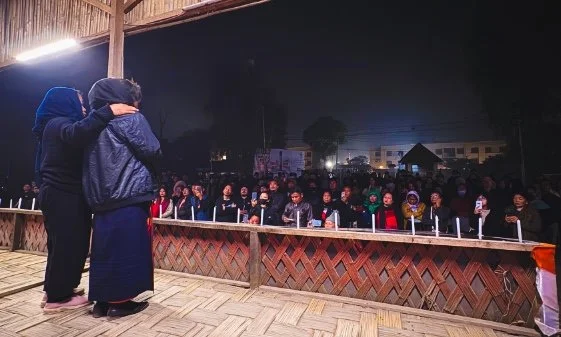
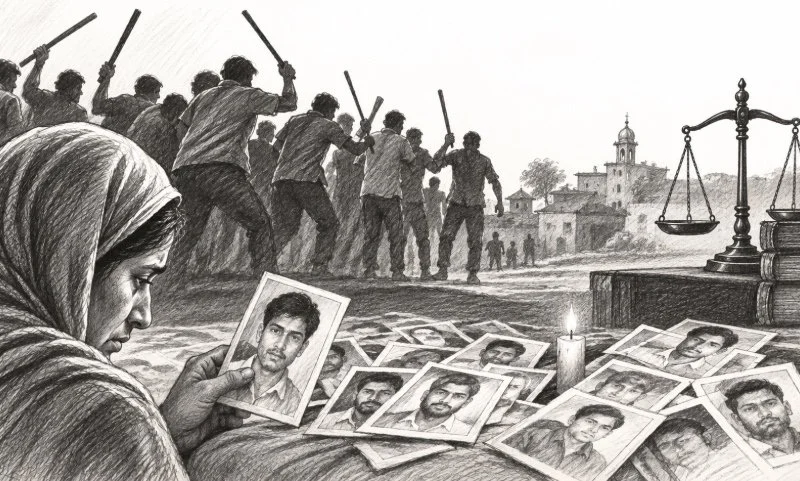
A 20-year-old Kuki-Zo tribal woman who was abducted, gang-raped and left for dead during the early days of the ethnic violence in Manipur died on January 10 from medical complications caused by the injuries she suffered nearly 20 months earlier. Her mother, speaking to Newsreel Asia, said all she wants now is justice for the heinous crime.
On January 18, a minority Kuki-Zo group, the Indigenous Tribal Leaders’ Forum, or ITLF, organised a candlelight vigil in memory of the victim, Nengtinlhing Haokip, who was from Churachandpur district but residing in Chassad Avenue area of Imphal East when the violence broke out on May 3, 2023.
About two weeks later, on May 15 that year, she was taken by the Meira Paibis, a group of women from the majority Meitei community, from an ATM kiosk in New Checkon area in Imphal, and handed her over to armed members of the Meitei extremist group, Arambai Tenggol, with explicit instructions to kill her.
According to her recorded statement, the Meira Paibis, who were dressed in their traditional phanek, a traditional wraparound skirt, were the first to beat her. Armed men in black T-shirts, from the Arambai Tenggol, then arrived and took her to Langol area, where she was blindfolded, tied up and threatened with death.
“They threatened to shoot me if I did not quieten down,” she said in her account, according to ITLF. The attackers later moved her to Bishnupur district, fearing arrest if they raped and killed her in Imphal.
In Bishnupur district, she said the men told her they would let her live if she allowed them to rape her. “I replied, I am not that kind of girl.” When she resisted, she was physically assaulted and raped by multiple men.
Her mother said she and a nurse took her daughter to a hospital in Guwahati, over 500 kilometres away, for treatment. A Kuki-Zo government official from Kangpokpi district helped the family obtain limited financial support under a central government scheme to cover the cost of her extended medical care, which included treatment for severe physical injuries, uterine complications and trauma.
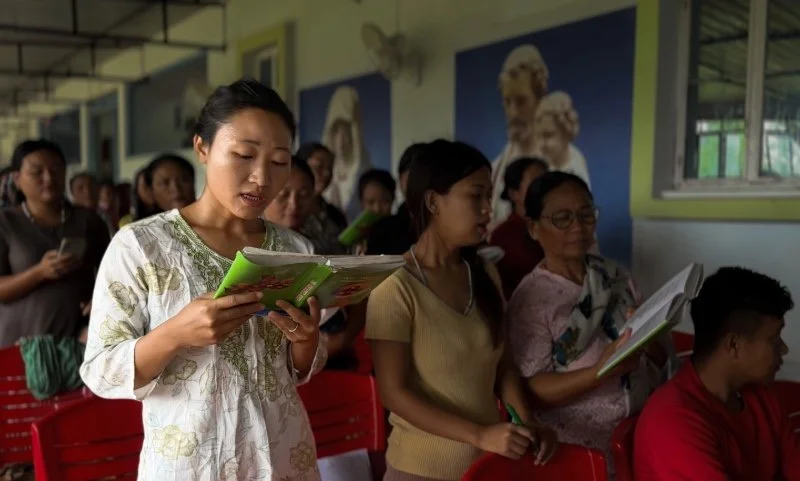
She added that her daughter was gentle and soft spoken. She studied until Class VIII and started working at a beauty parlour run by her cousin. She had two elder brothers and a younger sister. Her ambition was to open her own beauty parlour.
Court officials visited the family, but representatives from the Manipur government or the central government did not show up, she said. The family registered a first information report, but no arrests have been made, although the Central Bureau of Investigation took over the case on July 22, 2023.
The mother said homes belonging to the Kuki-Zo community were burned and many from their community were killed, leaving behind deep suffering. She said living under a Meitei-led Manipur government no longer feels possible, and coexistence with Meitei communities feels out of reach.
She said the most painful part of losing her daughter was her death coming without justice, and she wants those responsible for the crime to face the law.
While reports mention only the victim’s physical complications, the psychological toll of such violence can be just as severe. A young woman may be left with lasting trauma, haunted by fear, prone to depression or panic, and emotionally numb, according to psychologists. In societies where stigma surrounds sexual violence, that trauma often deepens into shame and silence. Trust in others can break down entirely. The assault disrupts her sense of self, her safety and the future she once imagined. And when justice remains out of reach and support is missing, the pain hardens into something more permanent, a sense that she has been abandoned and erased.
For the mother, the grief is layered and ongoing. She not only watched her daughter suffer for nearly two years, but did so knowing that no one had been held accountable. The helplessness of caring for a child brutalised in such a way, of navigating hospitals and government offices with no real support, and of carrying unanswered questions day after day can leave deep emotional wounds. Parents in such situations often live with guilt, rage, and a constant ache, a sense that they failed to protect their child, even when they did everything they could. The denial of justice keeps that grief alive. It festers.
The ITLF said The victim’s death reflects the pattern of assaults against Kuki-Zo women and the collapse of protection mechanisms during the violence.
Manipur witnessed prolonged ethnic violence starting in May 2023 after the High Court suggested the Meitei community could be granted Scheduled Tribe status, triggering fears among Kuki-Zo people that their land rights in the hill districts would be eroded.
Reactions to the protests, fuelled by rumours and misinformation, led to widespread violence that displaced more than 40,000 people and resulted in over 250 deaths.
Nearly 15,000 Kuki-Zo people remain in makeshift relief camps, with no indication of resettlement or justice. According to civil society accounts, more than 360 churches and synagogues were destroyed and 200 tribal villages burned down during the unrest.
Just like the victim’s mother, no Kuki-Zo family among the hundreds affected can say they have received justice.
Despite the scale of the violence, there have been no criminal prosecutions, except one or two, against members of Meitei vigilante groups such as Arambai Tenggol or Meitei Leepun. These groups have been named repeatedly in connection with attacks, including murders and sexual violence, but authorities have made no arrests.
The humanitarian situation remains grim. Medical access to conflict-affected districts like Churachandpur is still limited. Ambulances carrying critical patients have to travel to Aizawl in Mizoram, 350 kilometres away, since Meitei-controlled areas are inaccessible to Kuki-Zo residents and the reverse is also true. Travel for education or holidays for the Kuki-Zo must be routed through Mizoram or Nagaland, making the journey far more expensive than most families can afford.
The fact that an audio recording emerged that allegedly captured then-Chief Minister N. Biren Singh acknowledging the use of heavy weapons and looted arms in Kuki-Zo areas makes suffering harder for the community. Many see it as confirmation that state power was used to target them, deepening their sense of abandonment. The Supreme Court is still examining the recording’s authenticity, with hearings delayed by government lawyers, according to court records.
Singh, a member of the Bharatiya Janata Party, resigned in February 2025 ahead of a no-confidence motion in the state assembly. President’s Rule was imposed soon after, placing the state under direct central control.
The governor, now the acting head of the state administration, has announced no steps toward investigation, accountability or reparations. Victims and displaced persons continue to report fear, uncertainty and neglect.
You have just read a News Briefing, written by Newsreel Asia’s text editor, Vishal Arora, to cut through the noise and present a single story for the day that matters to you. We encourage you to read the News Briefing each day. Our objective is to help you become not just an informed citizen, but an engaged and responsible one.
What happened in Mumbai on October 2 may have been only one day of protest, but the issues behind it are unlikely to disappear with the dispersal of the crowd. The protest was centred around concerns over the Election Commission, electoral rolls and the Special Intensive Revision (SIR) exercise, with protesters demanding accountability from Chief Election Commissioner Gyanesh Kumar. At the same time, similar mobilisation has been taking place across different parts of the country, with student groups, Opposition parties and civil society organisations raising concerns over the electoral process. Newsreel Asia spent the day at Mumbai Protest capturing the preparations, the police presence, conversations with protesters, the atmosphere on the streets and how the day unfolded. The speech of Cockroach Janta Party's leaders and sentiment of protestors seemed larger than the concerns regarding the electoral process. Will this lead to something bigger?