How Bad is Delhi’s Air Pollution for Your Health, What Needs to Change?
New Study Tracks Real Lung Damage from Toxic Air, Calls for Urgent Action
December 10, 2025
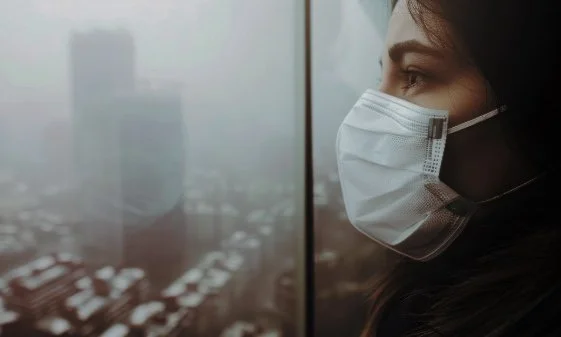
People in Delhi and nearby areas are absorbing dangerous amounts of air pollution deep into their lungs every day, far beyond what Indian or global safety standards allow. A five-year study measured how much of this pollution actually settles inside the respiratory system, offering a clearer and more direct view of the damage being caused to people’s health.
Using a method known as Respiratory Deposition Dose (RDD), the study titled “Respiratory Deposition of Particulate Matter in Delhi: A Five-Year Assessment of Exposure Patterns and Health Risks” traced how fine (PM2.5) and coarse (PM10) particles settle in different parts of the lungs, depending on a person’s location, activity, and the time of day.
Published on Nature.com, the study, conducted between 2019 and 2023, found that in every one of those five years, levels of both PM2.5 and PM10 exceeded not just India’s national standards but also the tougher limits set by the World Health Organization. In 2019, the highest daily RDD recorded for someone walking outdoors was nearly 40 times greater than what would be expected if the air met WHO guidelines.
People walking or doing any physical activity faced the highest doses because of their elevated breathing rate.
Men consistently recorded higher doses than women due to greater lung volume. Among all locations, industrial and commercial zones were the most toxic, followed by institutional and residential areas. This puts workers, vendors and people in transit at the highest daily risk.
Commuters in Delhi also face disproportionate exposure. The evening rush, from 4.15 to 6.45 PM, was consistently worse than the morning. During this period, RDD for PM2.5 was 39 percent higher and for PM10 was 23 percent higher. The spike is due to heavy vehicle emissions and poor atmospheric ventilation that causes pollutants to settle closer to the ground.
The study offers a more medically relevant picture of how pollution harms people.
PM2.5 particles, which are smaller, travel deep into the alveolar sacs of the lungs where oxygen exchange takes place, increasing the risk of cardiovascular problems and systemic inflammation. PM10 particles tend to stay in the upper respiratory tract but still pose serious health risks when exposure is sustained, as it is for those working in polluted zones.
The study also links alveolar deposition to worsening of asthma, wheezing, and susceptibility to pneumonia.
The exposure also contributes to a sharp rise in cardiovascular, respiratory, neurological and reproductive disorders. Prolonged exposure to PM2.5 has been linked to systemic inflammation and the acceleration of diseases such as atherosclerosis and chronic obstructive pulmonary disease.
In South Asia, annual exposure to PM2.5 levels above WHO thresholds is associated with around two million premature deaths. In Delhi alone, high concentrations of PM2.5 contributed to an estimated 56,876 premature deaths between 2015 and 2019, resulting in an economic loss of nearly USD 157 billion.
Special events like the Diwali festival and the COVID-19 lockdown served as two extremes in the data.
Diwali caused sharp surges in deposition, with PM10 RDD at night nearly doubling compared to daytime levels, and the elevated risk lasting for days due to stagnant weather. By contrast, during the lockdown, when traffic and industrial activity stopped, the RDD dropped to its lowest levels across the five years. This dramatic reduction shows how large-scale structural change can produce immediate and meaningful health benefits.
The study’s findings carry five clear policy lessons.
First, the current national standards are far too lenient. Even full compliance with India’s limits would leave people exposed to harmful air. The dose-based evidence argues for aligning national norms with WHO guidelines.
Second, policy needs to target specific time windows and activities. The evening peak must be reduced by limiting traffic through staggered work hours, promoting non-polluting transport and enforcing tighter vehicle emission controls.
Third, hotspot areas like industrial and commercial zones need strict enforcement of dust control, industrial emissions and construction site regulation. These zones expose daily wage earners and workers to consistently higher risk.
Fourth, there must be binding limits and clear advisories around firecracker use during festivals. Diwali exposure levels were not only high but also prolonged, creating dangerous conditions for children, the elderly and people with respiratory illness.
Fifth, long-term urban planning must build on the lesson of the lockdown.
Emissions reductions in transport, residential energy use, and industrial processes need to be built into structural policy, not left to emergency situations. Otherwise, Delhi’s residents will keep breathing toxic doses of fine particles that damage their lungs and blood vessels day after day.
The numbers leave no doubt that the city’s air is doing real harm to those who live and work in it, whether the damage is felt today or builds up silently over time.
You have just read a News Briefing by Newsreel Asia, written to cut through the noise and present a single story for the day that matters to you. Certain briefings, based on media reports, seek to keep readers informed about events across India, others offer a perspective rooted in humanitarian concerns and some provide our own exclusive reporting. We encourage you to read the News Briefing each day. Our objective is to help you become not just an informed citizen, but an engaged and responsible one.