
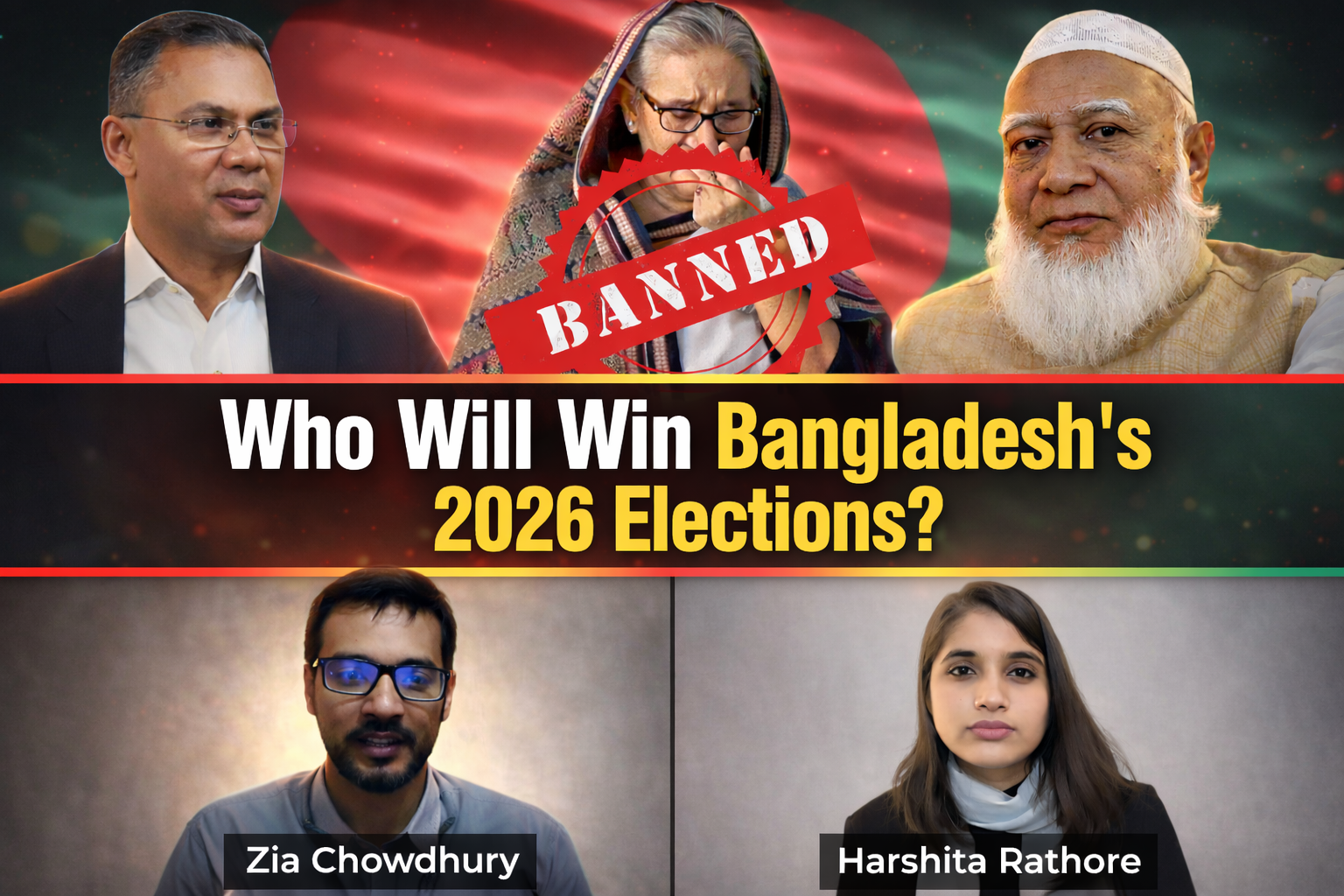
Bangladesh Elections 2026 | Issues, Fears and Islamic Radicalisation
On 12 February 2026, the country will vote in its first national parliamentary election since the July 2024 student protests, which began over government job quotas and quickly escalated into a nationwide movement demanding political change. The unrest ultimately led to the ouster of Prime Minister Sheikh Hasina after 15 years in power and the formation of an interim government under Nobel laureate Muhammad Yunus. This election is being closely watched not just within Bangladesh, but across South Asia and beyond.
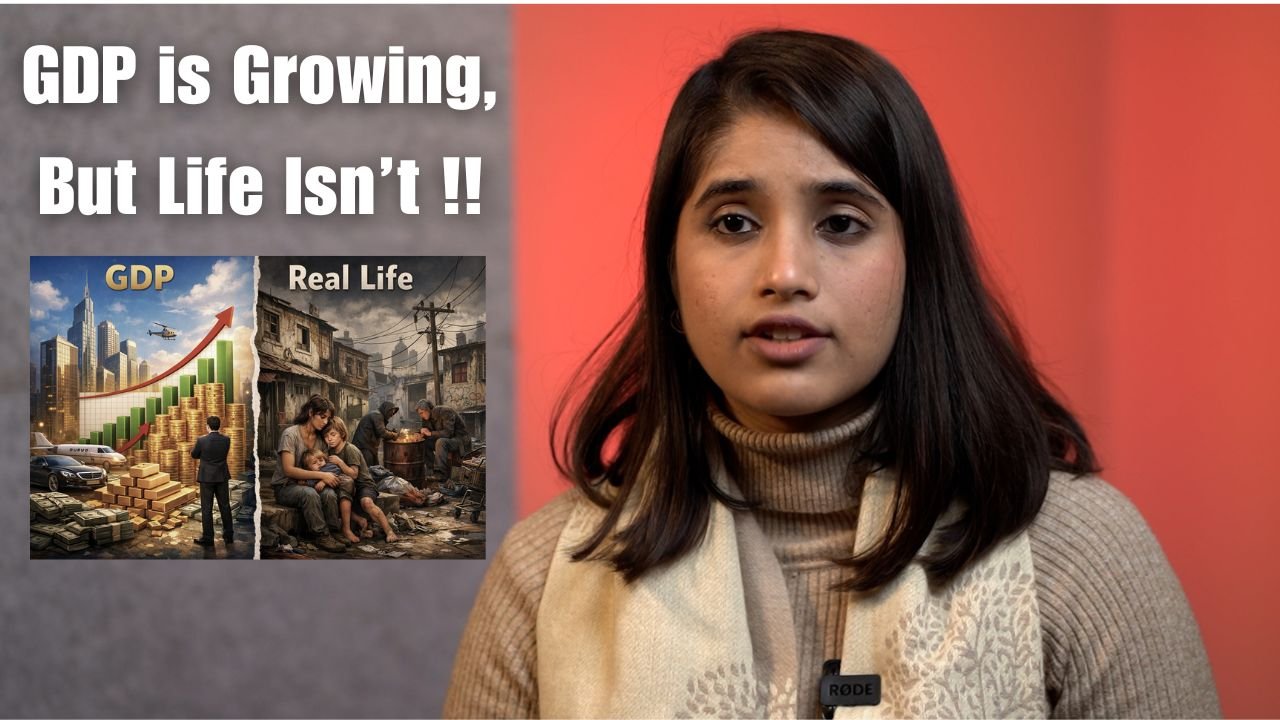
What GDP, Rankings & Statistics Don’t Tell You About Real Life
Governments often point to rising GDP, higher per capita income, and global rankings to claim that the economy is doing well. But do these numbers actually reflect how ordinary people live? If GDP grows by five percent, does life really improve by five percent for everyone? In this episode of We the People, we look beyond headline statistics to understand what economic “growth” truly means for people on the ground. Using simple examples—from wages and employment to gig work, nutrition, and cost of living—this video explains why commonly used economic yardsticks can be misleading.
Rights Are Recognised, Not Granted
In this episode of We the People, Surabhi Singh breaks down a powerful but often misunderstood idea: rights are recognised, not granted. Using everyday examples and insights from political philosophy and constitutional law, this video explains why freedoms like speech, conscience, equality, and dignity don’t come from the state — they belong to us simply because we are human.
A Country Can't Grow Without Dignity of Labour
Surabhi Singh explains why the dignity of labour is not just a moral idea, but an economic necessity. From caste and class hierarchies in India to global examples like Germany’s vocational education system, this video explores how respect, fair wages, and legal protection shape productivity, skill-building, and economic growth. Drawing on ideas from thinkers like Émile Durkheim, George Akerlof, Gary Becker, and Dr B. R. Ambedkar, this explainer shows how undervaluing manual and skilled labour weakens economies.
How Governments Use Law to Take Away Your Rights
In democracies, we expect rights to disappear loudly — through bans, crackdowns, or open repression. But in reality, freedom is often taken away quietly, through laws, procedures, and paperwork.
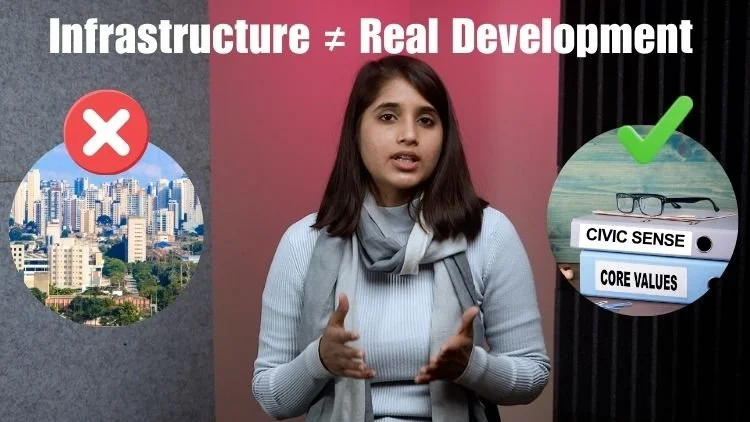
Know the Real Meaning of Development Beyond Roads and Buildings
When we think of development or vikas, we often picture highways, airports, metros, and tall buildings. But do these visible symbols really tell us how well a country is doing? In this explainer, Newsreel Asia looks beyond concrete and steel to ask a deeper question: does development only mean infrastructure, or does it also mean freedom, trust, and dignity? Drawing on ideas from thinkers like Amartya Sen, Robert Putnam, and Douglass North, this video explores why real progress is about expanding people’s choices and improving the quality of public life.
You Can Care About Politics Without Supporting a Party
Political engagement is not the same as political loyalty. Yet in today’s hyper-polarised world, many of us confuse supporting democracy with supporting a political party. In this episode of Newsreel Asia’s Explainer Series, Harshita Rathore breaks down what political engagement really means—and why being politically aware does not require blind loyalty to any party or ideology.
How Government Distracts you from Important Issues
Why does bad governance continue even when problems are clearly visible all around us? In this episode, Newsreel Asia producer Surabhi Singh breaks down how distraction politics allows those in power to escape accountability. From unemployment, healthcare failures, and broken public services to culture wars, identity politics, and manufactured controversies, this video explains how attention is deliberately shifted away from real governance issues.
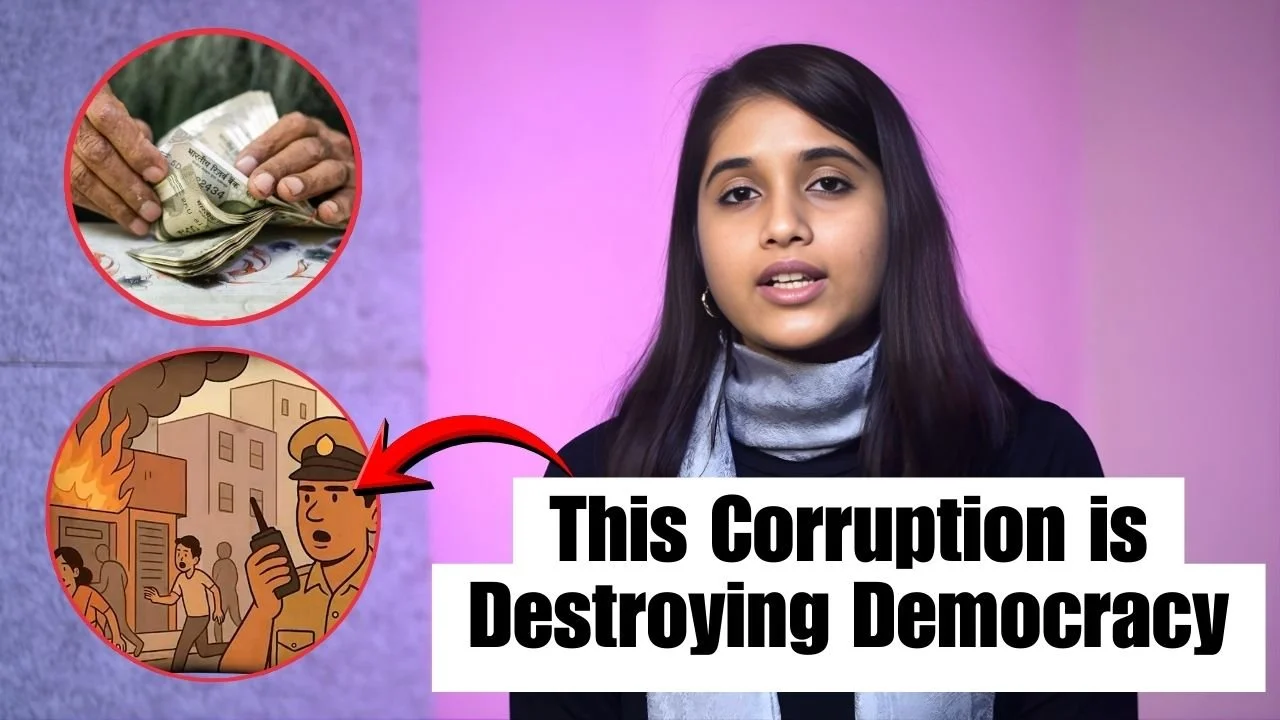
You’re Not Aware of This Corruption — It’s Not About Money
Corruption is often imagined as bribes, cash-filled envelopes, or stolen public funds. But today, scholars, legal experts, and real-world events are forcing us to rethink this definition. Corruption is no longer just about money — it also includes deliberate inaction, selective enforcement, and the betrayal of public duty. In this explainer, we unpack how a new idea has quietly entered the meaning of corruption and why it matters for every citizen.
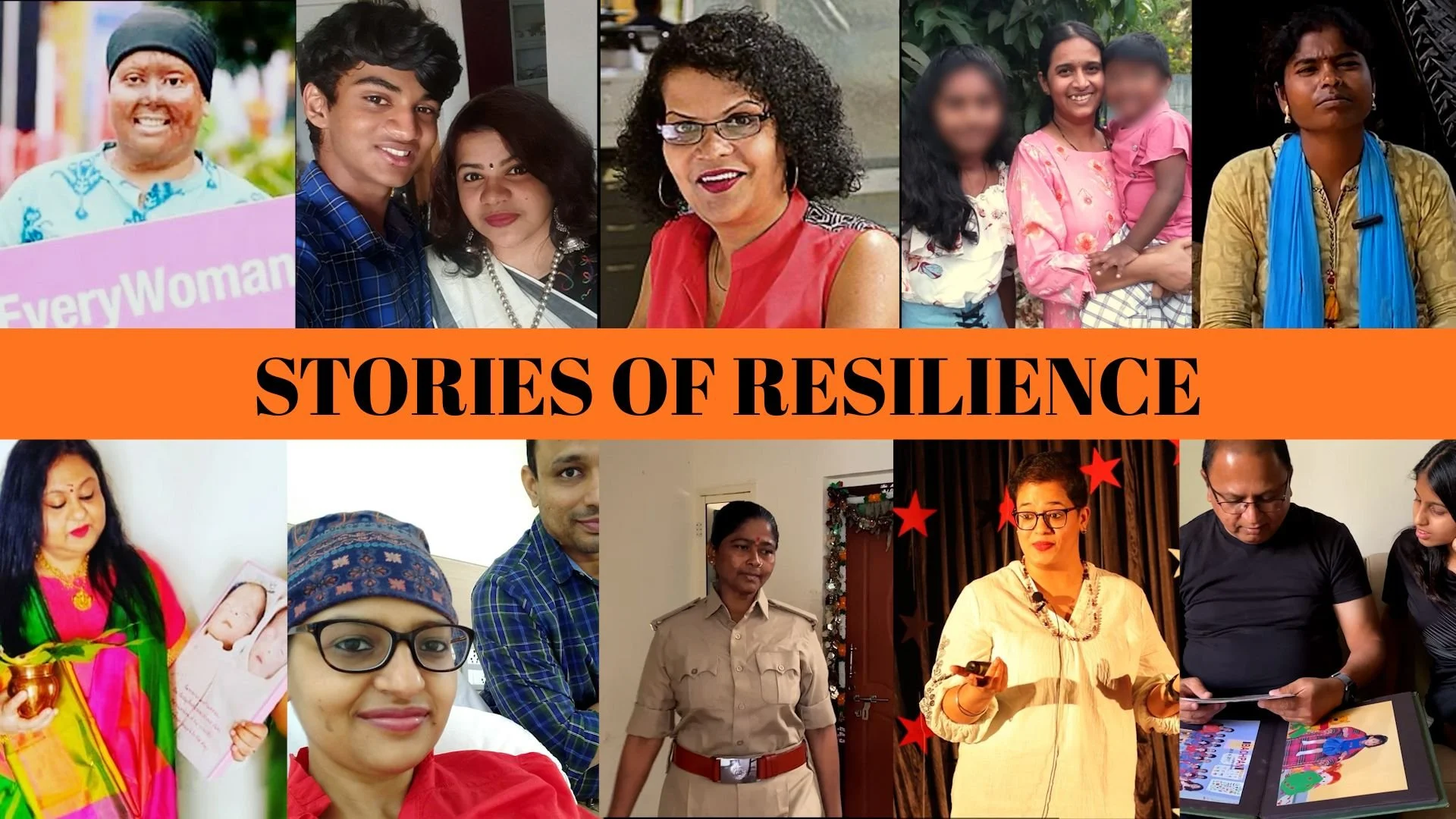
What These 10 Powerful Stories Teach about Resilience
This video is a powerful summary of Stories of Resilience — featuring an acid attack survivor, a cancer fighter, a bipolar disorder survivor, a single father, a trans woman reclaiming dignity, a domestic abuse survivor, a woman freed from bonded labour, a mother who rebuilt life after loss, a widow raising her child alone, and Bengaluru’s first woman BMTC driver.
Ten lives. Ten journeys.
One message: resilience.
Watch to get inspired and find strength against all odds.

Is India’s RTI Under Threat? DPDP Act 2023 Explained
India’s new Digital Personal Data Protection Act, 2023 (DPDP 2023), is reshaping the landscape of transparency and accountability—especially when it comes to the Right to Information (RTI). While the law promises stronger privacy protections, it also gives government offices sweeping power to reject RTI requests by simply categorising information as “personal data.” This shift could make it even harder for activists and journalists to expose corruption, investigate misuse of public funds, or track the implementation of welfare schemes.
In this episode, Gunjan Handa speaks with RTI activist Amrita Johri to unpack what the DPDP Act truly means for citizens, democracy, and the future of transparency in India. Together, they explore how privacy—meant to empower citizens—could instead become a tool for government secrecy, and why this raises serious concerns about holding those in power accountable.
Watch to understand the risks, loopholes, and realities of India’s first full-fledged data protection law—and what it could cost our democracy.

What's REALLY Driving Your Voting Decisions in Elections?
What are elections really for? Every election season turns into a spectacle — banners, slogans, TV debates, strategy talk, poll math. But beneath all the noise, we often forget the core purpose of voting in a democracy. This film takes you beyond the drama and deep into the true meaning of elections. It asks a simple but powerful question: Are we choosing performers… or public servants?

How is Bhutan Leading the World Spiritually?
Bhutan hosts the first-ever Global Peace Prayer Festival 2025 in Thimphu, held in continuation of the celebrations marking the 70th birth anniversary of His Majesty the Fourth King, Jigme Singye Wangchuck — the visionary behind Gross National Happiness. The two-week festival brings together spiritual leaders, monks, and practitioners from around the world to offer prayers for peace, compassion, and global harmony. The event features powerful rituals such as the Jabzhi Dhoechog, Bazaguru mantra recitation, and the Kalachakra Empowerment led by His Holiness the Je Khenpo. It also marks historic milestones, including the ordination of over 250 Buddhist nuns, symbolizing inclusivity and empowerment. Buddhism, founded by Siddhartha Gautama—the Buddha—is a spiritual tradition centered on compassion, mindfulness, and the path to liberation from suffering. Over time, it evolved into three major sects. Theravada, practiced mainly in Sri Lanka and Southeast Asia, preserves the earliest teachings and emphasizes individual enlightenment through meditation and discipline. Mahayana, widespread in East Asia, focuses on the Bodhisattva ideal—seeking enlightenment not just for oneself but for all beings. Vajrayana, prominent in the Himalayas including Bhutan and Tibet, uses advanced rituals, mantras, and tantric practices to accelerate spiritual transformation. Together, these traditions reflect Buddhism’s rich diversity while sharing the same core message: awakening through wisdom and compassion.All three major Buddhist traditions — Theravada, Mahayana, and Vajrayana — are coming together to participate in this peace prayer programme. Their unified presence makes the festival truly historic, as it brings diverse Buddhist lineages under one roof to offer collective prayers for harmony, compassion, and global peace. With Prime Minister Narendra Modi joining the celebrations, the festival stands as a profound expression of Bhutan’s spiritual heritage, unity, and its enduring message of peace to the world.
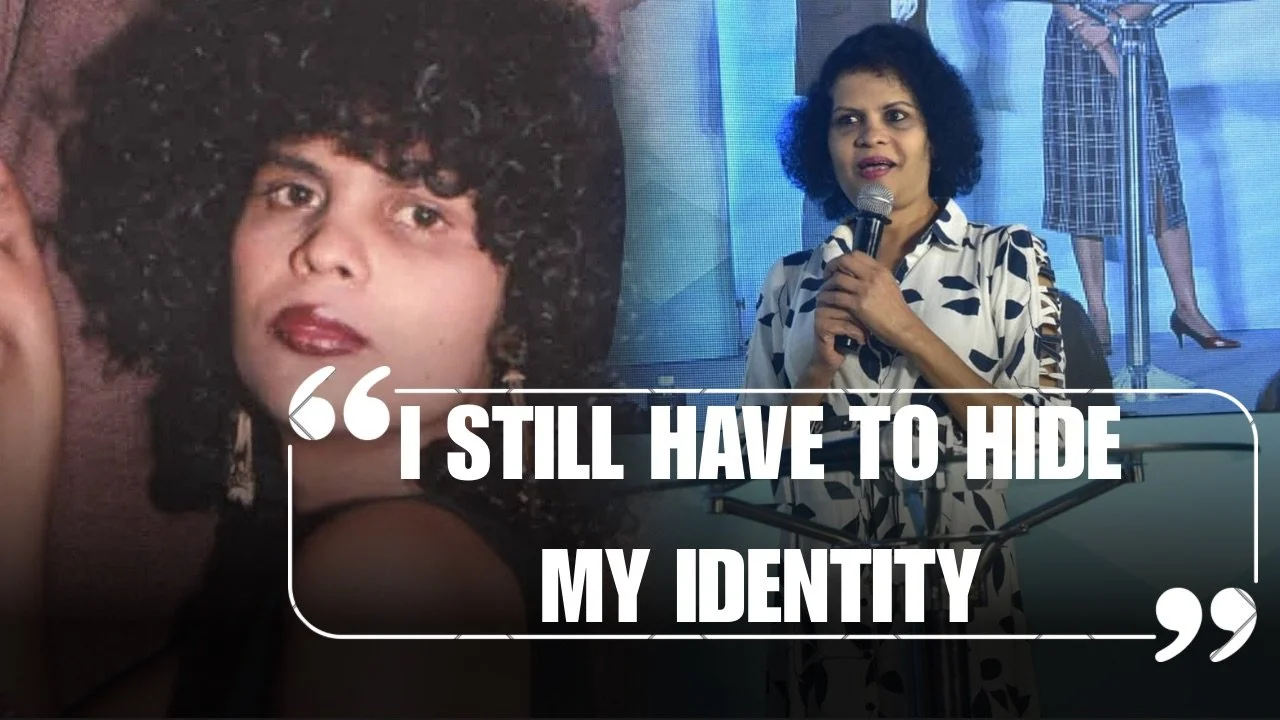
From Sex Work to Corporate Success : A Transgender's Journey
Transgender people in India have long faced exclusion and stigma. From concealing their identities to being judged and discriminated against, their lives continue to be marked by struggle. According to the 2011 Census, India recorded over 4.8 lakh transgender individuals, though activists say the actual number is much higher due to widespread underreporting and social invisibility. Even today, despite the 2014 Supreme Court judgment recognizing trans people as the “third gender” and the Transgender Persons (Protection of Rights) Act, 2019, many continue to face barriers in education, employment, housing, and healthcare. Yet, Nayana’s journey stands out as a story of resilience and hope. Born as a boy, she transitioned to become a trans woman—overcoming immense hardship to transform her life. Once forced into sex work for survival, today she works as a marketing associate at an IT company in Bengaluru, proving that determination can rewrite one’s destiny. Born in Udupi to a modest family, Nayana always knew she was a woman at heart. But growing up, she faced relentless bullying and was branded with hurtful slurs reserved for the “third gender.” She moved to Pune and joined a transgender community, surviving for years through begging and sex work — a reality for nearly half of India’s transgender population, as per a 2018 National Human Rights Commission study, which found that 96% of trans people are denied jobs and 60% are forced into sex work or begging. Eventually, Nayana resolved to rebuild her life. Returning to Bengaluru, she took computer and multimedia courses, connected with NGOs, and began administrative work supporting sexual minorities. Her journey from exclusion to empowerment mirrors the broader struggle of India’s transgender community - a fight not just for acceptance, but for dignity, opportunity, and equality.
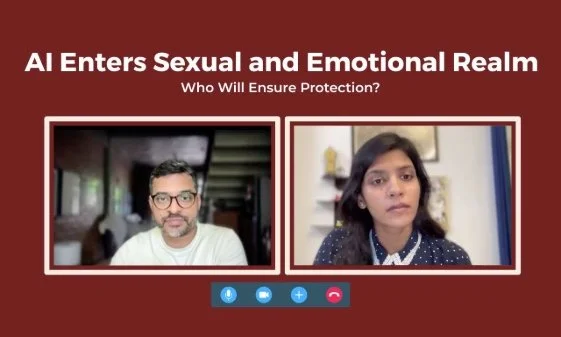
AI Enters Our Sexual and Emotional Realm | Who Will Ensure Protection?
Online technology, despite its many advantages and advancements, now faces a formidable challenge. How do we safeguard our emotional and psychological wellbeing? This is the third in a series of stories and interviews by Newsreel Asia journalist Surabhi Singh, looking into how social media platforms and messaging apps have increasingly become hubs for the circulation of harmful and illegal sexual content. Now, joining these digital spaces are AI platforms, adding a new and deeply complex layer of concern.
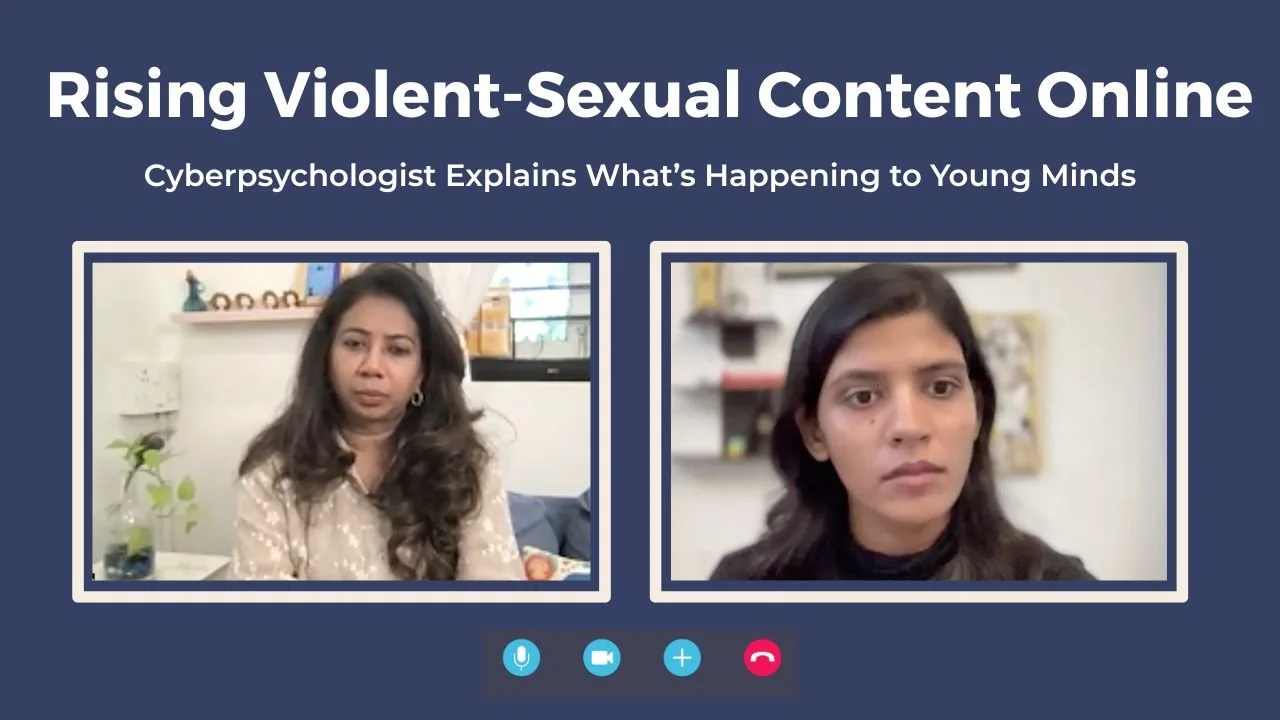
How Internet is Corrupting Young Minds | Cyberpsychologist Explains
What’s really happening to young minds on the internet?
In this powerful conversation, Newsreel Asia’s journalist Surabhi Singh speaks with Nirali Bhatia, a leading cyberpsychologist and counselling expert, about the dark side of India’s online world — where young boys are getting exposed to extreme sexual content, misogyny, and even fantasies involving their own mothers and sisters.

Will Faith Allow Reform? The Future of Nepal’s Kumari Pratha
Will the centuries-old tradition of the Kumari — Nepal’s living goddess — ever reform with time?
Harshita Rathore explores the deeply rooted practice of Kumari Pratha, where a prepubescent girl from the Newar community is worshipped as the living embodiment of Goddess Taleju. Chosen for her purity and perfection, the Kumari is revered as divine until she begins to menstruate — a moment that abruptly ends her sacred status.
Through history, the practice has stood as a symbol of faith and culture, yet it also raises pressing questions about gender, childhood, and the right to live with dignity. The Nepal Supreme Court’s 2008 ruling brought some reforms — including access to education and healthcare — but is that enough?
To understand the path forward, Harshita speaks with activist Radha Paudel, who has been advocating for dignified menstruation and gender equality in Nepal. Paudel argues that while traditions must be respected, they should also adapt to protect the rights of girls and women. She suggested some reforms to the practice. But will faith allow tradition to evolve?

Are Assam’s Floods Natural or Man-Made?
To find out whether the floods that Assam faces every year are natural or man-made, Newsreel Asia producer Tej Bahadur Singh travels to Lakhimpur district, one of the worst-hit by floods. He meets a 47-year-old Toramai Pawe, an ASHA worker and daily wage laborer, in Assam’s Pahumara Ahom village, who has lived for decades, raising her children in a modest home built through years of toil. In May 2025, a sudden flood, triggered by water released without warning from the Ranganadi Dam, swept through her village.
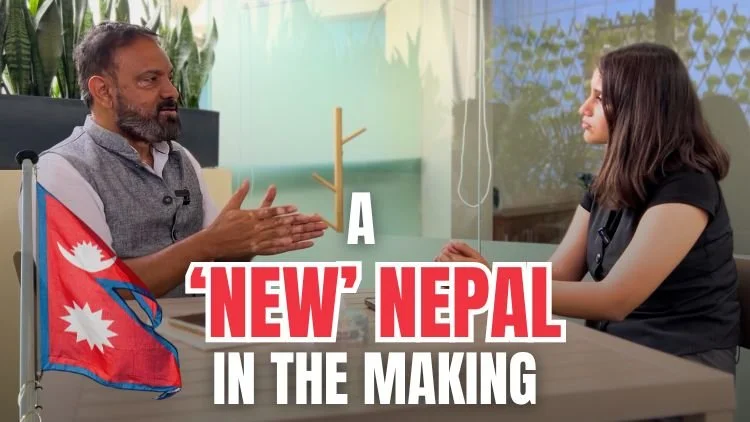
Is it the Beginning of a ‘New’ Nepal?
Nepal has been making global headlines after a mass youth uprising forced Prime Minister K.P. Sharma Oli to resign, paving the way for an interim government led by former Chief Justice Sushila Karki. Triggered by a controversial social media ban, the protests quickly grew into a movement against corruption, nepotism and authoritarianism. Nineteen Gen Z protesters were killed in police firing on September 8, sparking nationwide grief and anger, but also a surge of hope for change. For the first time, Nepal has appointed a woman as interim prime minister, and a cabinet of non-partisan professionals is attempting to steer the country toward elections in March 2026.
Political thinkers, activist and youth groups like Hami Nepal are now shaping the idea of a “new” Nepal through citizen assemblies, proposals for decentralised governance and calls for institutional reform. Newsreel Asia’s Harshita Rathore spoke with Prashant Singh, a social activist from Nagarik Pratham, to understand what this moment means for Nepal’s political evolution, the grassroots nature of the movement, and the new political imagination young Nepalis are bringing to the table.
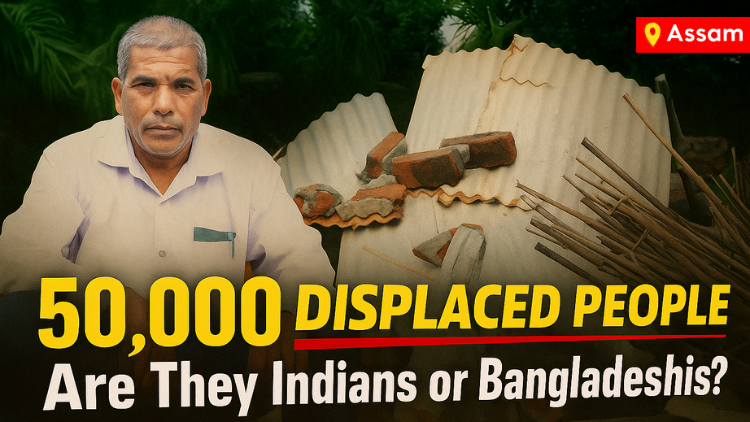
Inside Assam’s Bulldozer Politics Against Bengali-Speaking Muslims
Suleman Ali lived his entire life in Hasila Beel, a village in Assam’s Goalpara district. He built his home brick by brick over years of labor, married off his daughters there, and believed his documents proved he belonged. But one morning in June 2025, bulldozers reduced it all to rubble.