Citizenship, Encounters and Temple Funds: A Question of Trust | THE INDIA REPORT | Ep 2
By Asad Ashraf
July 1, 2026
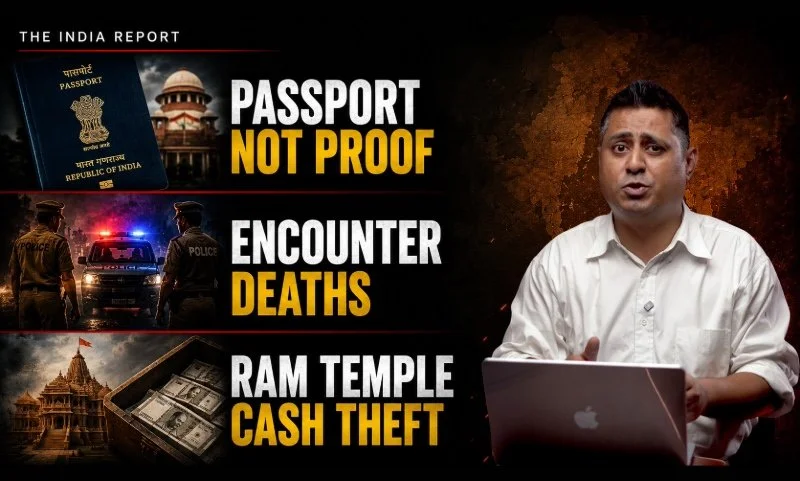
This week on our weekly show “The India Report,” we bring together three stories that, at first glance, seem to have nothing in common. One concerns citizenship documents. Another concerns police shootings. The third concerns alleged theft inside one of the most important religious institutions in the country. Although these stories come from very different parts of public life, they all point to the same fundamental question about modern India. What happens when institutions ask citizens to place their trust in them, but the procedures meant to inspire that trust appear uncertain, inconsistent or inadequate?
In our first segment, we look at a little-noticed statement by the Ministry of External Affairs that has reopened a basic question many Indians thought had long been settled. If a passport, issued after extensive government verification, is not definitive proof of citizenship, then what is? We look at the legal distinction the government is drawing, the continuing absence of a clear nationwide standard for proving citizenship, and the implications for millions of people whose lives depend on documents that may be incomplete, damaged, inconsistent or simply unavailable. The discussion revisits the experience of Assam’s National Register of Citizens and explores what it means when the state retains the power to question belonging even after issuing its own official documents.
In the second segment, we turn to two police encounters, or shootouts, that took place nine days apart in two different states. One involved a man accused of serious crimes, including kidnapping and rape. The other involved a social media commentator whom police had publicly described as mentally unstable just a day before he was killed. Through these cases, we explore a difficult but important issue. Does support for due process depend on who the accused person is? We examine what Indian law actually says about encounter killings, why courts have insisted on independent investigations, and how growing public acceptance of encounter policing is changing the relationship between citizens, police and the justice system. The conversation asks whether frustration with delays in the courts can ever justify bypassing the courts altogether.
Our final segment takes us to Ayodhya, where investigators allege repeated thefts from Ram Temple donations over several weeks. The case has already led to arrests and high-profile resignations, but it also raises broader questions about accountability within institutions built on public trust. We look at what investigators claim happened, why existing safeguards appear to have failed, and what the controversy reveals about the challenge of managing large and influential institutions. The discussion explores the tension between personal trust and professional oversight, and why successful movements often face their greatest tests after they become established institutions.