

The ‘Politics of the Unprotected Body’: Why Women From Northeast India Remain Vulnerable to Violence
Repeated racial and gender-based abuse against women from Northeast India points to a deeper structural failure of the Indian state to provide equal protection to all citizens. Law enforcement agencies, courts and policymakers often acknowledge such incidents, yet their racial dimension frequently disappears from legal and institutional responses, producing a pattern of unequal citizenship. Women from the Northeast thus occupy what may be called the “unprotected body,” formally included within the republic but repeatedly denied the full protection of its institutions.

Study: Mainstream Media’s Coverage of Manipur Violence Biased, Superficial
A study featured in the recently published book, “Inclusiveness in Indian Media Coverage,” examined Hindustan Times’ reporting on the Manipur violence in 2023 and found glaring lapses in its coverage. Considering that the Times is regarded as one of the better mainstream newspapers, the study could be alluding to widespread issues in the journalism practiced by traditional Indian media.

Manipur: Skyrocketing Cancer, Kidney Failure Deaths Amid Displaced People
More than 20 months after ethnic violence erupted in Manipur on May 3, 2023, over 31,900 displaced Kuki-Zo individuals remain in relief camps in two districts of the state. Newsreel Asia has learned that in one of the districts alone, at least 90 deaths from humanitarian causes have occurred, with cancer and kidney failure death rates far surpassing national or regional averages amid a lack of government intervention.
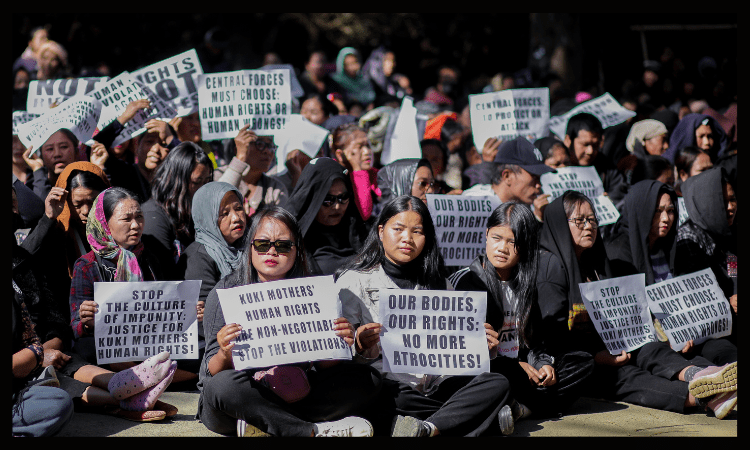
Manipur’s Women Describe CRPF ‘Assault’: Lost Eye, Head Trauma, Broken Bones
At least 75 tribal girls and women were injured, some grievously, in the Dec. 31 clash with personnel from the Central Reserve Police Force (CRPF) and the Border Security Force (BSF) in Manipur, according to representatives of the Kuki-Zo Women Forum in Delhi. They accuse the central forces of violating operational guidelines by targeting women protesters above the waist. This “mistreatment,” they say, has left them disillusioned with the central authorities.

Illegal Mining in Assam’s Dima Hasao Costing Lives
Three people have been confirmed dead, and one body had been recovered as of Jan. 8, two days after at least nine miners became trapped in a flooded “rat hole” coal mine in Assam’s Dima Hasao district. The incident resembles several similar accidents over recent years, despite numerous protests by local residents. The issue persists.
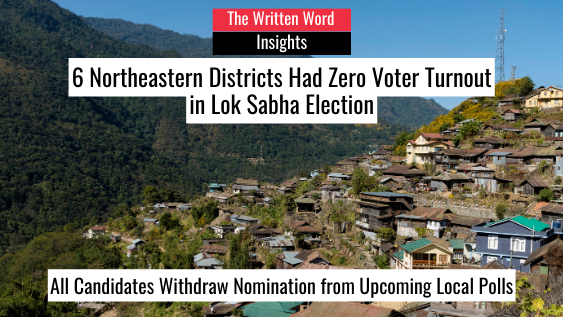
6 Northeastern Districts Had Zero Voter Turnout in Lok Sabha Election
Residents of six districts in a northeast Indian state abstained from voting in the 2024 Lok Sabha election and have announced a boycott of the upcoming local elections scheduled for June 26, marking a profound statement against what is perceived as a long-standing governmental neglect.

Cyclone Remal's Aftermath Claims Nearly 60 Lives in Northeast India
Floods and landslides triggered by Cyclone Remal have claimed nearly 60 lives and affected hundreds of thousands of people in the northeastern states of Mizoram, Assam, Nagaland, Manipur and Meghalaya. As many of these states have regions that are difficult to access and telecommunication can be challenging during disasters, it is likely that the death toll will rise in the coming days.

97% Of Displacements in South Asia Caused by Manipur Violence
Conflict-induced displacement surged across South Asia, a region encompassing eight countries, in 2023, uprooting a staggering 69,000 people in 2023. Of these, the violence in India’s northeastern state of Manipur alone forced 67,000 individuals to flee their homes, according to a report by the Geneva-based Internal Displacement Monitoring Centre (IDMC). This marks the highest number of displacements in India due to conflict since 2018.

How the New Forest Law May Impact Northeast India
The Forest Conservation (Amendment) Act, 2023, or FCAA, which faces criticism for favouring corporate interests over forest communities, especially threatens the northeastern states of India. This is due to a provision allowing the diversion of forest land for certain projects without forest clearance under the Forest Conservation Act, 1980 (FCA).