Layoff Limit and Stricter Union Rules Remove Safeguards for Majority of Workforce
November 28, 2025
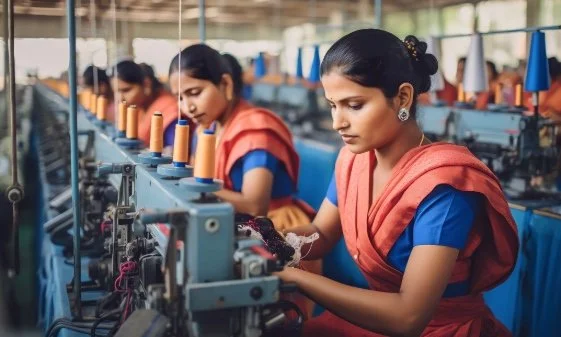
Industrial units with fewer than 300 workers in India no longer need government approval for layoffs under the new labour codes. This change removes key legal protections for most employees, shifting the law’s focus away from security and collective rights in the workplace.
The Industrial Relations Code (IRC), 2020, has made it easier for factories to lay off workers or shut down. Earlier, any unit with 100 or more workers had to get government permission before doing so. Now, this rule applies only if there are 300 or more workers. The All India Trade Union Congress (AITUC) says that 60 to 70 percent of factories in India have fewer than 300 workers, according to Money Control. This means most employers can now cut jobs or close their units without asking the government, as long as they give notice and pay compensation.
The Occupational Safety, Health and Working Conditions Code (OSH Code), 2020, has changed the rules for what counts as a factory. Earlier, any unit with 10 workers using power or 20 workers without power had to follow safety and welfare laws. Now, these limits have been raised to 20 and 40 workers. This means smaller factories can operate without having to provide basic things like clean drinking water, toilets, first aid, set working hours, or overtime pay.
Some important protections for migrant workers have been dropped while merging older labour laws into the new ones. Under the earlier Inter-State Migrant Workmen Act of 1979, contractors had to pay each migrant worker a Displacement Allowance, which was half a month’s wages, at the time of hiring. They also had to give every worker a passbook that recorded details like wages, allowances and working conditions. These requirements are missing in the new OSH Code. While it asks employers to keep records and give appointment letters, the passbook system has been removed, and the Displacement Allowance is no longer required.
The new codes have also made it harder for workers to form unions. Earlier, any seven workers could come together to start a union. Now, they need either 10 percent of the total workforce or at least 100 workers, whichever is less. This blocks union formation in many smaller units that do not have enough people. For a union to speak on behalf of workers, it now needs support from more than half the workforce. If no union meets that mark, a Negotiating Council is created, but only unions with at least 20 percent support can join. The AITUC says these rules make it harder for workers to organise, raise demands or protest unfair treatment.
These changes allow employers to have more control over workers without legal limits. Labour laws are meant to stop employers from deciding everything on their own. Most workers cannot bargain fairly because they do not have money, legal support, or job security. Without strong laws, employers set the terms, and workers have little power to question or change them.
Supporters of these reforms often say that too many rules can scare away investment and make it harder for companies to create formal jobs. It is true that some rules should not make it too difficult or costly for businesses to respond during tough times. But if the law gives employers more freedom, it should also give workers stronger protections in return.
These new codes have taken away several safeguards without offering anything new to balance the loss. There are no better severance benefits, no fresh ways for workers to raise complaints, and no extra rights for those who are no longer covered by the law.
A fair labour system should allow businesses to grow while still protecting workers. This does not mean employers and workers must be treated exactly the same, but it does mean that workers should not be left out of the law entirely. If most rules apply only to big factories, and smaller ones are free from basic duties, then the law stops being useful for most workers. Over time, this creates more informal jobs, less trust at the workplace, and greater fear and uncertainty for workers.
Workplaces are not just places where goods are made or services are provided. They are spaces where rules, control and power are exercised every day. If workers cannot form unions easily, if employers can lay them off without any checks, and if most units are free from safety rules, then workers are left with no defence. The law is supposed to limit this kind of power and give workers a way to stand up for themselves. These new codes no longer do that.
You have just read a News Briefing by Newsreel Asia, written to cut through the noise and present a single story for the day that matters to you. Certain briefings, based on media reports, seek to keep readers informed about events across India, others offer a perspective rooted in humanitarian concerns and some provide our own exclusive reporting. We encourage you to read the News Briefing each day. Our objective is to help you become not just an informed citizen, but an engaged and responsible one.