
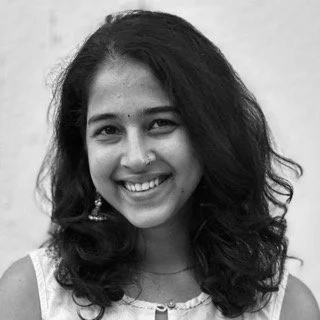
GUNJAN HANDA
Journalist & Talk Show Presenter
Curiosity shaped my childhood in Punjab, a state where trauma, resilience and empathy run deep, rooted in memories of decades of immense suffering and the spirit of sarbat da bhala (welfare for all). My instinct to ask questions, especially the difficult ones, often unsettled those around me, but I never stopped wanting to understand the world, both at its edges and at its heart.
My ability to connect with people and truly listen drew me towards storytelling. Every conversation sparks new questions for me, and each encounter reveals fresh layers of humanity, something I’ve always wanted to keep exploring. Early on, empathy helped me recognise my own privileges and inspired me to use my voice for the greater good.
I pursued a Master’s degree in Journalism at the Symbiosis Institute of Media and Communication, Pune. My time in mainstream Indian media as an anchor, and desk producer before joining Newsreel Asia, was a steep learning curve, but my true passion lies in bearing witness to untold stories and reflecting lived realities from the ground. Documentary work allows me to bridge perspectives and shine a light where it’s needed most, and where I feel most inspired.
At Newsreel Asia, I aspire to bring honesty and sensitivity to every story I tell. I believe we are all shaped by the stories we encounter, and through my work, I hope to spark understanding and create impact, one story at a time.
I can be contacted at gunjan@newsreel.asia.
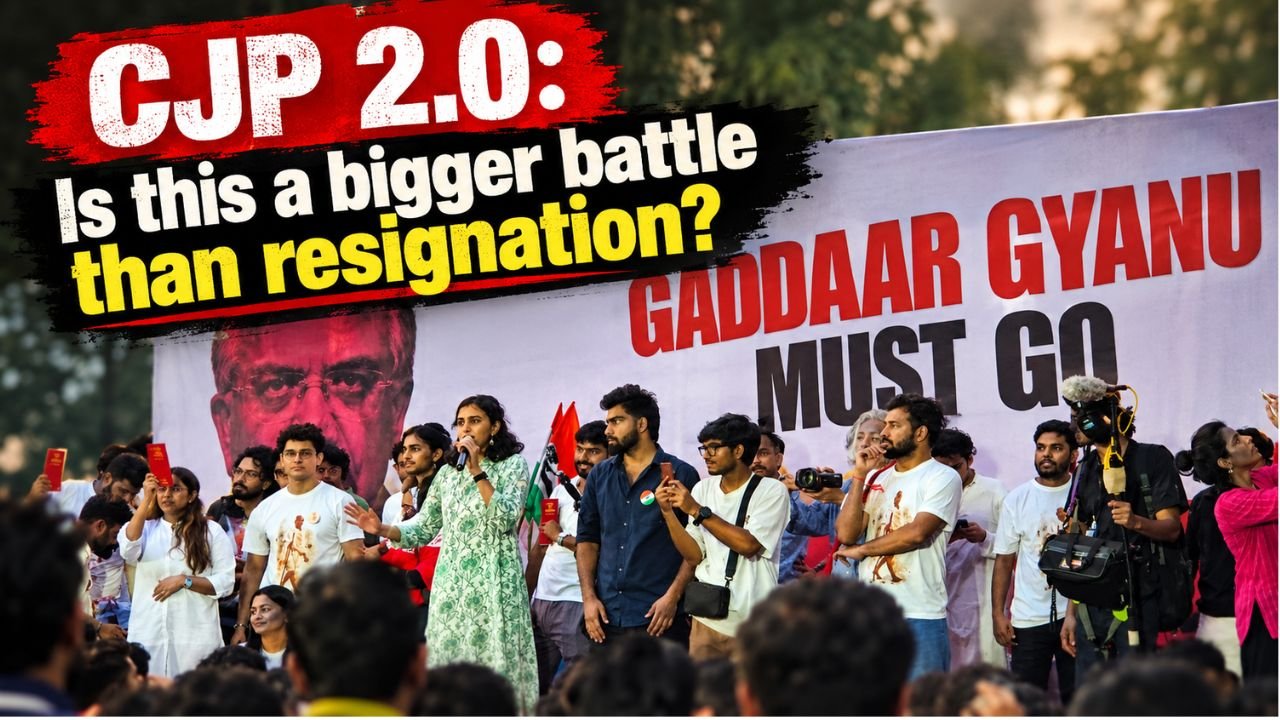
On October 12, opposition leaders, MPs, MLAs, student organisations and political workers came together in a massive march against Chief Election Commissioner Gyanesh Kumar, raising serious concerns over the Special Intensive Revision (SIR) of electoral rolls and the alleged mass deletion of voters’ names. The march brought together a broad coalition, including the INDIA bloc, AISA, SFI and other student unions, as part of a wider nationwide mobilisation against the SIR exercise and concerns surrounding electoral integrity.