Arunachal Pradesh: Videos/Mapping India
From buying votes with lakhs of rupees during elections to contractors allegedly paying massive commissions to secure government projects, corruption runs deep across Arunachal Pradesh. Because Arunachal Pradesh shares an international border with China, the central government allocates huge funds for infrastructure and development. But where does that money really go?
This documentary explores how corruption in Arunachal is no longer limited to politicians or officials alone — many believe it has evolved into an entire system involving power, money, contractors, voters, and institutions meant to ensure accountability.
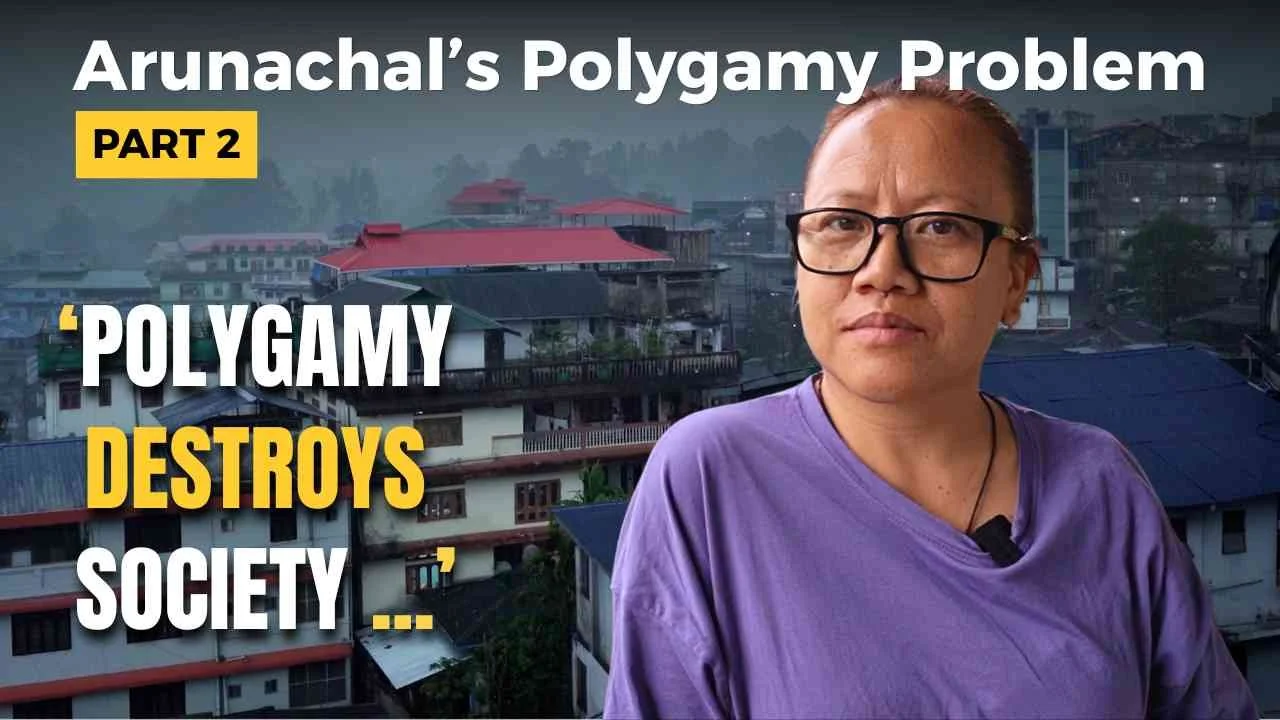
In Part 2 of the story on polygamy among tribal communities in Arunachal Pradesh, Nada Nampi, now an advocate, speaks about the disturbing impact this practice has on women, children, families, and society at large. When she met her husband, who had also grown up in a broken family shaped by similar circumstances, she felt she had found someone who would understand her. But some social customs are inherited in ways that the very patterns people suffer under become the ones they carry forward; and Nampi did not realise when her biggest fear would become her own reality.
In Arunachal Pradesh, a predominantly tribal state known for its rich cultural heritage, certain traditional practices continue to shape everyday life. However, as conversations around rights, equality, and justice grow, many of these customs are being questioned. One such practice is polygyny—the system where a man can have more than one wife.
News Briefings About Arunachal Pradesh
Repeated racial and gender-based abuse against women from Northeast India points to a deeper structural failure of the Indian state to provide equal protection to all citizens. Law enforcement agencies, courts and policymakers often acknowledge such incidents, yet their racial dimension frequently disappears from legal and institutional responses, producing a pattern of unequal citizenship. Women from the Northeast thus occupy what may be called the “unprotected body,” formally included within the republic but repeatedly denied the full protection of its institutions.
A new geological study finds that, contrary to earlier belief, the Indian Plate beneath the Tibetan Plateau is breaking and twisting deep below the surface. The discovery has serious implications for understanding earthquake risks across South and East Asia, including Myanmar, India, Bhutan, Nepal and China.
The health outcomes of India’s tribal populations lag behind the national average, according to an IndiaSpend analysis of government data. More tribal children die in early childhood, and many of those who survive suffer from malnutrition.
China is building the world’s largest dam on a major river in Tibet, which originates from a glacier in the northern Himalayas and flows downstream as the Brahmaputra River, crossing into India before merging with the Bay of Bengal through Bangladesh. The project is expected to significantly impact crucial ecosystems and the livelihoods of millions of people, including those in India and Bangladesh.
One of the most concerning revelations in the recently released India State of Forest Report (ISFR) is the complete loss of 3,656 square kilometres of dense forests between 2021 and 2023. While it shows a net gain in overall forest and tree cover, this substantial loss of dense forests is deeply concerning for several reasons.
The Indian government has transferred control of 62% of new Sainik Schools to groups associated with Hindu nationalist organisations, including the Rashtriya Swayamsevak Sangh (RSS), and the ruling Bharatiya Janata Party (BJP), according to The Reporters’ Collective. The move comes after the 2021 initiative allowing private entities to operate Sainik Schools under a Public-Private Partnership (PPP) model, aiming to expand the network of these military preparatory institutions.
The central government’s decision to fence the India-Myanmar border, purportedly to bolster national security by terminating the Free Movement Regime (FMR), may not necessarily achieve its intended security objectives. Instead, it could detrimentally impact the welfare of communities living along the border and create more security challenges, as indicated by experts and the affected populations themselves.
A new study published in the Lancet medical journal has brought to light a distressing reality: over 225,000 Indians died from cancer in one year due to preventable causes. This statistic places India second to China in such deaths, calling for immediate action at both individual and governmental levels.
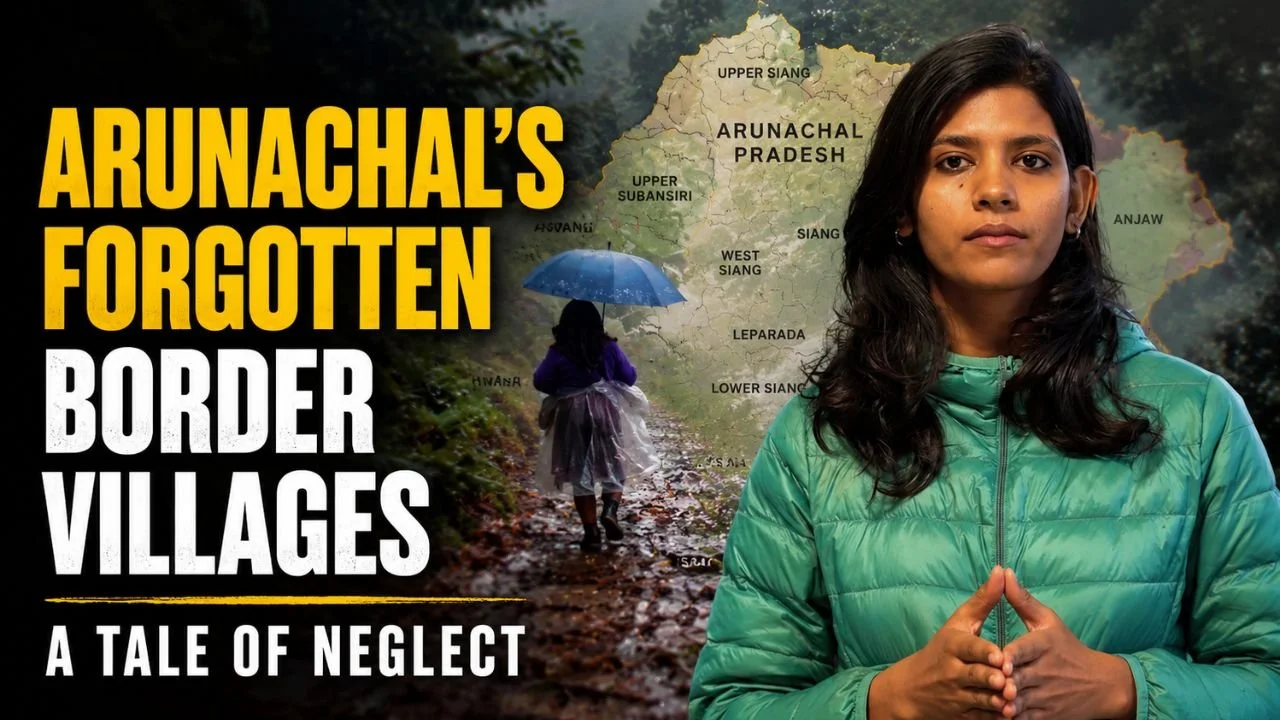
More than 500 villages along Arunachal’s border areas have seen depopulation, with families leaving behind their ancestral homes, ways of life and cultures. With even the most basic facilities missing, many people say they had no option but to move in search of a better future for the next generation. But this migration — not by choice, but because of circumstance — has left deep wounds of neglect. For governments, the border has always mattered. But the people living along it have had to wait much longer to matter. In this video, Newsreel Asia travels to Lower Dibang Valley, one of the districts in Arunachal Pradesh that shares a border with the Tibet Autonomous Region, controlled by China. Datu Mega, Pronov Mega and Deta Mega represent three generations of hill-inhabiting Idu Mishmis who have suffered the consequences of this neglect.